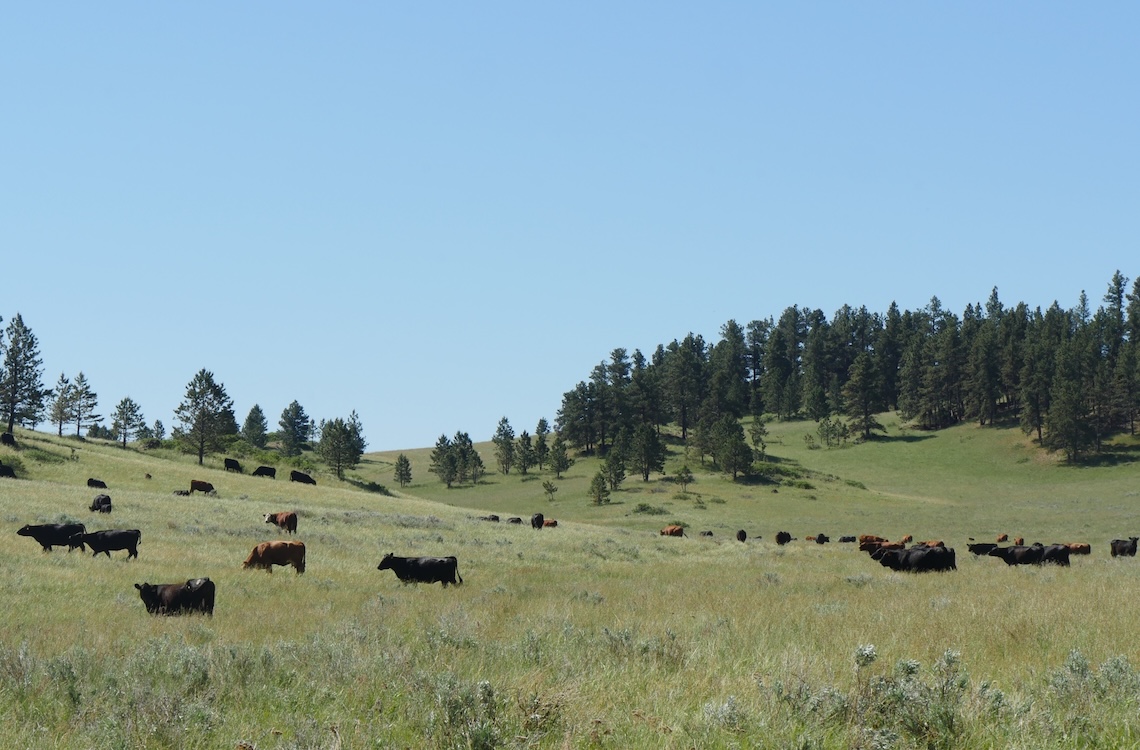


Calving season is well underway for many Wyoming ranches. Though this spring may seem mild when we remember last year’s cold and snow, there are still many challenges facing newborn calves when they hit the ground. The connection between calf loss and a ranch’s profit need not be explained, but what can we as cattlemen do to improve the survival chances of our herd’s newest members? One way to prevent calf loss is to build a thorough understanding of colostrum and its importance in calf health.
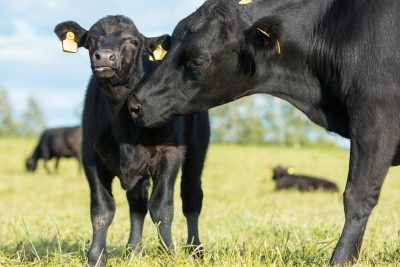
Colostrum is the first milk produced by the cow following birth. Colostrum contains antibodies and is extremely nutrient dense. Unlike in humans and many other mammals, where antibodies can be passed through the placenta during pregnancy, the bovine reproductive tract doesn’t allow for immunological transfer from dam to calf, leaving the newborn vulnerable. This makes the antibodies in colostrum critical for their initial resistance to disease. According to the USDA ARS center in Clay Center, Nebraska, calves that don’t get colostrum become over 50 times more likely to die within their first three weeks. Calves that don’t receive enough colostrum but still manage to survive to weaning are at a significantly higher risk of developing diseases later in life compared to those that do.
The timing of colostrum intake is absolutely crucial in securing calf health. In general, calves should receive roughly two quarts or about 5% of their body weight in the first half hour after birth. They should then receive at least one gallon within twelve hours. This is because the calf’s digestive tract only allows antibodies to pass directly to the bloodstream for the first 24 hours of life before the intestine becomes impermeable.
The most efficient way for the calf to receive colostrum is for it to stand and suckle from the cow on its own. However, as all producers know, there are times when it doesn’t go so easily. Whether it’s due to problems with the cow or calf, extreme weather, or other issues, there are occasions when the calf is unable to nurse directly from their dam during this critical period. It is important to recognize when a calf may be unable to receive colostrum in the normal way and be prepared to step in. Ideally, colostrum can be collected directly from the dam and given to the calf, but if this is for whatever reason not possible, colostrum will need to come from other sources.
If colostrum cannot be collected from a particular calf’s dam, colostrum from other cows can be stored and used as needed. When colostrum is saved for future use from another cow, it is best to select healthy, mature cows as donors. Research shows us colostrum from cows in at least their third lactation or later is higher quality than that of heifers. Collecting colostrum should take place within 12 to 24 hours of calving. It should be a thick, rich, yellow liquid. Colostrum can be stored by freezing it in milk jugs, or better yet, in 1-gallon Ziploc baggies that are half filled and have the air squeezed out.
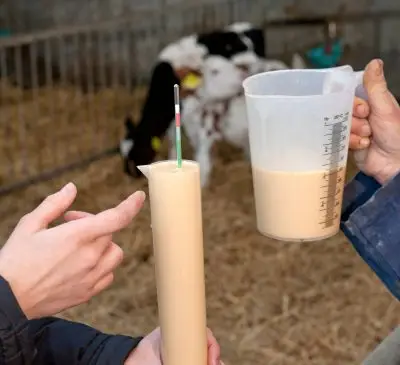
When prepping frozen colostrum for use, do not place it in boiling water to thaw it out. Studies show this can destroy a portion of the antibodies the calf needs. Frozen colostrum should be thawed slowly in a 110˚F water bath until it reaches ~104˚F throughout.
If natural colostrum is not a practical choice or is unavailable, commercial colostrum replacers can be used instead, but these are more effective as supplements for a calf that has already received some natural colostrum. Natural colostrum is always the superior choice when available.
Hopefully, the calf will be able to suckle from a bottle, but in some cases the calf may be too weak or will refuse to accept being hand fed. In this instance, a tube feeder can be used. However, this can be tricky and is dangerous to the calf if done wrong. A veterinarian should be consulted first, especially for those who have not attempted this method before.
In conclusion, colostrum is a vital element of a calf’s survival and therefore the success of a cow-calf operation. The high nutrient content and immediate natural disease resistance make this one of the most important considerations not only in ensuring a good calf crop but in guaranteeing an animal’s lifelong productivity. Be prepared to monitor for calves not receiving colostrum from their dam and have a plan to get it to them, one way or another.
By Dagan Montgomery, Agriculture & Natural Resources Extension Educator, Sublette County, Wyoming. Reprinted with permission from the Wyoming Livestock Roundup.