
A newly launched framework for migratory big-game conservation by the U.S. Department of Agriculture (USDA) has its roots in efforts piloted by Wyoming and informed by the state’s university.
The USDA’s “Migratory Big Game: A Framework for Conservation Action” document is described by the agency as the most unified, landscape-scale approach undertaken by the USDA’s Farm Service Agency and Natural Resources Conservation Service to support big-game conservation while putting farmers and ranchers first by keeping working lands working. The USDA unveiled the framework last week.
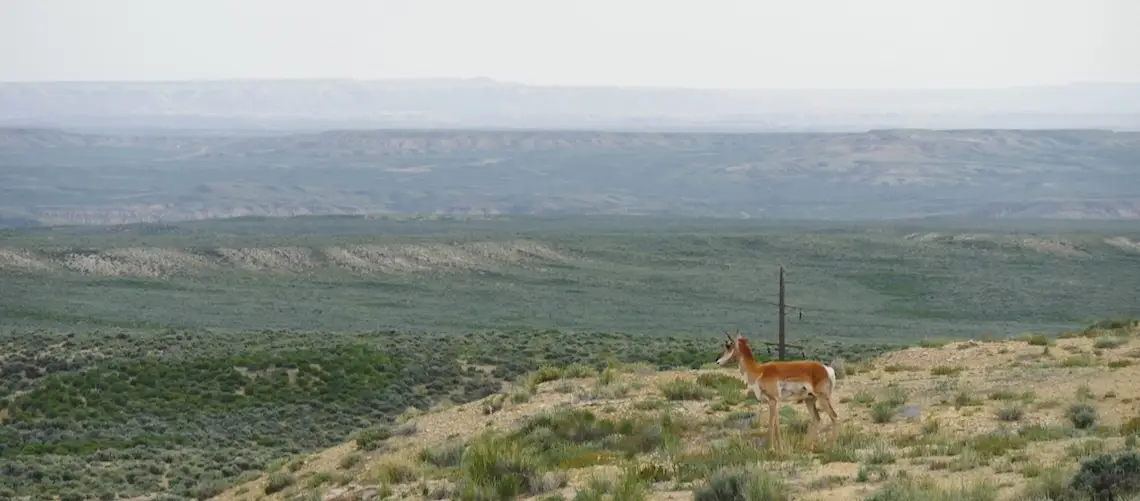
Recognizing that species such as mule deer, pronghorn, and elk need large, connected landscapes spanning both private and public lands to meet their daily, seasonal, and annual needs, the framework provides the recipe to align Farm Bill programs—such as the Environmental Quality Incentives Program, the Agricultural Conservation Easement Program, and the Grasslands Conservation Reserve Program—to alleviate threats to migratory big game identified by state wildlife agencies.
Wyoming is a foundational component of the history of this framework. A similar effort was originally piloted in Wyoming in 2022, thanks to leadership and insight from the governor’s office, state USDA Natural Resources Conservation Service office, and the Wyoming Game and Fish Department. That effort, named USDA’s Migratory Big Game Pilot, brought tens of millions of dollars to Wyoming for conservation on working lands that benefit ranchers and migratory big game. That pilot has since expanded into a full-blown USDA initiative, now supporting migratory big game in five states.
Behind the scenes, the University of Wyoming has played and will continue to play a significant role in these efforts. The U.S. Geological Survey’s Wyoming Cooperative Fish and Wildlife Research Unit at UW has conducted much of the foundational research in migration ecology and is leading the Western Migration Corridor Mapping Team, which has mapped hundreds of migrations across Western states. Further, the science adviser to the USDA’s migratory big-game work is UW Associate Professor Jerod Merkle, in the College of Agriculture, Life Sciences and Natural Resources’ Department of Zoology and Physiology.
“This framework is a great example of how UW works with our partners to ensure Wyoming’s agricultural industry, rural communities, and wildlife populations continue to thrive,” says Kelly Crane, the Farm Credit Services of America Dean of the College of Agriculture, Life Sciences and Natural Resources. “Wyoming leads the nation in collaborative, research-based habitat management strategies that balance the needs of wildlife while sustaining the agriculture, recreation, and energy economies which support our communities. We have been studying, managing, and conserving migratory big game for decades, and it is exciting to see the very important role USDA can play in such efforts on private, working lands.”
The migratory big-game framework extends across the 17 Western states and is the third USDA framework in the West. The framework focuses on state- and tribal-identified priority areas, which provide shovel-ready options to fully protect and improve the ecological potential of the land for both agriculture and migratory big game. The work outlined in the framework falls into three categories: protecting habitat and connectivity; reducing barriers to movement; and improving habitat.
Working across public and private lands and coordinating between federal and state agencies, the scale, collaboration, and outcomes needed to keep the West’s migratory big game healthy and abundant can be achieved, the agency says.
To learn more, go to www.wlfw.org/migratory-big-game-framework-in-focus-wildlife-conservation-through-sustainable-ranching/.
This story was originally published on UW News.