



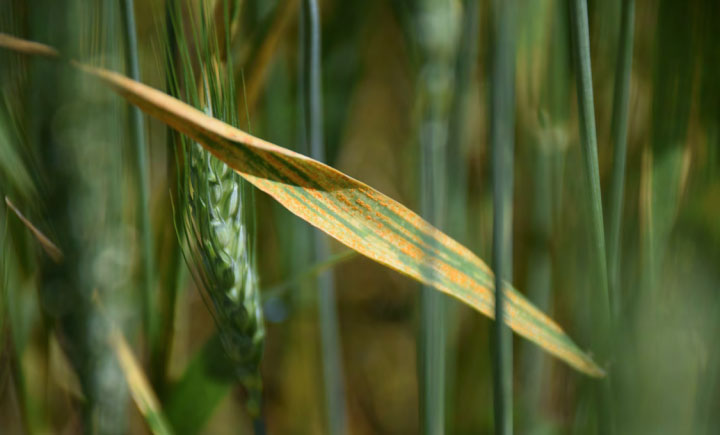

UW Extension bulletin describes stripe rust of wheat biology

Man in hat standing in a field with microphone
UW Extension plant pathologist William Stump

A new publication from the University of Wyoming Extension provides the life cycle of stripe rust as well as management techniques wheat producers can use.

Stripe rust has become one of the most important disease pests of winter wheat in the region since the early 2000s.

The publication gives producers a comprehensive source for current information about stripe rust biology and management, said Bill Stump, assistant professor for plant sciences and extension plant pathologist.

This publication is available as a pdf, HTML or ePub. To view or download, go to bit.ly/StripeRustWheat.

 

Share the Post:

Related Posts

In a fenced-in grassy space, a gardener with a sunhat sprays water from a garden hose onto an area of ground covered in flattened pieces of cardboard

UW Extension to Host Water-Wise Garden Workshop in Buffalo

A water-wise gardening workshop will be held by University of Wyoming Extension and the Johnson County Master Gardeners on Saturday, June 20, from 9 a.m. to 12:30 p.m. at the Buffalo Community Garden (across from 30 Fairgrounds Rd).

Participants will learn the principles of water-wise gardening, sometimes called xeriscaping, and will help install native perennial plants in a new demonstration garden bed.

Read More
two mice sit together under the reddish glow of a heat lamp

The Science of Snuggling: What Huddling Mice Can Teach Us About Body Temperature Regulation

If you’ve ever stayed home sick, you’ve probably experienced the unpleasant temperature swings that accompany a fever. You may remember feeling chilled, then warming up as your fever spiked—a well-established process governed by the autonomic nervous system.

But maybe you also wrapped up in a blanket to keep warm. The science behind this kind of behavioral response is less well understood.

Read More

Help us improve this website!

We’re working to make AgNews easier to use and more useful for you. This quick survey takes about 1–2 minutes.