


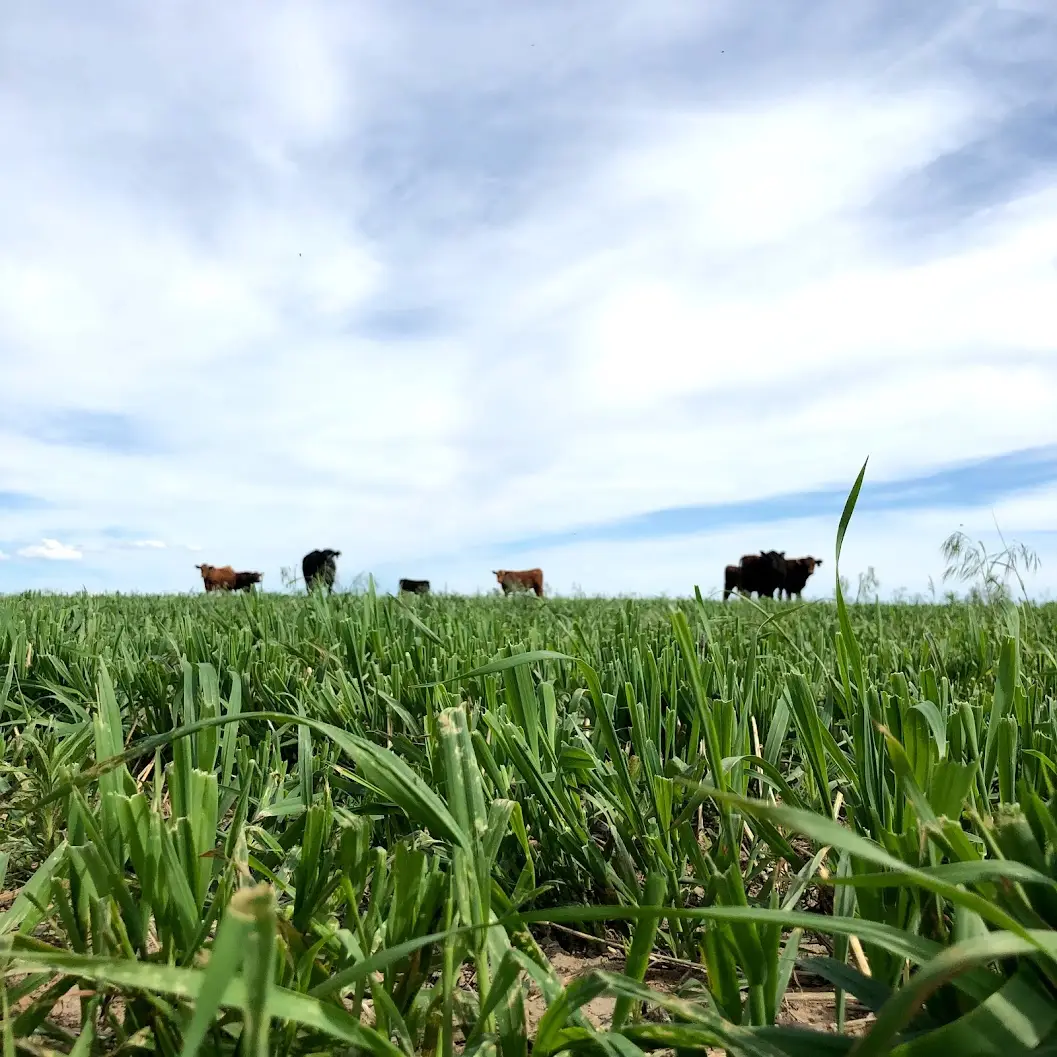
 The use of cover crops to maintain soil cover, sustain soil microbes and build organic matter content is becoming an increasingly common practice.
An additional benefit of cover crops is the potential to supplement existing range, pasture and hay forage resources. Cover crops are often grown in a blend of species than can include grasses, legumes and brassicas.
Sorghum-sudangrass and forage sorghum varieties are common in warm-season cover crop blends. These plants contain enzymes and molecules normally separated by the cell wall. When cellular damage occurs, they are allowed to mix. The result is formation of poisonous prussic acid, also known as hydrocyanic acid, which is a form of cyanide.
Prussic acid poisoning in livestock can result in rapid asphyxiation and death because cyanide limits the ability of blood hemoglobin to transport oxygen throughout the body. In cases where the rancher is unaware of the risk of grazing damaged sorghum-sudangrass, the first sign of a problem is often a dead animal.
The precursor molecules are most concentrated in young foliage and regrowth, so it is recommended to wait until plants are at least 18 inches tall before introducing livestock for grazing early in the growing season.
Risk of poisoning is decreased for animals grazing cover crops blends because they can diversify their forage plant intake and dilute the sorghum-sudangrass in their diet relative to grazing sorghum-sudangrass monocultures.
Damage that can induce prussic acid formation in mature sorghum-based forage can be caused by weather events like hail, drought, and most pertinent this time of year, freezing. Chopping for silage or cutting for hay also results in prussic acid formation, but the poison is eliminated by the processes of fermentation or curing.
Prussic acid concentrations are highest immediately following cellular damage, and then dissipate over time. Livestock actively grazing sorghum-sudangrass cover crops should be removed as quickly as possible after a frost to prevent poisoning and may safely be reintroduced 5-7 days after the last freeze event. Waiting at least a week should ensure safe grazing conditions.
Plant regrowth following a freeze is naturally high in the precursors to prussic acid, so animals returned to a cover crop field should be closely monitored for any sign of illness or discomfort. In this case, it may be wise to swath standing plant material, allow it to cure, and graze livestock on windrows rather than risk grazing plant material with high toxicity potential.
Prussic acid dissipates quickly from plant samples and is notoriously difficult to test in a laboratory setting. Contact your local UW Extension office with questions or if you suspect prussic acid risk.
Micah Most is an agriculture and natural resources educator with University of Wyoming Extension based in Johnson County. He can be reached at mmost@uwyo.edu or 307-684-7522.
Additional Reading:
- Preventing Prussic Acid Poisoning of Livestock https://www.wyoextension.org/agpubs/pubs/B1122-7.pdf
- Minimizing Extreme Weather Impacts: Cover Crops 101 https://www.wyoextension.org/agpubs/pubs/MP131_3_cover_crop-web.pdf
- Sorghums and Sudangrass; Management for Supplemental and Emergency Forage https://www.wyoextension.org/agpubs/pubs/B1122-2.pdf
- What Cover Crop Should I Plant? https://extension.psu.edu/what-cover-crop-should-i-plant