

A University of Wyoming laboratory is testing influent from Wyoming towns for the virus that causes COVID-19 to help the Wyoming Public Health Laboratory determine trends of the disease in the state.
Wastewater from about 30 Wyoming towns is being sampled, with the UW lab testing for six communities and the public health laboratory the others, said Bledar Bisha, associate professor and head of the Department of Animal Science in the College of Agriculture and Natural Resources.
The effort is part of an $800,000 grant from the Wyoming Department of Public Health.
The process can indicate whether there is a trend of increasing positive samples as well as higher virus quantities, which could indicate if the disease is spiking in a community. The testing does not accurately determine the number of cases, said Bisha.
UW is testing wastewater from Cowley, Deaver, Laramie, Hudson, Pinedale and Powell. Results from those towns, plus the others, are at https://covidwastewatermonitor.wyo.gov.
Dots with a red outline indicate increasing rates. Recently, Cowley, Laramie, Gillette, Green River, Riverton and Worland show increasing rates.
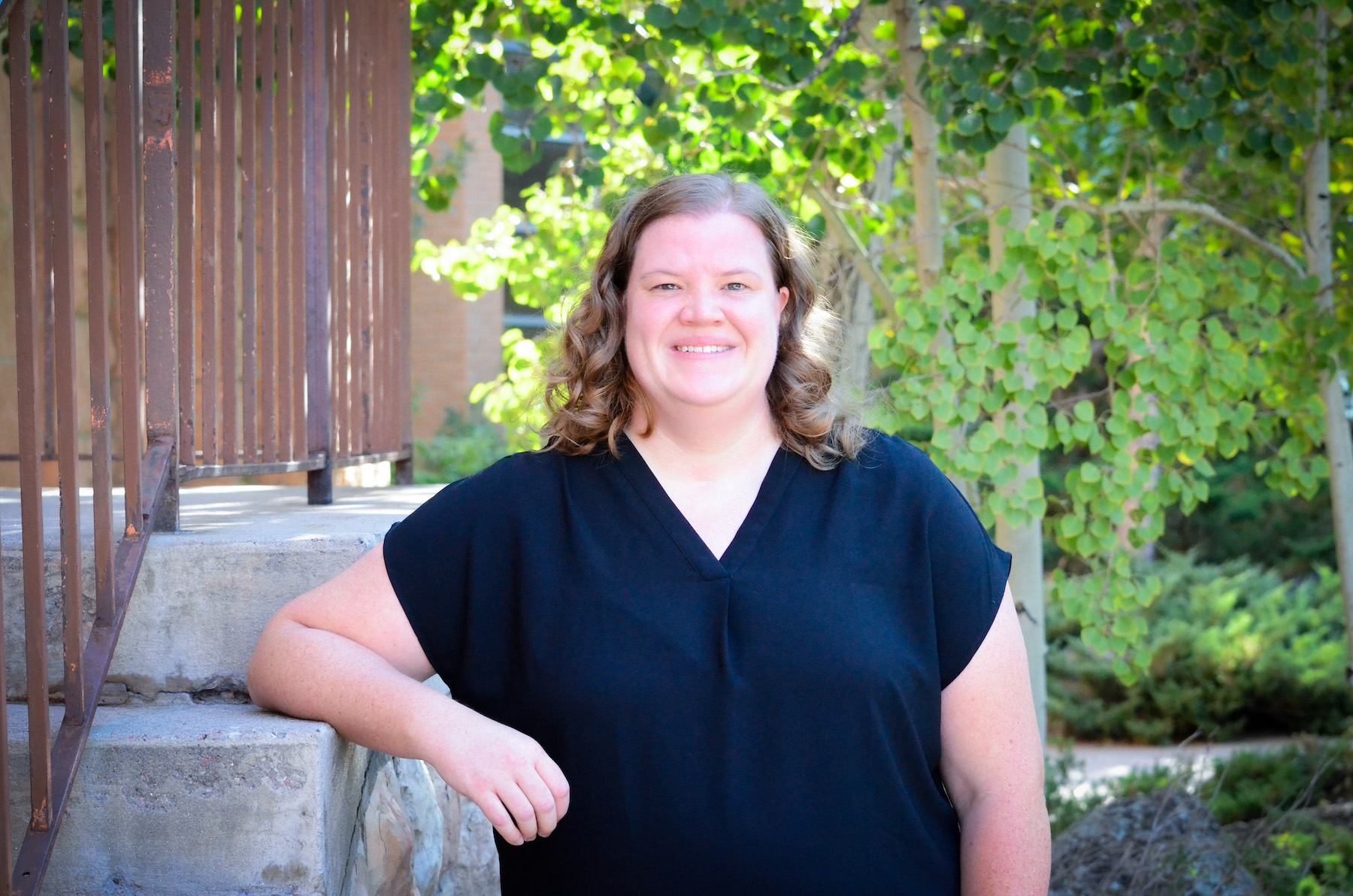
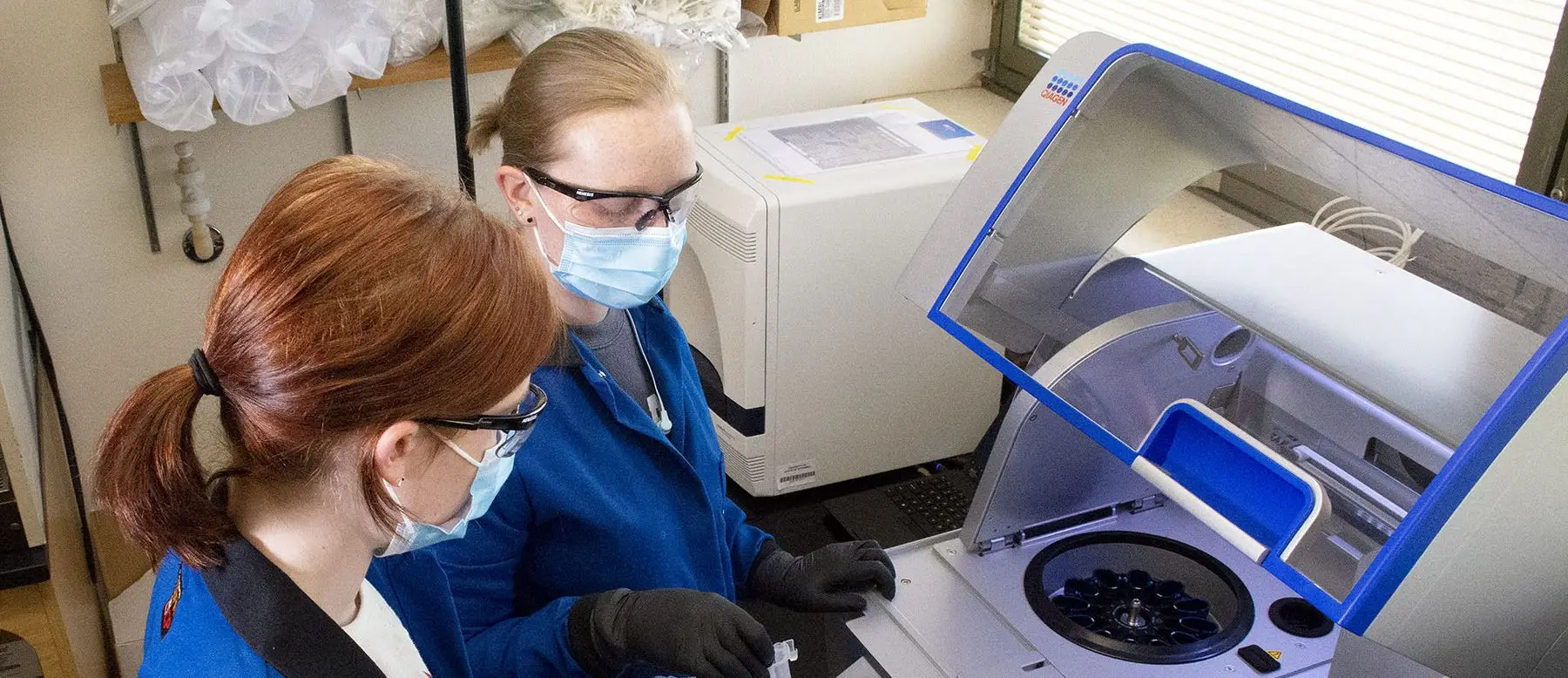
The UW laboratory is testing two samples a week taken over a 24-hour period by employees of a town, said graduate student Alexys McGuire, of Akron, Colo., who is leading the project and assisted by undergraduate students.
The testing detects the viral nucleic acids, which is the ribonucleic acid (RNA). The target RNA is indicative of the virus, and the polymerase chain reaction (PCR) process used makes millions of copies of the RNA, said Bisha. The testing does not replicate the virus, only the RNA.
Samples are taken before the influent is treated. Samples are received overnight and incubated in a water bath to kill any potential virus outside the tubes, said McGuire.
“After that, we extract the RNA from the sample and use PCR that tells us how much of the COVID-19 genome is actually in each sample,” said McGuire.
Each samples takes four to five hours to test, she said.
COVID-19 is thought of as a respiratory illness, but the receptors to which the virus attach are also present in the gastrointestinal tract. Those infected shed the virus through feces.
The tool was used to detect polio cases in the 1930s and more recently used for that in developing countries.
Wyoming results show COVID-19 prevalence fluctuates in communities.
“We definitely see some weeks where there is higher prevalence and sometimes where it’s not as prevalent,” said Kelly Woodruff, of Laramie, who is overseeing the laboratory.
Trends have changed entering the fall months.
“We’ve seen increased trends that’s actually corresponding with the increased rate of hospitalizations,” Bisha said. “I would say that hospitalization levels are pretty much back to the highest rate we saw at the height of the pandemic.”
Rates spiked in September, and McGuire said trends in the wastewater results seem to precede clinical data sometimes by weeks because the symptoms take time to appear in a body.
Mutations of the virus can be detected by testing for specific nucleic acids. Bisha said the SARS-CoV-2 virus variant of late 2020 and early 2021 is now almost all gone.
The Delta variant is prevalent now, and Bisha said Delta is much more contagious than the original virus. Testing would look for specific sequences encoding a unique alteration in the amino acids in the Delta variant virus.
“I would say that in our region, the variant is identified in 99 percent of the cases now,” said Bisha. “We will be set up to potentially look at the emergence of other variants that could happen. The Mu variant is one variant that is becoming more and more interesting to those of us involved in monitoring, and that may become the next thing to monitor after Delta.”
Bisha added viruses do not survive for extended periods in the environment.
“People have looked at wastewater as a vehicle for transmission, and there have been no recorded cases of transmission through wastewater,” he said.
Bisha cautioned against relaxing health practices if positive samples are not found in a community’s wastewater.
“There could be a variety of reasons why wastewater sampling is not picking up a potential spike,” he said. “And I also would caution against panicking, taking public health measures based on wastewater sampling alone.”
He said the testing is a predictive tool that assesses trends and should be aided by clinical testing and other auxiliary methods to assess a community.