


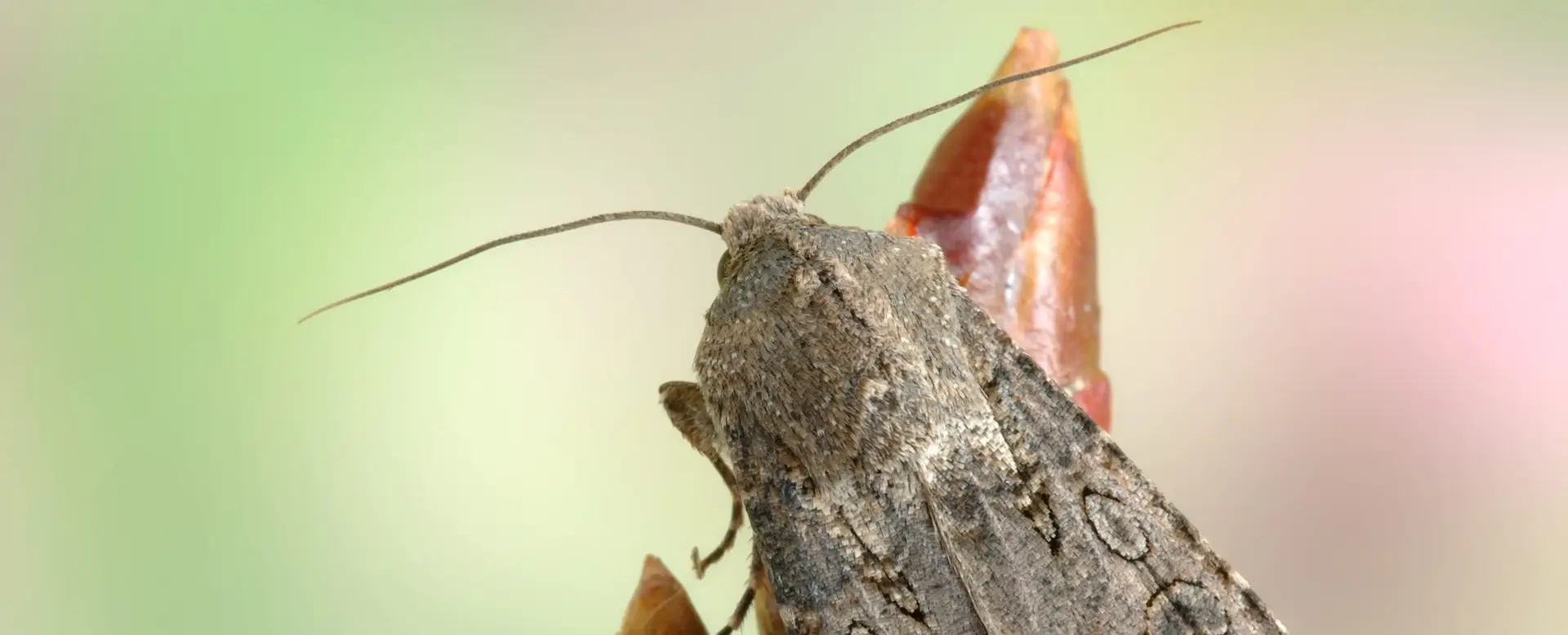
As I write this in late August, “miller” moths, or more accurately the adults of the army cutworm, are migrating back to the lower elevations after spending the summer
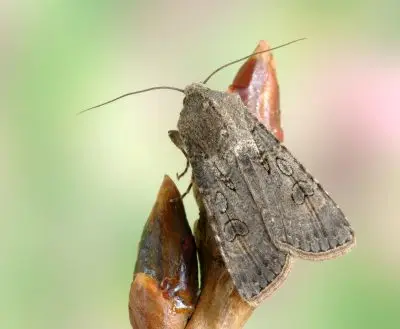
fattening up by feeding on alpine flower nectar.
Miller moths were very abundant this spring as they migrated to the mountains. I had lots of inquiries from citizens and news media asking why the millers were so numerous and such a nuisance this year. Weather conditions favorable for survival of the previous generation of miller moths and their offspring are the main factor that influences army cutworm year‑to‑year population changes.
We also had a dry spring in 2020 with fewer flowers for them to feed on in the rangelands. This concentrated more of the migrating millers into areas with irrigation, such as the landscapes in our towns where they could find food. During their migration to the mountains, the millers don’t hurt plants — they use a soft proboscis to feed on flower nectar.
During the fall migration, the millers will deposit eggs on bare soil associated with potential host plants for their caterpillars to feed on in late winter and early spring. Along her flight path, a single miller moth can potentially produce up to 3,000 eggs before she eventually dies. The eggs don’t immediately hatch but will after being stimulated by fall precipitation.
After hatching, the tiny caterpillars feed on green vegetation for as long as temperatures at soil level are at least 45 F. When it gets too cold, the still‑small caterpillars will enter the soil to spend the winter insulated from extreme air temperatures. The caterpillars, now called army cutworms, can feed on a wide variety of plant species and inflict crop damage on alfalfa, small grains, sugarbeets, and pulse crop seedlings when they resume feeding in the spring.
Army cutworms have also been documented damaging rangeland. In the spring of 2008, approximately 10 square miles of rangeland north of Morrill, Nebraska, was infested with army cutworms. The insects left behind only plants they couldn’t eat, such as thread leaf sedge.
Army cutworms feed at night or on heavily overcast days and hide during the day under plant debris, dirt clods, and in soil cracks making them hard to detect. If a population of army cutworms eats all the available food in an area, they live up to their common name and stage a mass migration, “marching” together like an army of insect soldiers.
Because army cutworms are sporadically occurring pests, producers may not think about scouting fields for them every year, starting in March or April when we are still getting frosts. With so many miller moths migrating this year, even if they have poor egg survival, their army cutworm offspring may still be at economically damaging densities next spring.
As few as two army cutworms per square foot in some crops can be economically damaging. Please mark your 2021 calendar with a reminder to scout crop fields and rangelands for this pest starting in March.
Detailed information for the management of army cutworms on the numerous crops they damage is at the High Plains Integrated Pest Management website https://wiki.bugwood.org/HPIPM:Crops. From the crop directory, pick those you are growing to find out more information about army cutworm or related cutworm species management.
Scott Schell is the University of Wyoming Extension entomologist and can be reached at (307) 766‑2508 or at sschell@uwyo.edu.