
A $1 million gift from Wyoming rancher and conservationist Bob Model to the University of Wyoming—doubled to $2 million with state matching—establishes the Boone and Crockett Club Professor of Working Lands Wildlife Conservation, which will address some of wildlife conservation’s most pressing challenges.
“I am humbled to be able to work with the University of Wyoming as they educate our future private landowners, biologists, land managers, and stewards of America’s public lands and wildlife,” Model says. “We have the unique opportunity to work with all areas that affect the most effective management of our most precious resources—land and wildlife. Wyoming is uniquely situated where private landowners and public stewards work together symbiotically and systemically. It is not, and should never be categorized, as ‘us’ versus ‘them.’
“We all have a stake in the present and future generations to ensure that our public lands are managed for the benefit of everyone and that our wildlife populations have the ability, through science-based management, to not only survive but thrive as human encroachment/needs push those ever-dwindling boundaries.”
This position will lead an internationally recognized research program focused on working lands wildlife conservation as well as developing practical strategies to sustain healthy wildlife populations, productive landscapes, and vibrant rural communities within the state.
The professorship also will serve as the founding leader of a future UW Center for Wildlife and Working Lands within the College of Agriculture, Life Sciences and Natural Resources. The center will bring together researchers, students, agency partners, landowners, and conservation organizations while also attracting external research funding to expand Wyoming’s leadership in wildlife conservation throughout the West.
“This is exactly the kind of work a land-grant university should lead,” says UW President Shane Reeves. “Wyoming has extraordinary wildlife, working lands, and people who understand both. Our job is to bring research, education, and partnerships together to solve real problems for the state. Through Bob Model’s generosity, this professorship gives UW an opportunity to build on its strengths, serve Wyoming, and make an impact well beyond our borders.”
The position draws on expertise across the College of Agriculture, Life Sciences and Natural Resources, including the departments of Zoology and Physiology, Botany, Animal Science, Agricultural and Applied Economics, and Ecosystem Science and Management. It also will collaborate extensively with the Ranch Management and Agricultural Leadership Program, the Wyoming Agricultural Experiment Station, UW Extension, the Wyoming State Veterinary Laboratory, and the Haub School of Environment and Natural Resources.
Beyond the university, the professor will work closely with the Wyoming Game and Fish Department, federal and state land management agencies, the USDA Natural Resources Conservation Service Working Lands for Wildlife, and conservation organizations throughout the West.
“The future of wildlife conservation in Wyoming will be shaped by our ability to bring people and disciplines together,” says Kelly Crane, the Farm Credit Services of America Dean of the College of Agriculture, Life Sciences and Natural Resources. “This professorship gives us the opportunity to connect the expertise of our faculty with the knowledge of landowners, managers, producers, and conservation partners. Thanks to Bob for this incredible gift.”
Successfully conserving wildlife in the West requires more than protecting habitat. It demands collaborative science-based solutions that benefit wildlife, livestock, landowners, and rural communities alike.
As Wyoming’s land-grant university, UW combines world-class research, trusted partnerships, and a deep commitment to serving the state’s landowners, wildlife managers, and communities. From mapping the migrations of mule deer and pronghorn to pioneering potential solutions for chronic wasting disease and restoring sagebrush ecosystems, UW faculty members are delivering science that directly informs conservation and management across Wyoming and the West.
Nowhere is the relationship between wildlife conservation and working lands more important than in Wyoming. The state contains some of North America’s largest remaining intact sagebrush ecosystems, which provide essential habitat for mule deer, pronghorn, elk, sage grouse, and countless other species.
Wyoming is recognized for some of the nation’s largest, most innovative, and sustainable ranches, where private landowners serve as critical partners in maintaining wildlife habitat across millions of acres.
And, for much of its history, Wyoming has demonstrated that productive working lands and thriving wildlife populations go hand in hand—each depending on the other. The state’s ranches, rangelands, forests, and public lands sustain one of the world’s most remarkable concentrations of big game while supporting the livelihoods and traditions that define the American West.
Lasting conservation depends upon strong partnerships between UW and private landowners, whose stewardship supports wildlife across vast landscapes. The program will use voluntary incentive-based conservation approaches to help ranchers and landowners implement management practices that improve agricultural productivity, ranch profitability, and wildlife habitat.
“Philanthropy has the power to turn a good idea into an enduring vision for UW,” says John Stark, president and CEO of the UW Foundation. “We’re grateful for Bob’s generosity, together with the state’s matching support and partnership from the Boone and Crockett Club. It creates an extraordinary opportunity for UW to build a lasting center of excellence in wildlife conservation.”
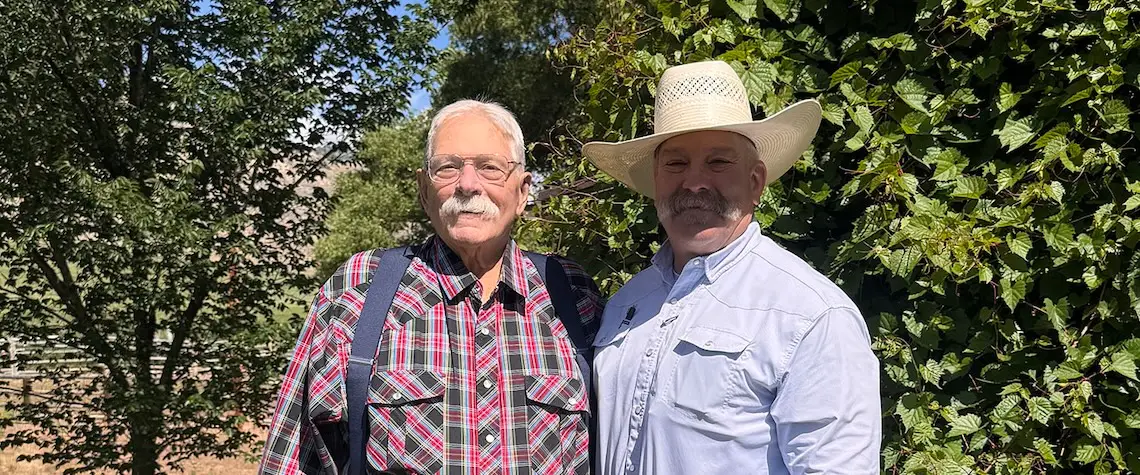
Model, of Cody, is a champion of the importance of private lands in sustaining public wildlife resources. He has served as president and chair of the Boone and Crockett Club, the premier conservation organization promoting hunter ethics and advancing national policy on wildlife conservation and hunting heritage. His stewardship of Mooncrest Ranch and his contributions to Wyoming wildlife conservation also earned him induction into the Wyoming Outdoor Hall of Fame in 2010. On Mooncrest, Model has worked with the Wyoming Game and Fish Department and the Shoshone National Forest to improve grazing systems, enhance wildlife habitat, and support a thriving elk herd.
The Boone and Crockett Club also is partnering with UW to establish this professorship. The club champions science-based wildlife conservation, ethical stewardship, and responsible management of healthy wildlife populations for future generations, which aligns with UW’s land-grant mission. The club was founded by Theodore Roosevelt and George Bird Grinnell in 1887.
Model also is a founder and past chairman of the American Wildlife Conservation Partners, a coalition of more than 40 hunter and conservation organizations.
Model also established the UW Bobby Model Photojournalism Professorship and Excellence Fund to honor his late son, Bobby Model, a prominent National Geographic photographer and UW alumnus who passed away in 2009.
“I am honored to support the University of Wyoming in honor of my son, Bobby, to see his avocation continue through other young, inspired individuals,” Model says. “As a longtime private landowner in Wyoming, I know this Boone and Crockett Professorship will carry on something I have always believed in—the public and private landowners working collaboratively so our roles as land/wildlife stewards will benefit all the American people now and in the future.”
This story was originally published on UW News.