

Here’s how one University of Wyoming Extension educator surveying malting barley markets in the Big Horn Basin and an extension agricultural economics scientist browsing a table recipe book in France came to the same conclusion.
Their idea to bring ancient grains to Wyoming began 4,750 miles apart then converged on UW research and extension centers and in producer fields to determine if the grains could survive Wyoming’s persnickety climate zones – and if grown, whether any products would interest consumers.
Emmer, einkorn and spelt are called ancient grains because evidence shows them being grown more than 10,000 years ago in ancient Mesopotamia during the first agricultural revolution and later fueling pharaoh’s Egypt thousands of years later. Modern New World producers bypassed them because an extra step is needed to remove their hulls, increasing costs. Grains not needing that extra step were developed.
Now, rising consumer interest in niche foods has farmers and scientists taking a new look at these grains.
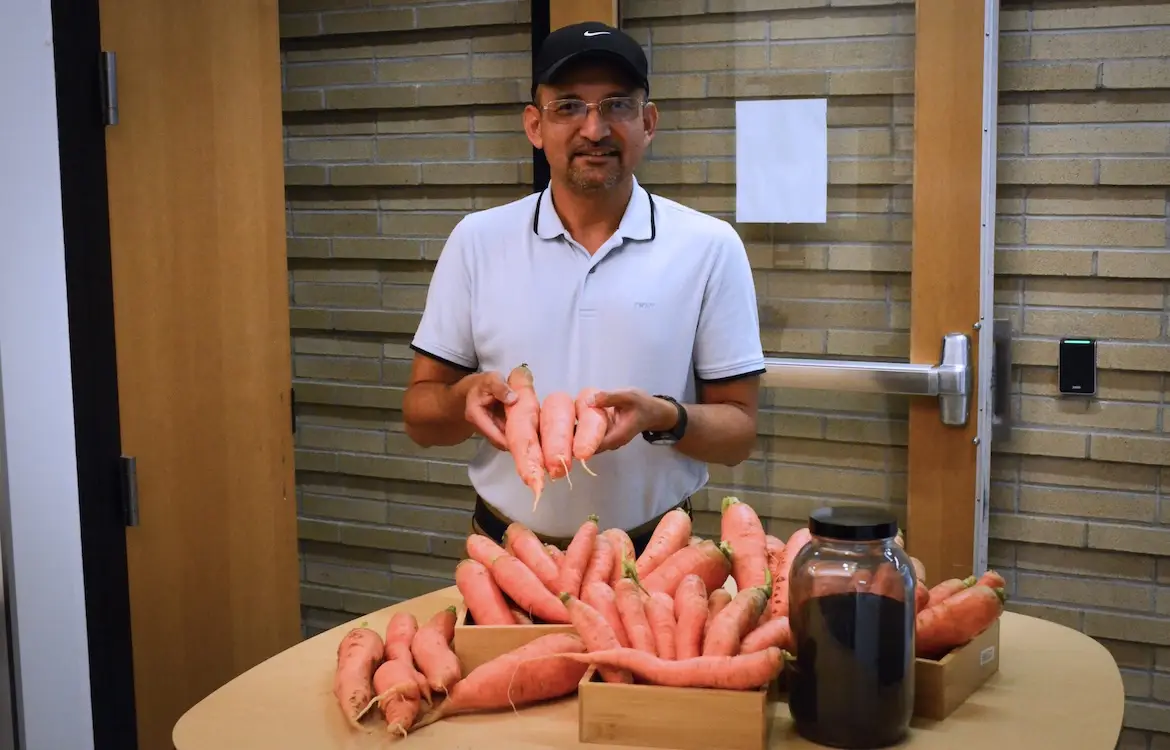
Senior research scientist Tom Foulke was in a chateau in Blois (Bl wa’), France, looking at that recipe book while he was shepherding UW students during an annual international course.
Emmer, spelt and einkorn are the world’s first domesticated cereal crops.
“I’m looking at the book and saying, ‘Why aren’t we growing this?’ We are always looking for crops to grow here,” said Foulke. “The question for me came up that maybe there’s a business here, maybe there’s an opportunity, and it evolved.”
Meanwhile, agriculture and horticulture educator Caitlin Youngquist based in Washakie County experimented growing a small amount of emmer and spelt in the bountiful Big Horn Basin.
“My interest in some of these first grains or early grains started as I was listening to barley growers express concern about MillerCoors cutting some of their contracts,” she said. “I wanted to look for other crops that could be easily grown with the existing equipment and expertise we have in the basin.”
Named First Grains after the first domesticated cereal crops, the project grew into crop and nutrition research and marketing efforts – Youngquist and agronomy and cropping systems specialist Carrie Eberle in crops, assistant professor Jill Keith in the Department of Family and Consumer Sciences studying nutrition, and Foulke exploring potential products and markets, trying to guide a project a public university just isn’t built for.
The program is end-to-end (vertically integrated), from producers raising the grain to bakers and brewers selling products made with these grains. If successful, private industry would then take over.
The goal is to build a niche industry in Wyoming’s agricultural economy.
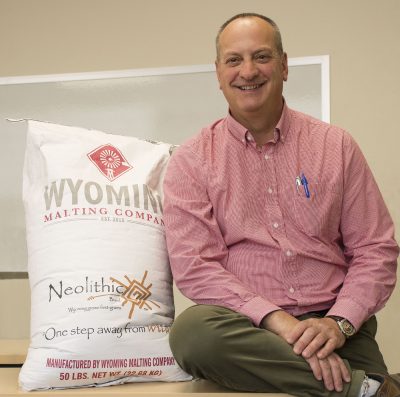
“The public-private partnership is something the university has not done before,” said Foulke. “The university normally licenses patents and does the research but to actually have the whole system under one roof is a little bit different, and that’s been a challenge.”
The process is backward from business as usual when determining what crops to research.
“In the past, we’ve looked at it from what crops we have and how well they will grow here,” he said. “As an economist, I’m trying to look at this and say what crops can we sell, how are they grown and how well they work.”
A better bottom line usually entices farmers to consider changing crops. Foulke said getting the premium for growing a niche crop is one of his goals.
The grains have been grown on UW research and extension centers near Powell, Sheridan and Lingle and by five producers in the state. The grains are grown under dryland and irrigated conditions, no till and conventional, and organic and non-organic to find out if they will grow in Wyoming and how best to grow them.
Youngquist said how the crops could fit into current crop rotations is also been studied.
“What some of the research shows is they are not competitive with our modern wheats in terms of yields under a high-input system,” Youngquist said. “But they can be quite competitive under a low-input system, and so they fit well into a potential niche.”
Big Horn Basin harvests burst with commodity crops and seed but not many niche crops that go into an organic or health food market.
“The ancient grains have a potential if there’s enough market development both locally and regionally for this product. There’s a great increase in products that are labeled with ancient grains,” said Youngquist.
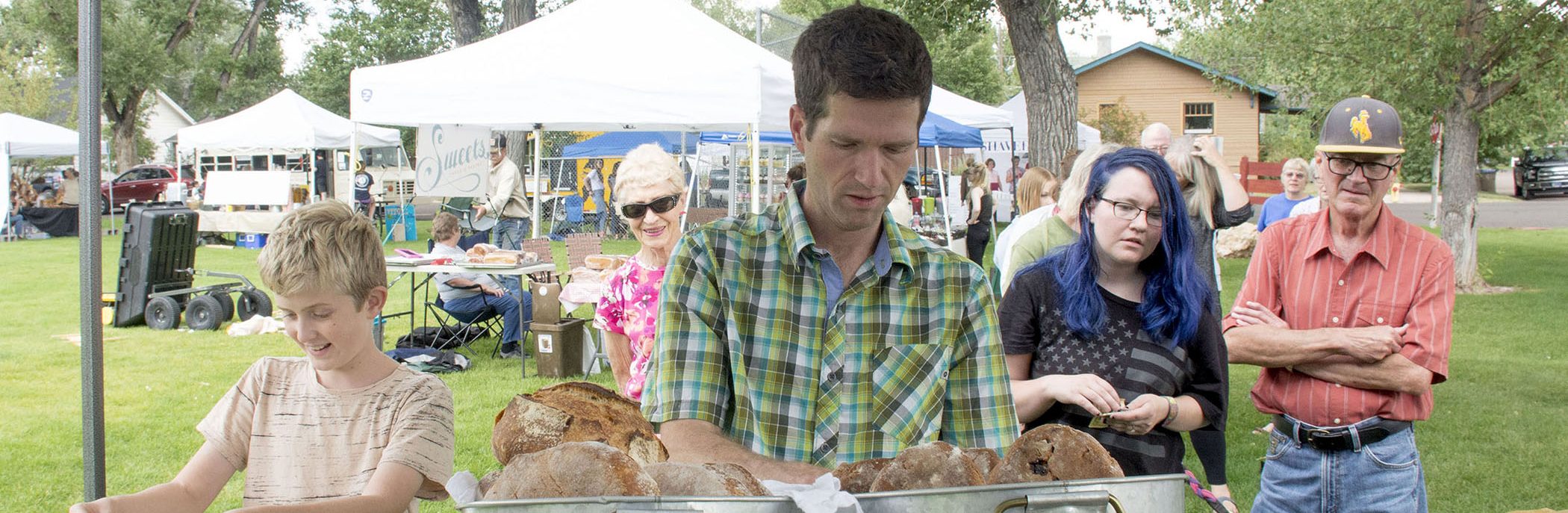
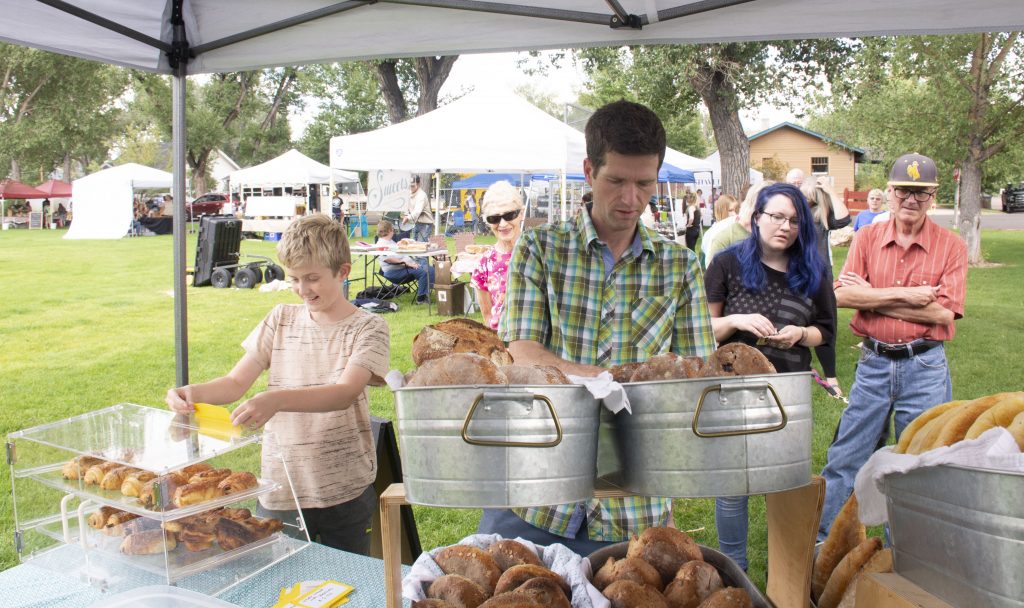
Some Wyoming bakers have experimented with using the grains, as have some microbreweries.
Ancient grains like einkorn and emmer aren’t going to take over malting barley acres in the Basin, she said, “But it does provide some other options for growers who want to grow something different or want to grow something that goes into a local food product or local breweries they could maybe sell to at a premium or as a niche-marketed product.”
The dehulling problem has been solved, opening the door to product development. A de-huller has been purchased and installed at the Powell Research and Extension Center.
The de-huller is the center of production processing for these grains, said Foulke.
“All of the products, whether for bread or for beer, need de-hulled seed,” he said. “No de-hulling capacity was available in a three-state area. With this new machine, the project can start building the niche industry and take the first steps toward privatization.”