


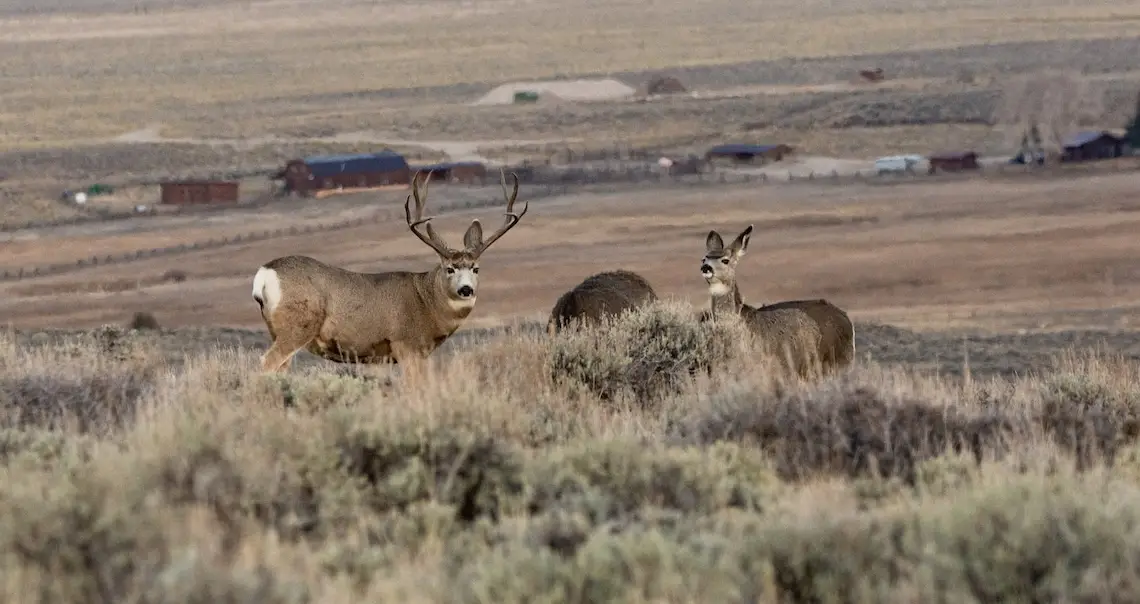
Housing development is expanding, pushing homes into wild landscapes at an unprecedented pace. The allure of living near the West’s large landscapes and its big game species such as elk, deer, and pronghorn has increased demand for houses in these areas.
Yet, as residential development moves into previously undeveloped areas, those same species face more than the direct loss of land under a building’s footprint—they also can lose access to the habitat surrounding those homes, multiplying the effective impact of each new structure. Without clear guidance on how much open space must be maintained between homes to conserve habitat for wildlife, new housing developments risk shrinking available habitat and fragmenting the movement pathways animals depend on to move between seasonal ranges.
A new study published in the Journal of Applied Ecology by researchers and biologists at the University of Wyoming, Wyoming Game and Fish Department, National Park Service, U.S. Fish and Wildlife Service, U.S. Geological Survey, and the University of California-Berkeley offers some of the most detailed empirical information to date on that question—and translates the findings into a practical online tool that planners and managers can use today.
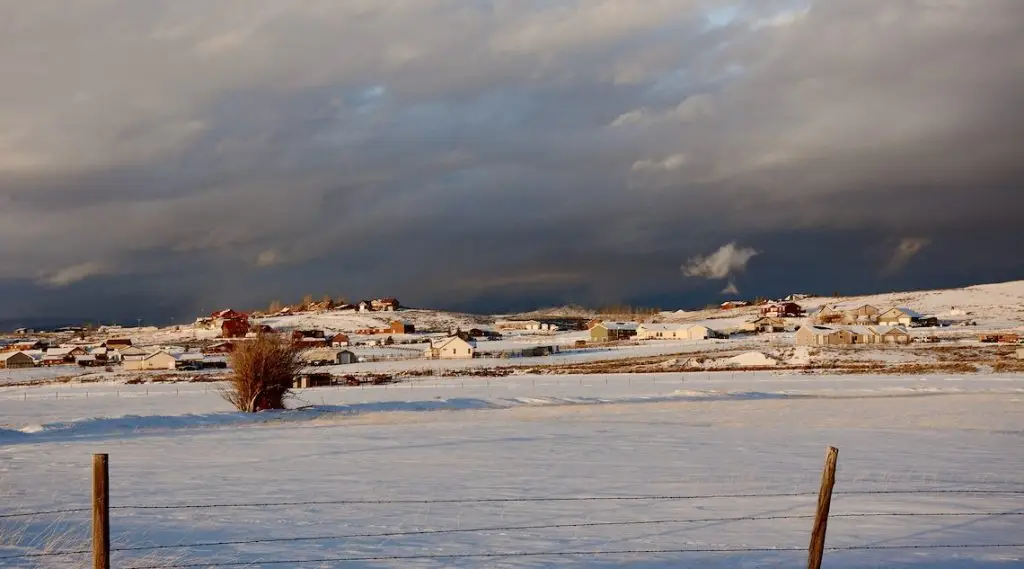
Led by Associate Professor Jerod Merkle’s research group at UW, the team analyzed the movements of GPS-collared mule deer, elk, pronghorn, and moose in both rural and semi-urban areas in and around Cody and Jackson. Rather than relying on housing density or distance to houses—conventional but difficult-to-implement-in-practice metrics—the team introduced a novel width metric: defined as the shortest distance of open space between any two nearby houses or associated structures. This approach captures how housing development is configured and how that configuration could influence how big game use habitat in the spaces between houses.
Broadly, patterns were similar across species and landscapes, though responses varied. Big game animals were generally less likely to use narrow spaces between houses and more likely to move through as those spaces widened, with some exceptions in semi-urban contexts. The specific distances at which animals shifted from avoiding to tolerating housing varied by species and study area, and whether individuals spent their time in rural or semi-urban areas.
“Our goal for this work is to help make recommendations that can inform development decisions and planning discussions that meet the demand for new houses while also maintaining big-game habitat and movement,” says Ben Robb, a UW research scientist and the lead author of the study.
Summarizing findings across all species and contexts, the team found clear evidence of indirect habitat loss between houses. Some big game avoided habitats between houses that were a mile or two apart, while others were still willing to move through spaces as narrow as a quarter to half a mile between houses.
The authors note that these width thresholds are not prescriptive development standards, but rather an important component of a broader tool kit that local managers can draw on to make science-informed decisions—particularly in rapidly developing areas such as Jackson and Cody. Merkle clarifies that “our research helps provide numbers behind the general and well-accepted message that clustering houses and leaving larger, contiguous areas of open space between those clusters is best for wildlife.”
To help put these findings into practice, the team developed an online tool where users can input housing configurations and immediately explore how those configurations may influence habitat use by big game.
The researchers emphasize that houses themselves are only one factor among many—including roads, fences, big-game population size, and human-associated food sources—that shape how wildlife can persist alongside growing human communities. For instance, many deer and moose spend a lot of time, particularly during winter, near people’s houses, but the benefits of this lifestyle to the health of big-game herds more broadly are still unknown. This study does not offer guidance for those urban-adapted individuals but, instead, highlights that maintaining adequate open space between houses matters for herds of migratory big game that rely on intact habitat and seasonal movement to survive.
“This work sharpens our understanding of one critical dimension of that challenge, offering a step toward housing development policy that can work for both people and wildlife,” Merkle says.
This story was originally published on UW News.