


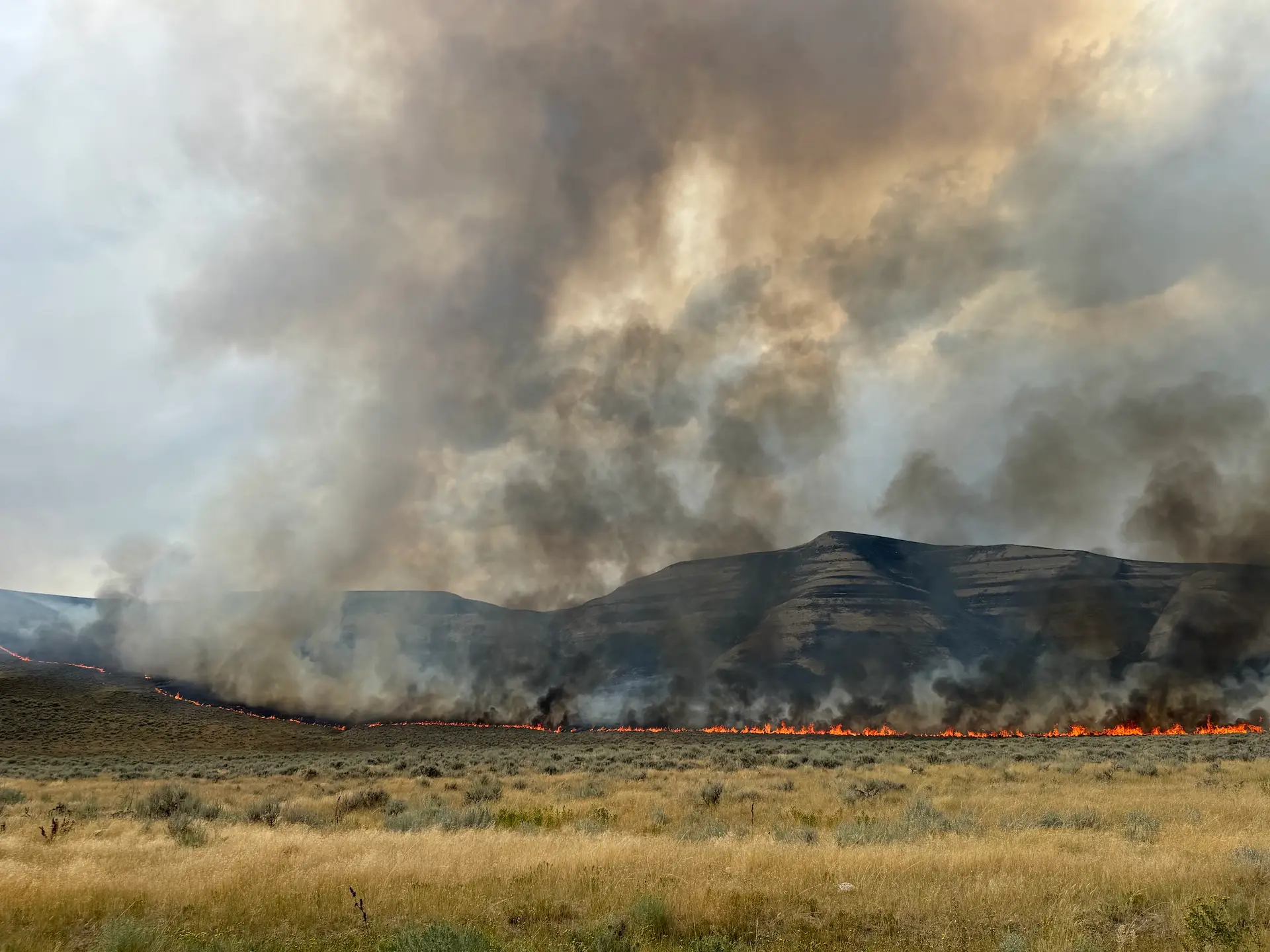
Beginning Thursday, April 30, the University of Wyoming Extension will host a free six-part webinar series focused on preparing for, responding to, and recovering from wildfire.
The weekly series, delivered via Zoom, will discuss topics ranging from how to reduce household fire hazards to community preparedness and understanding how wildfire can impact livestock, wildlife habitat, and public health.
Each webinar runs from 6 to 7:30 p.m. on Thursday evenings, with an hourlong presentation followed by a 30-minute Q&A session. Presentations will highlight specific case studies in Wyoming communities as well as offering general tips for managing risk, staying safe, and knowing what to expect in the aftermath of a fire.
“Wildfire can be really scary—there’s a lot of unknowns,” says UW Extension educator Peyton Loss, who co-organized the series in partnership with fellow extension educator Mallery Larson.
“We’re hoping that by giving people more information on the front end, they feel a little more empowered about where to go and what to do,” Loss adds. “We hope people take away some new tools or community connections that help them feel more prepared.”
To view speaker information and register for the series, visit https://bit.ly/uwe-wildfire-webinar. Contact Loss at ploss@uwyo.edu or Larson at mlarso34@uwyo.edu with questions.
Dates, topics, and speakers are as follows:
- April 30: Integrated Fuels Management within the Wind River and Bighorn Basin, presented by Rance Neighbors, Bureau of Land Management Fuels Program Manager
- May 7: Collaborative Community-Level Planning for Wildfire Risk Management, presented by Matt Hamilton, UW’s Eldon and Beverly Spicer Chair in Environment and Natural Resources
- May 14: Impacts of Wildfire Smoke on Livestock & Grazing After a Wildfire, presented by Barton Stam, UW Extension educator, and Amy Skibiel, associate professor of animal, veterinary, and food sciences at the University of Idaho
- May 21: Reduce the Ire from Wildfire: Best Practices to Reduce Risk to You and Your Home, presented by Robb Sgroi, land resources specialist for the Teton County Conservation District
- May 28: Sheridan County Public Health: A Case Study of the 2024 Elk Fire Response, presented by Edward Hinzman, Sheridan County public health response coordinator
- June 4: Wildland Fire: Positive and Negative Impacts to Wildlife Habitat, presented by Tim Kramer, state coordinator for the U.S. Fish and Wildlife Service’s Partners for Fish and Wildlife Program