



UW Extension publishes irrigation ditch burning guide

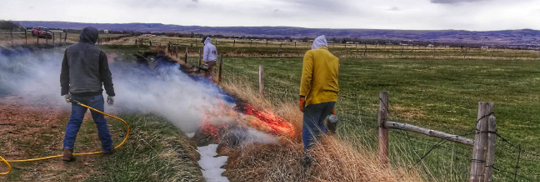
Crew burning irrigation ditch
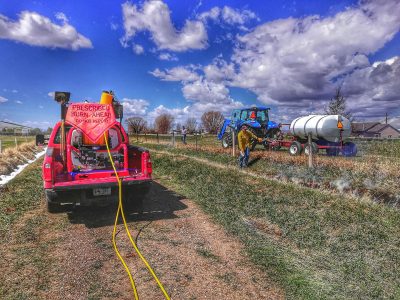
Adequate equipment for ignition and suppression are needed for safe and effective ditch burning. In this picture, the tractor has a spray tank with boomless nozzles and a hose, the truck has a spray tank with a hose and other hand tools, and proper signage is displayed due to the proximity of the road (UW Photo).

            A new publication providing guidance to landowners for burning irrigation ditches is now available from the University of Wyoming Extension.

Burning Irrigation Ditches, B-1351, provides landowners an overview of using fire as a management tool, equipment needs and operations, safety and weather considerations, timing of burning and relevant state and federal polices and regulations.

Vegetation that accumulates in irrigation ditches slows the flow rate of the water and can reduce the total capacity of the ditch.

“Burning irrigation ditches is an important tool for effective water delivery in the West,” said Derek Scasta, UW Extension range management specialist. “Planning for safe and effective ditch burns will ensure this practice continues to be a tool in the toolbox.”

It is available as a pdf, HTML or ePub at http://bit.ly/UWBurningIrrigation.

Share the Post:

Related Posts

Two deer in a sagebrush steppe landscape overlooking some houses.

New Research Shows How Much Space Between Houses Keeps Big Game Moving

Housing development is expanding, pushing homes into wild landscapes at an unprecedented pace.
Yet, as residential development moves into previously undeveloped areas, those same species face more than the direct loss of land under a building’s footprint—they also can lose access to the habitat surrounding those homes, multiplying the effective impact of each new structure. Without clear guidance on how much open space must be maintained between homes to conserve habitat for wildlife, new housing developments risk shrinking available habitat and fragmenting the movement pathways animals depend on to move between seasonal ranges.

Read More
Scott Shaw holds up a plastic bottle.

Shaw Receives UW’s George Duke Humphrey Award

When it comes to University of Wyoming faculty recognition, it’s hard to beat the past two years for Department of Ecosystem Science and Management Professor Scott Shaw.
After receiving the 2025 John P. Ellbogen Lifetime Teaching Award that recognizes the long, distinguished, and exemplary career of one senior faculty member who has excelled as a teacher at UW, Shaw has been selected as the recipient of the 2026 George Duke Humphrey Distinguished Faculty Award, the university’s top faculty honor.

Read More

Help us improve this website!

We’re working to make AgNews easier to use and more useful for you. This quick survey takes about 1–2 minutes.