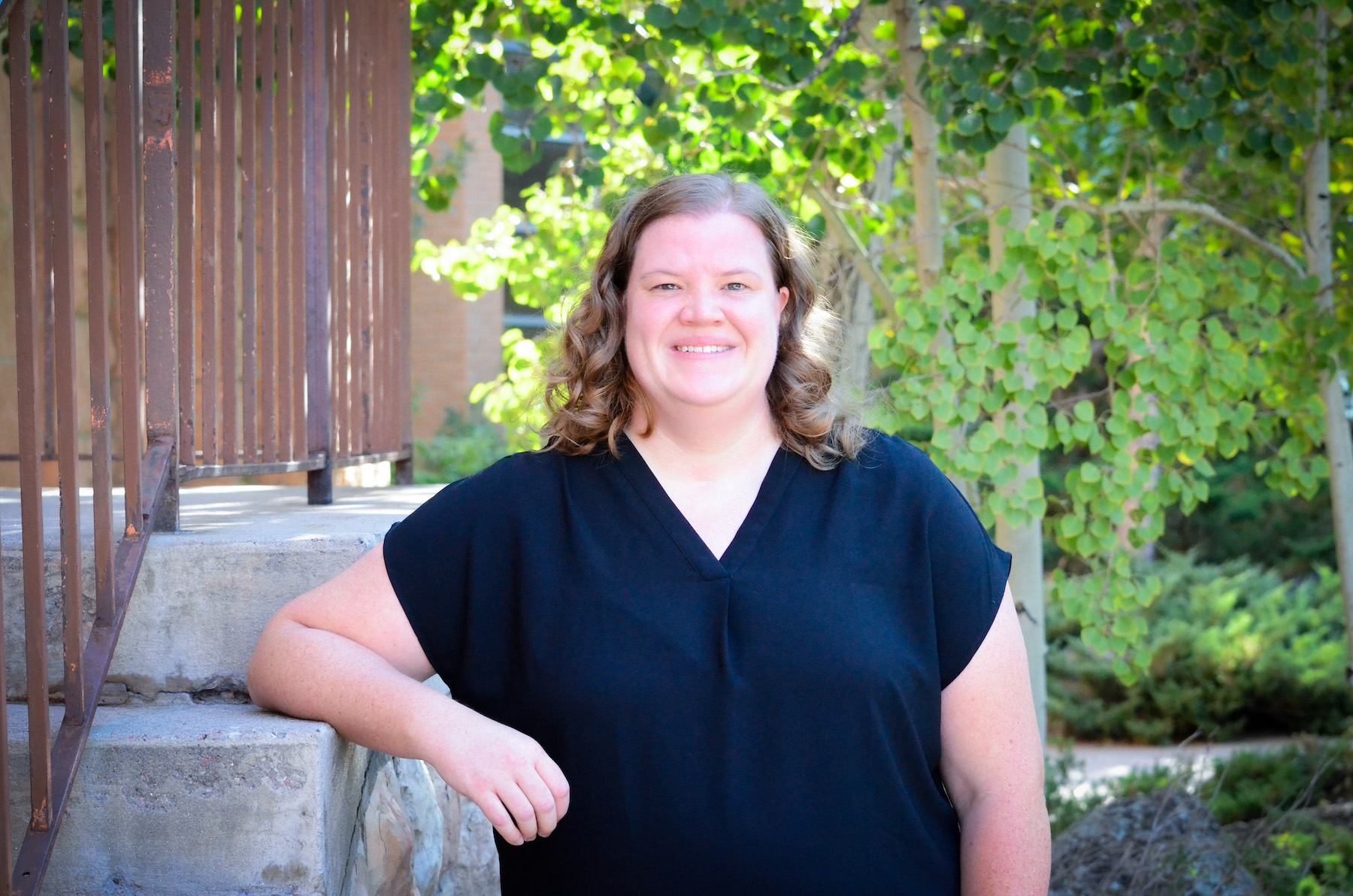


David Fay, a professor in the UW Department of Molecular Biology, has spent his career studying a tiny roundworm. Specifically, for the last decade, Fay has been studying the genes that control how the roundworm Caenorhabditis elegans molts.

As it turns out, humans have genes that are very similar to the genes that help this roundworm molt. In fact, Fay’s lab has discovered that human genes could be implanted into mutant roundworms missing some specific molting genes, and the worms could then successfully molt using the replacement human genes.
“You’re uncovering universal biology that will apply up and down the animal kingdom,” says Fay. “There’s fundamental cellular processes that are needed for molting.”
Molting genes in humans
In humans, molting-associated genes control the way that cells pass proteins and other substances from cell to cell, allowing old material to be broken down and new material to form in the right place. When growing a new fingernail, for example, many cells coordinate where the new nail ends up.
Some of these molting genes are also strongly connected to cancer. When processes controlled by these genes go wrong, cells can end up with materials they shouldn’t have, like someone ordering a hammer and receiving a drill. This could lead to the abnormal cell growth characteristic of cancer — in other words, equipped with the wrong materials, the builder might start trying to hammer in screws.
Much of the research on cancer has focused on cell division. Concentrating on the way cells move materials instead might help researchers discover new ways of detecting or preventing the disease.
Why study worms in Wyoming?
Fay chose to study C. elegans for several reasons. These worms reproduce quickly, their genome is well-understood and easy to manipulate, and the worms are transparent, making it easy to see how different experiments affect their insides.
Most people might not expect a huge medical advance to come from a sparsely populated state with just one public university. But Fay believes that scientific breakthroughs can come from anywhere, as long as the science is conducted meticulously.
That’s exactly why Fay values working at UW. The university provides valuable opportunities to students who might not otherwise have a chance to contribute to cutting-edge science. “You can make a real impact here,” says Fay.
Fay takes pride in the researchers he’s trained, some of whom have gone on to faculty positions at prestigious institutions like the National Institutes of Health, Rice University, and George Washington University.
“There’s a lot about science that feels out of your immediate control, including where the experiments take you and whether you can maintain funding to support your work in what has always been a very competitive environment,” he says. “In the end, what I have control over is training students and young researchers to do good science.”
This article was originally published in the 2024 issue of Roots & Ranges, an annual magazine published by the UW College of Agriculture, Life Sciences and Natural Resources.