

Antimicrobial resistance, in which harmful microbes become resistant to treatments like antibiotics, is a growing problem around the world. But little is known about how this constantly evolving public health threat is impacting Wyoming livestock, pets, and wildlife.
Mariela Srednik, assistant professor and veterinary bacteriologist at the Wyoming State Veterinary Laboratory (WSVL), aims to find out. She’s currently investigating the presence, prevalence, and genetics of antimicrobial-resistant bacteria in Wyoming animals, from wild and farmed bison to mountain lions, prairie dogs, and domestic cats and dogs.
Developing resistance
Antimicrobial resistance occurs when microbes develop resistance to medical treatments like antibiotics, rendering those treatments ineffective.
Resistant microbes possess “superpowers” in the form of genes that help protect them from antibiotic “warriors” sent in to attack them. Bacteria with natural or acquired resistance are selectively favored in animals and environments where antibiotics are used. Those that are susceptible to existing antibiotics are wiped out during treatment, while their non-susceptible counterparts survive and multiply.
Antimicrobial resistance can spread during bacterial replication, horizontal gene transfer between bacteria, or transmission through water, soil, and other environmental reservoirs. Over time, microbes that adapt and survive can gradually spread their traits throughout a population.
As these genes spread across populations, microbes can become resistant to multiple categories of antimicrobial drugs. In extreme cases, microbes may become pan-drug resistant, meaning that they are not susceptible to any currently available antimicrobial treatments.
When faced with invaders resistant to multiple drugs, veterinarians may find themselves with no viable antibiotic treatments for infected animals.
Monitoring susceptibility
Antimicrobial susceptibility testing, a service offered by the WSVL’s bacteriology lab, can help prevent the development of antimicrobial resistance.
In this type of testing, bacteria are isolated from a sample and exposed to a panel of different antibiotics in varying concentrations. The results can help veterinarians choose the most effective treatment and determine the lowest concentration of antibiotic needed to control the infection.
By selecting antimicrobial drugs that target a narrower range of microbes and using the proper dosage and length of treatment, veterinarians can help prevent the development of resistance. Administering a broad-spectrum antibiotic may clear up symptoms in the moment, but ultimately can accelerate the development and spread of multi-drug resistance. For this reason, Srednik urges veterinarians to request susceptibility testing from the WSVL before prescribing antibiotics.
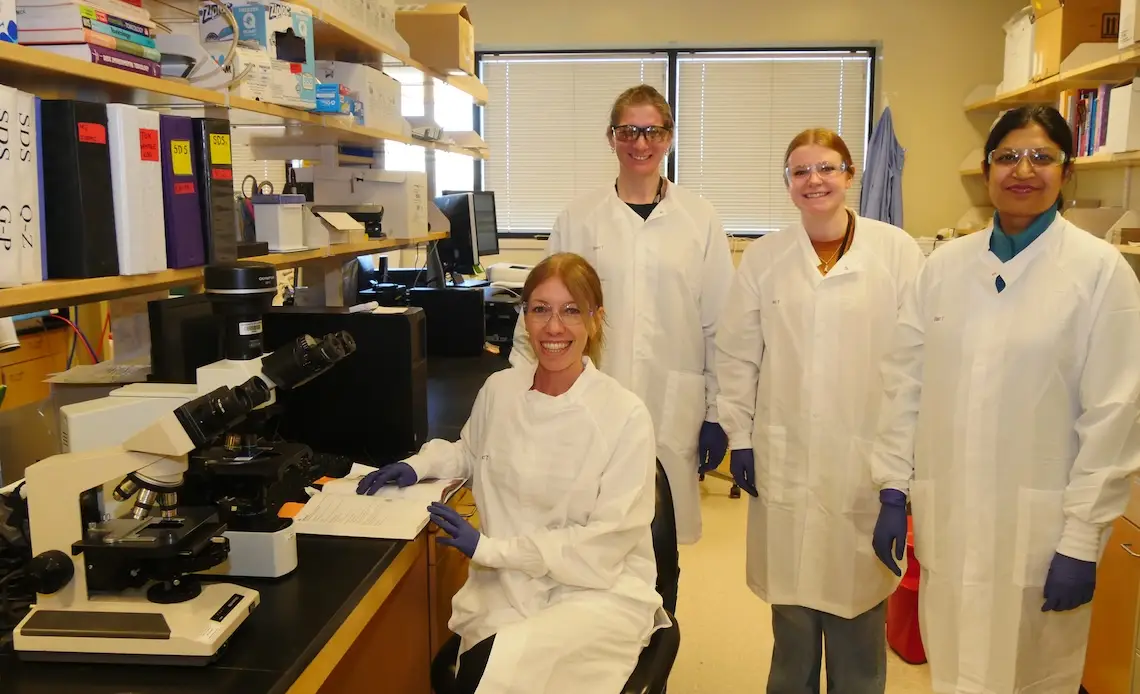
Lab technicians at the WSVL conduct antimicrobial susceptibility testing on bacteria present in samples from livestock, pets, and wildlife across Wyoming. “Our goal is to uncover how susceptible—or resistant—important bacterial pathogens are to antibiotics and monitor how resistance evolves over time,” Srednik explains.
In addition to overseeing the bacteriology diagnostic lab, Srednik is working on several research projects focused on characterizing and monitoring antimicrobial susceptibility, including in fish pathogens.
She studies a wide variety of harmful bacteria, including federally regulated microbes like Francisella tularensis, the bacterium that causes tularemia, and Yersinia pestis, which causes plague. In Wyoming, the presence and prevalence of antimicrobial resistance in these pathogens is unknown.
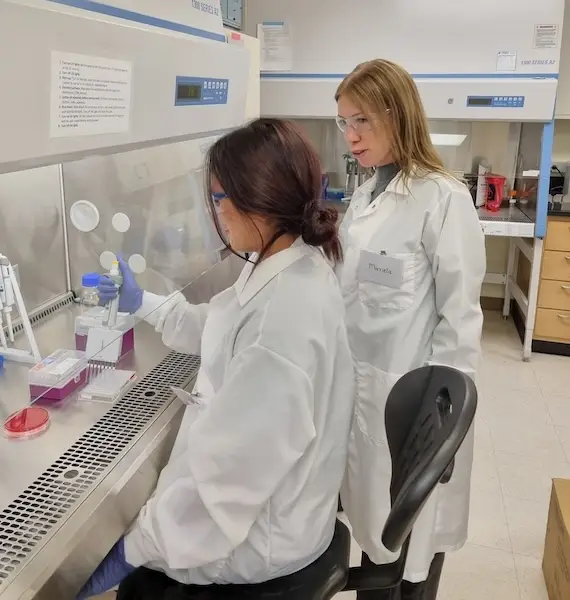
To find out, Srednik is isolating harmful bacteria from animal samples that previously tested positive for microbes like Francisella tularensis and Yersinia pestis. Once these bacteria have been successfully grown in the lab, Srednik’s team extracts their DNA and uses special software to locate genes associated with antimicrobial resistance.
Eventually, Srednik plans to compare the antimicrobial resistance genes and susceptibility test results from Wyoming samples to those from other states.
Bacteria in bison
Antimicrobial resistance typically originates and spreads in domestic animals in response to the administration of antimicrobial drugs. But resistance can also spread from domestic animals to wildlife and even humans.
Shared environments often facilitate the process, Srednik notes. For example, antimicrobial-resistant bacteria could be transferred from livestock feces to wildlife grazing in the same area or drinking from a water source downstream. Once these bacteria colonize an animal’s gut, they can be shed again in feces, allowing the resistant bacteria to continue circulating in the environment.
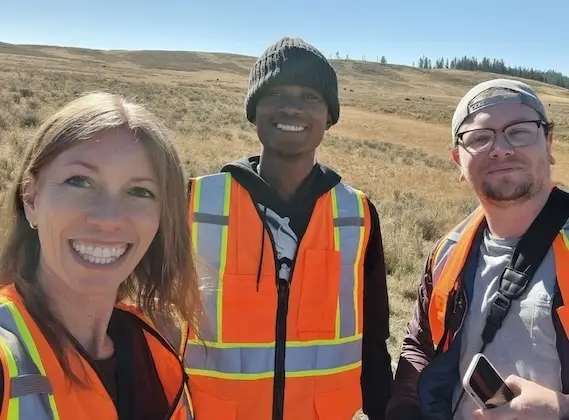
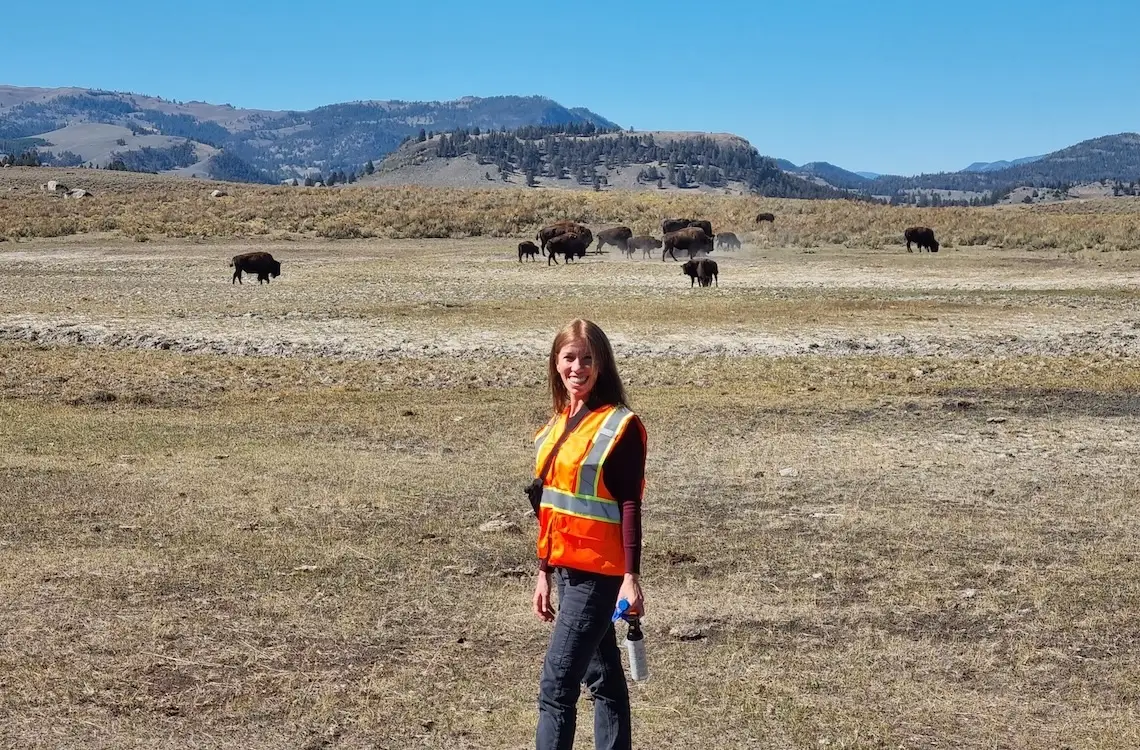
In fecal samples from wild bison in Yellowstone National Park, Srednik’s lab has already identified microbes that can be pathogenic, such as E. coli. The bacteria isolated from these samples are currently undergoing testing to determine if they are pathogenic and whether they contain antimicrobial resistance genes.
Srednik is also coordinating the collection of fecal samples from a bison farm near Laramie. Examining which microbes are present in these samples—and whether they contain antimicrobial resistance genes—allows researchers to compare how resistance develops in wildlife compared to domestic animals that have been exposed to antibiotics and vaccines.
While the study is still in progress, Srednik predicts that samples from farmed bison will have higher frequency and diversity of antimicrobial-resistant microbes and antimicrobial resistance genes than samples from wild bison.
Protecting humans and animals
There’s no magic cure for antimicrobial resistance. As new antibiotics are released, new resistant populations of microbes will inevitably crop up. But antimicrobial susceptibility testing can help veterinarians select the most effective treatment options and keep current antibiotic treatments working longer.
Srednik’s efforts to identify resistant strains of harmful microbes—and determine the scope of that resistance—will also help inform future antibiotic treatments. Ultimately, she hopes her work will help protect animal and human health in Wyoming and beyond.
“By studying both the everyday and the extraordinary microbes that live among Wyoming’s animals, we’re building a clearer picture of how resistance emerges and spreads,” she says. “This work not only protects animal health but also safeguards the people who share this land with them.”
To learn more, contact Srednik at msrednik@uwyo.edu.
This article was originally published in the 2026 issue of Reflections, the annual research magazine published by the UW College of Agriculture, Life Sciences and Natural Resources.