
Originally from Minnesota, UW Extension educator Peyton Loss moved to Wyoming to study water resource economics in the West.
With a background in agricultural business and soil science, she was excited to conduct community-centered water research as a graduate student in the Department of Agricultural and Applied Economics.
Locally relevant research
Under the mentorship of Associate Professor Kristi Hansen, Loss examined how changes in water availability could affect forage production and profitability for Wyoming cattle ranches.
Specifically, she created models predicting how changes in temperature and precipitation could affect rangeland forage production in the Bighorn Basin—and how ranchers might adapt management practices to meet those challenges.
Loss also used existing models to investigate how these variables might affect hay production, another driver of management decisions.
But first, she interviewed 14 ranchers in Hot Springs County.
For Loss, research isn’t just about the numbers. It’s about addressing community needs and answering questions with local relevance. Before developing models, she wanted to better understand local production calendars, forage needs, and concerns about water availability.
Ultimately, Loss compared how cow-calf and cow-calf-yearling operations might adapt to possible changes in water and forage availability in 15 different scenarios.
Her results indicated that cow-calf-yearling operations, which can more easily adjust herd size and composition, were more profitable and had more flexibility in adapting to reduced water availability. These operations were more resilient to changes in forage production and price cycle dynamics.
Loss also found that hay production varied significantly in response to changes water availability. In hotter, drier scenarios, hay production declined steeply.
“This reflects a need at the ranch and policy level for more flexible management,” Loss notes. “At the ranch level, if you can be more flexible, that’s great because you’re reducing your risk to some of these unknowns. At the policy level, if we’re expecting the timing of resource production to shift, we might need more flexible, responsive policies for responding to what’s available when it’s available.”
Learning through listening
Through her research, Loss connected with Eastern Shoshone and Northern Arapaho water leaders. Although she couldn’t access data collected on tribal land, Loss wanted to ensure that her research incorporated water management concerns in the Wind River community.
To get started, she and Callie Surber, a fellow graduate student working on a qualitative interview-based study in the same region, reached out to the Wind River Water Resources Control Board.
Board members introduced the UW students to the Wind River Water Code and explained how tribal water management is informed by factors like stream flow and conservation impacts, not just agricultural production.
“We also learned how important it is that there is reciprocity between researchers and the communities they’re serving,” Loss notes.
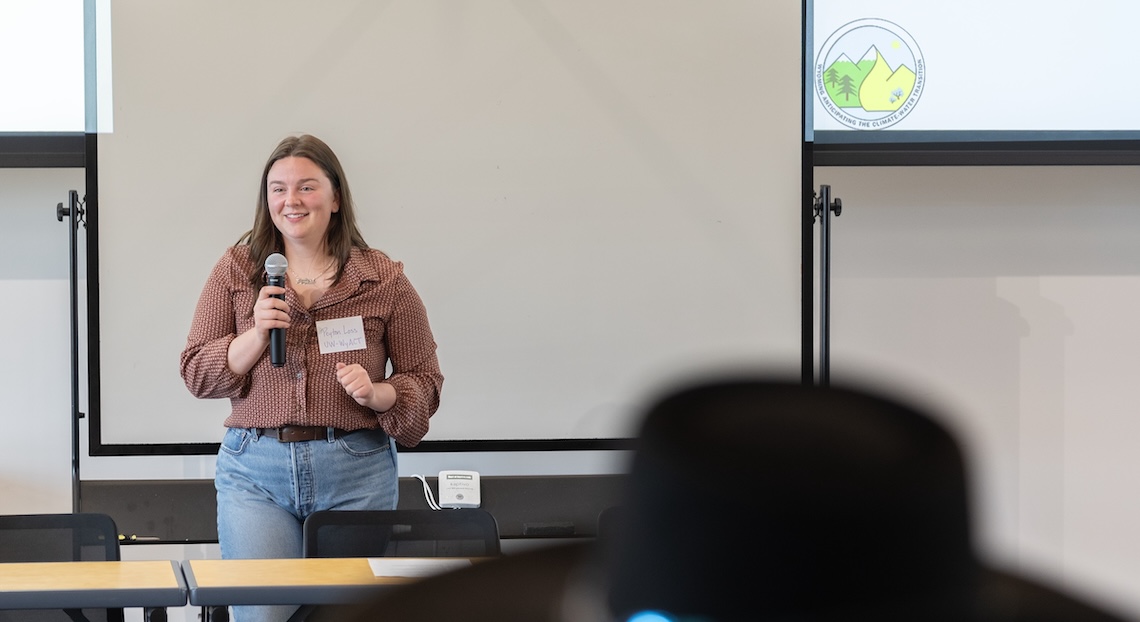
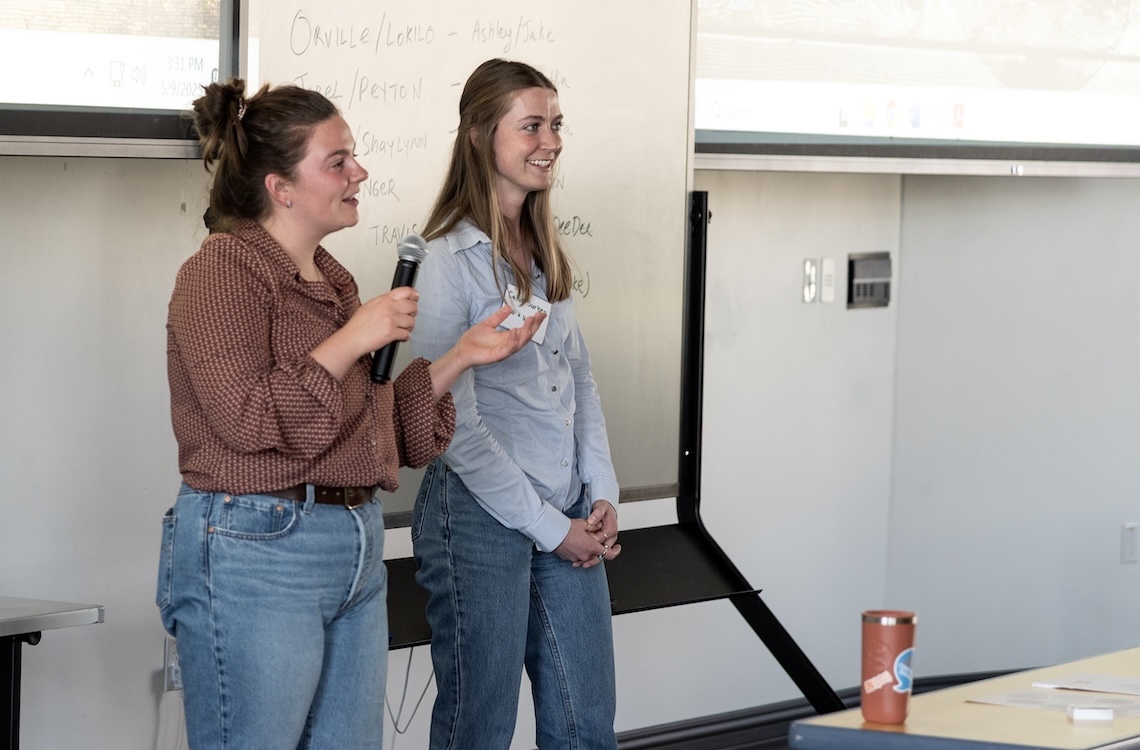
Inspired by conversations with community leaders, she and Surber partnered with a tribal steering committee to organize a symposium focused on the Wind River Water Code and Wind River Agricultural Resource Management Plan.
“They helped inform the questions we might be asking, and they mentored Callie and me…including through the proper social customs,” Loss comments. “They were really integral to our success. When it came time to advertise, we didn’t have any bigger champions.”
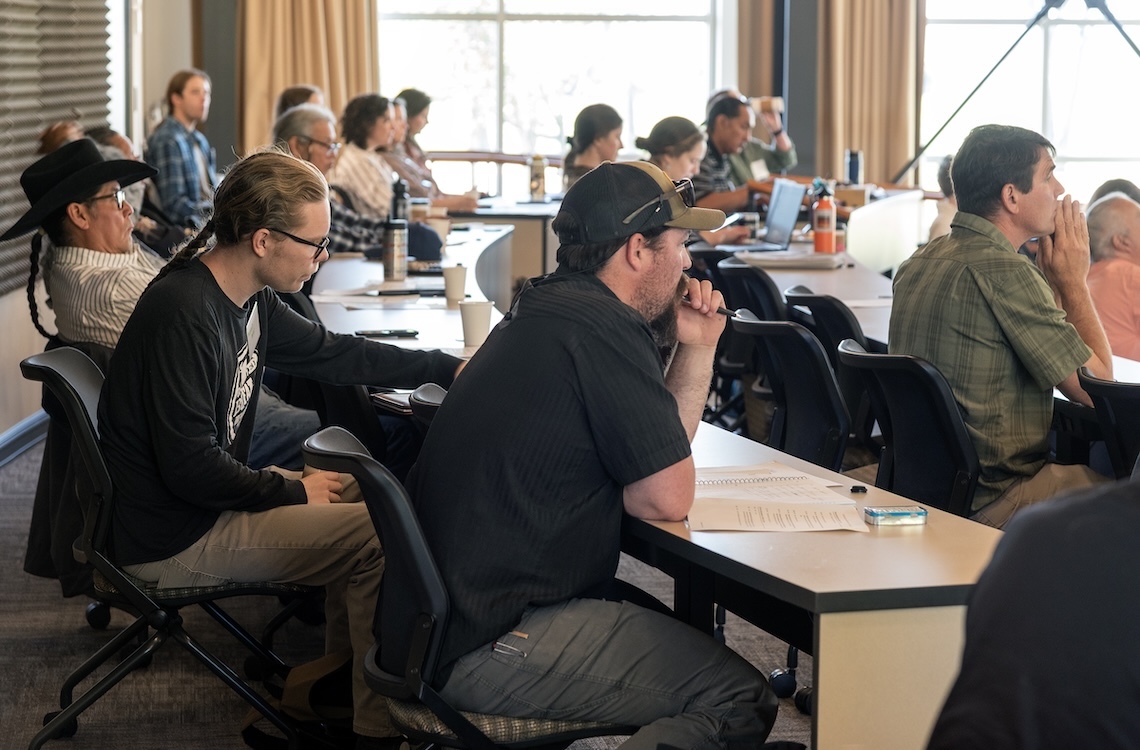
The event brought together tribal leaders, UW students and faculty, local ranchers, and other stakeholders for a day of community conversation focused on how water was used in the past, how it is used in the present, and how it might be used in the future.
Responding to community needs
Post-graduation, Loss accepted a position as a UW Extension educator on the Wind River Indian Reservation. Through this role, she’s finding new ways to engage with the Wind River community.
Unlike most county extension educators, Loss is responsible for both 4-H programming and agricultural and natural resource education.
Fulfilling both roles has required creativity and a willingness to adapt to community needs, she notes. For example, she might retool a soil-sampling workshop to include a youth component so that both parents and children can participate.
“This position offers a unique opportunity to work across generations and disciplines and to build upon ongoing work in the region,” Loss comments. “I am committed to listening first, showing up consistently, and ensuring that extension programs reflect the knowledge, goals, and lived experiences of the communities they serve.”
On a given day, you might find Loss helping implement an air-quality monitoring program, hosting a wildfire preparedness webinar—or even coaching soccer for local youth programs.
Rather than attempting to impose extension programs developed for other communities, she says, “I’ve done a lot of listening and letting tribal organizations lead the way. It’s not about being the face of anything, it’s about being here as a good community partner to support what is already going on.”
Ultimately, that’s her goal as an extension educator: to be there, whether it’s supporting student-athletes, helping community members prepare for wildfire, or facilitating conversations about water management.
This article was originally published in the 2026 issue of Roots & Ranges, an annual magazine published by the UW College of Agriculture, Life Sciences and Natural Resources.