

For thousands of years, Shoshone people traveled across the West every year, hunting and gathering along the way.
Ancestral Shoshone diets relied on resource management, understanding seasonal food cycles, and hunting and gathering practices rooted in reciprocity and relationality. As colonial governments restricted Shoshone people to a tiny fraction of their ancestral homelands, native peoples were forced to adapt to foods like flour, sugar, or canned meats.
Today, many families rely on the Food Distribution Program on Indian Reservations (FDPIR), also known as commodities, as well as monthly mobile food distributions from food banks. The majority of these items are nonperishable, highly processed, and have a long shelf life, while perishable options are limited.
In 2020, a grassroots group called the Restoring Shoshone Ancestral Food Gathering (RSAFG) spearheaded a community-based research study that collected data about how eating traditional Shoshone foods impacted the health and wellness of Shoshone participants.
Jill Keith, associate professor of human nutrition and food, worked with the group to design the study, secure grant funding, gather food, and analyze data.
“Intuitively, people from the community know that an indigenous diet is healthier than a Western diet,” says Keith. “But having that data helps with getting funding, pulling together information about culturally relevant foods, and reclaiming that knowledge.”
"Intuitively, people from the community know that an indigenous diet is healthier than a Western diet. But having that data helps with getting funding, pulling together information about culturally relevant foods, and reclaiming that knowledge."
Jill Keith
Seasons to scout, gather, process
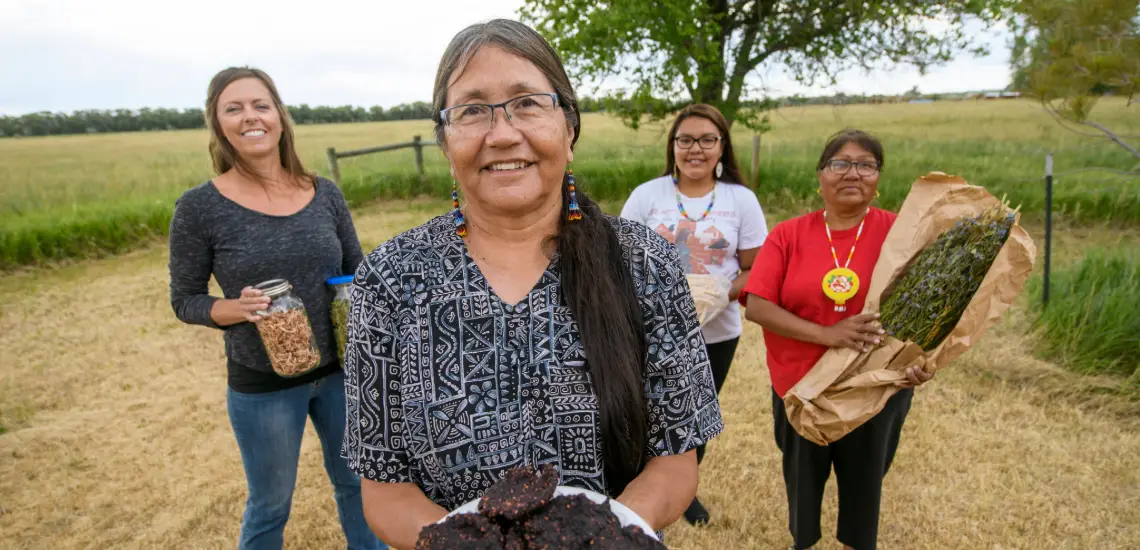
RSAFG members began preparing for the study in 2019. Using traditional methods, they gathered foods on the Wind River Indian Reservation and as far afield as the Grand Tetons and the Red Desert.
“We had different people who knew these different aspects of collecting the plants properly,” says John Mionczynski, a founding member of the RSAFG. “It was a group effort to gather these foods in a way close to the way Shoshone elders did hundreds of years ago.”
Mionczynski is not Shoshone but is familiar with ancestral Shoshone foods because of his long-standing personal interest in wild foods and career as a wildlife biologist. He helped the group find and identify certain plants.
Gathering and preparing food for the winter took many months, and the group supplemented gathered foods by buying some foods, like bison meat.
Most members of the RSAFG are Shoshone. Some of the RSAFG members who helped gather foods were also participants in the study, eating a 50% traditional Shoshone diet for a month.
Planning traditional menus
The study aimed to create a traditional Shoshone menu that provided half of participants’ total caloric intake for a month.
During the first month of the study, 10 of the 19 participants ate a 50% traditional Shoshone diet, while the other half of the group ate what they would normally eat. Then, during the next month, the other 9 participants switched to the 50% Shoshone diet and the first group returned to their normal diet. All participants kept a food diary tracking what they were eating.
Each week, those eating the traditional Shoshone diet received bags of Shoshone foods gathered, processed, and preserved by the RSAFG. They also received daily menus and recipes that described several ways to prepare ingredients. Each menu was designed to provide a certain number of servings of grains, proteins, and other nutrients.
At the beginning of the study and at the end of each month, UW researchers helped collect data like height, weight, waist circumference, body mass index (BMI), blood pressure, and levels of cholesterol and blood sugar from all 19 participants.
Participants also filled out a survey that assessed their feelings of wellness and cultural connectedness.
Interrupted by the pandemic
The study took place from January through March of 2020. The group was able to collect data at the beginning of the study and after the first month, but could not collect data after the second month due to COVID-19 restrictions.
Researchers asked participants to mail in certain data, like waist circumference and the survey about cultural connectedness and mental wellness, but were not able to conduct the final blood draw. “We definitely lost a pretty significant chunk of data that people were really interested in,” says Keith. “People that were following the diet wanted to know, ‘What happened to my blood glucose?’ They wanted to see if it made a difference.”
Based on the data they did have, the researchers found that there were positive trends in all areas measured. On average, participants had lower cholesterol and lower BMIs, and felt more resilient and more connected to their culture. However, the study did not find statistically significant results in any of the factors it measured. The positive trends could be a result of chance.
Getting to know Shoshone foods
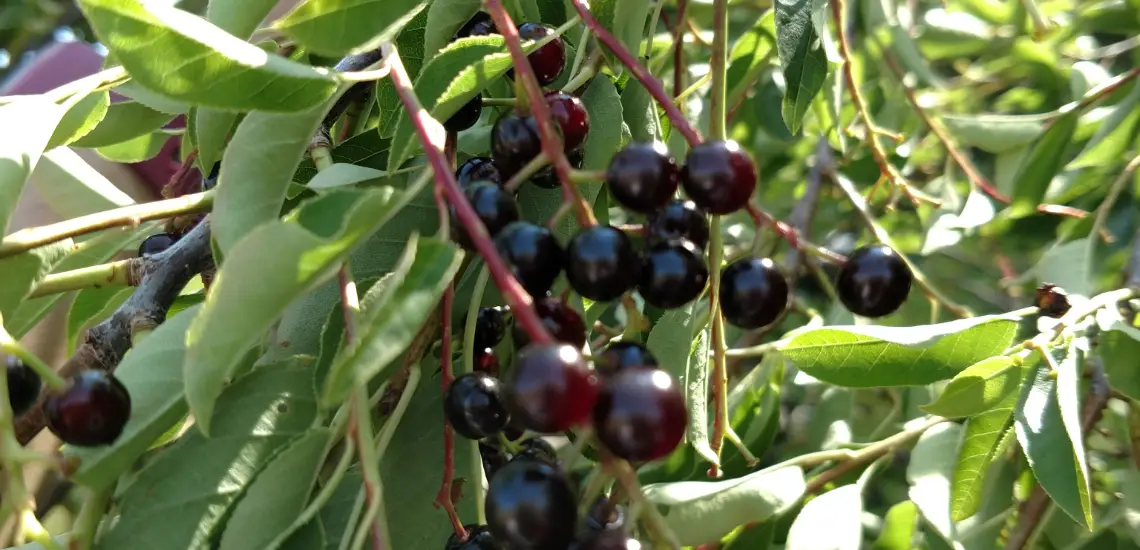
Chokecherries are a staple of ancestral Shoshone diets. They are eaten fresh, used as tea, and dried into patties that provide nutrients and flavor throughout the winter. Chokecherries are very high in antioxidants and have been found to lower blood pressure.
Biscuitroot is a plant related to carrots with a root that can be dried and ground down into flour. The Shoshone traditionally used a mano and metate, stone tools somewhat like a mortar and pestle, to grind roots. During this study, the group ground some of the flour using a mano and metate.
Juniper, pine, and Douglas-fir needles make teas that are a good source of vitamin C.
Limber pines don’t drop their cones every year, but when they do, they drop cones en masse. In 2019, the RSAFG gathered hundreds of pinecones and then harvested the pine nuts by hand.
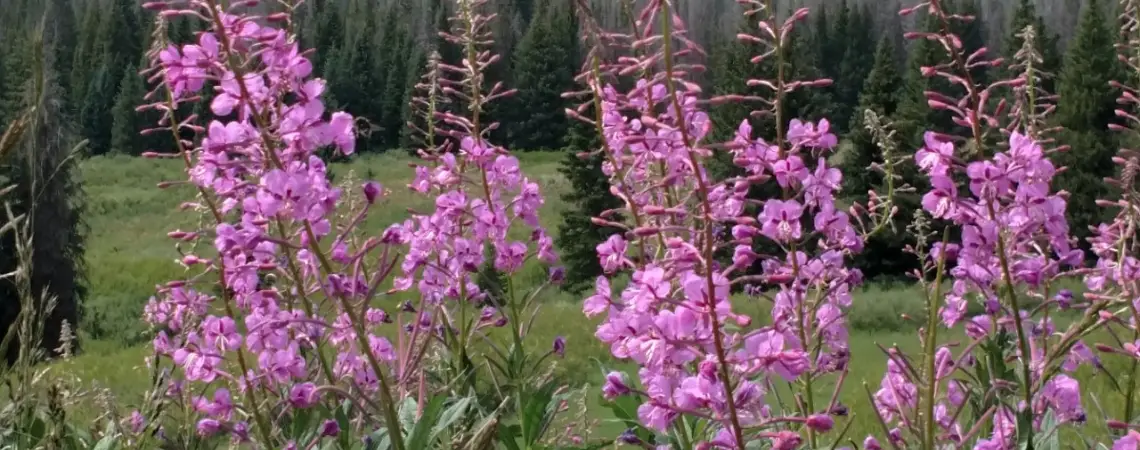
Other foods that participants consumed during this study included hawthorn berries, huckleberries, bitterroot, camas root, cattail, fireweed, sego lily bulbs, wild mint, wild onions, rose hips, yampah root, buffalo, deer, elk, and salmon.
Food as medicine
Though the RSAFG did not find statistically significant evidence that eating a Shoshone diet is healthier than a Western diet, the study allowed the group to restore and spread knowledge of how to gather foods in a traditional way. The study also enacted Shoshone treaty rights to use their ancestral lands and gather ancestral foods.
The process had a major impact on participants. Denyse Ute, a participant in the study who is now a member of the RSAFG, commented that participants “felt more connected to culture, which is inseparable to the land. We became more familiar with traditional foods and different ways to prepare and use them, gained a greater understanding of roots, herbs, wild vegetables, and game meats, and strengthened our relationships to ancestral knowledge and the land.”
The 2020 study is part of a food sovereignty movement led by native people across the U.S. and Canada. As part of this movement, the RSAFG will continue to promote access to traditional foods and medicines in a variety of creative ways. These efforts include showcasing Shoshone ancestral foods at intertribal conferences, putting together recipe books, growing some native foods closer to home, or even conducting other studies about the benefits of certain traditional foods.
This article was originally published in the 2025 issue of Reflections, the annual research magazine published by the UW College of Agriculture, Life Sciences and Natural Resources.