
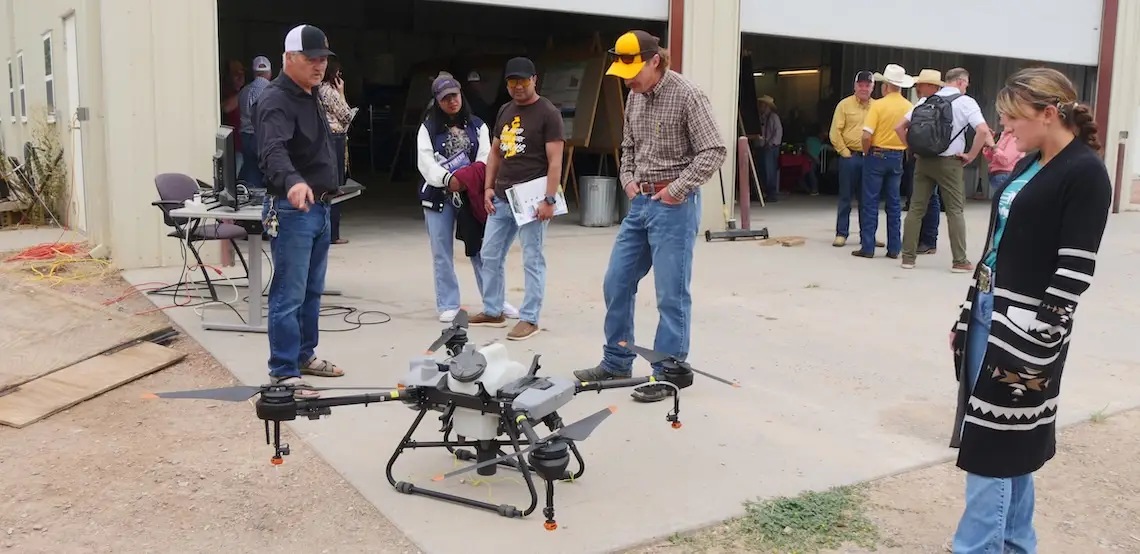
The National Science Foundation (NSF) Great Plains I-Corps Hub, of which the University of Wyoming is a partner, is recruiting teams for a special entrepreneurship training cohort focused on agriculture-related technologies.
The cohort, dubbed Ag45, is open to individuals and teams developing agriculture-related technologies who want to better understand their path to market. The Hub lead, North Dakota State University (NDSU), is positioned at the center of North Dakota’s agricultural landscape and plays a critical role in advancing research, education, and industry collaboration.
The seven-session program—scheduled Aug. 13-Sept. 24—is designed to help teams that are developing agriculture or ag-related technologies to validate their ideas and build a strong foundation for commercialization. Each session will take place virtually 9 a.m.-noon MT.
“Ag45 gives UW faculty members, students, and other Wyoming innovators an opportunity to learn how to move an agriculture-focused technology from a concept or lab toward real-world impact,” says Erica Belmont, a UW associate professor of mechanical engineering and faculty lead for UW in the Hub. “Participants will interact directly with producers and other industry stakeholders to better understand market needs, validate their ideas, and build connections across the agricultural ecosystem. Whether someone is just beginning to explore commercialization or is already developing a technology, this program will provide valuable entrepreneurship training.”
During the training, participants will:
- Conduct customer discovery interviews: Participants will talk to farmers, industry leaders, and stakeholders across the agricultural ecosystem to test their assumptions and validate their ideas.
- Participate in workshops and office hours: Learn a proven framework for customer discovery and learn startup methodologies with expert guidance.
- Engage with stakeholders: Connect with potential customers, industry leaders, and stakeholders across the agricultural system.
Course benefits include exploring pathways to startup launch; evaluating the potential of research discoveries or technologies; discovering the societal impact of innovations as usable technologies; enhancing research proposals for securing funding; building your network; and obtaining eligibility to apply for a $50,000 grant from the National NSF I-Corps team grant.
In-person panels and lectures are scheduled Tuesday-Friday, Sept. 15-18, in Fargo, N.D. Participants will attend the Big Iron Farm and Construction Show and Grand Farm’s Autonomous Nation Conference, offering direct exposure to cutting-edge advancements shaping the future of agriculture.
To apply, go here. The deadline to apply is Monday, July 13.
For more information, go to the website at https://gp-icorps.org/events/ag45/ or email Belmont at ebelmont@uwyo.edu.
This story was originally published on UW News.
About the NSF Great Plains I-Corps Hub
The Great Plains I-Corps Hub provides immersive, entrepreneurial training for scientists and engineers with the goal of moving ideas to commercialization. NSF I-Corps are currently organized into regional hubs across the nation, with each hub consisting of a lead institution and seven or more partner institutions. North Dakota State University (NDSU) serves as the lead institution for the Great Plains Hub, which is located at NDSU’s Research and Technology Park.