
For thousands of years, humans have been breeding plants to help feed their families. Nowadays, this ancient profession uses genetic engineering and other modern tools to modify crops—but at its heart, plant breeding is still about feeding communities.
In 2018, the National Association of Plant Breeders (NAPB) created the Borlaug Scholarship Program to support and mentor promising plant breeders. Every year, the scholarship is awarded to about 25 college students who demonstrate exceptional character, scientific achievements, and leadership.
In 2025, Grace Vinarao, a doctoral candidate in the plant sciences department, became the first UW student to win the prestigious award.
Why plant breeding?
Vinarao grew up in the Philippines, where her parents farmed and sold produce at the local market. Vinarao woke up at 5 a.m. some days to begin harvesting with her father and then trekked to the market by 7 a.m. to help her mother run their booth.
Vinarao credits her upbringing with her interest in plant breeding. “Up to this day, [my father] still grows herbicide-tolerant hybrid corn, which gives good yield and helps control weeds, and so do many other farmers in my community,” she says. “That’s a result of crop improvement, and I have seen its impact firsthand. It made a big difference not only to my family but also to many families just like mine globally.”
Vinarao chose to attend UW in part because of Donna Harris, assistant professor of plant breeding and genetics, whose career has included work with the University of Georgia, Monsanto, and Bayer—huge names in the plant breeding world.
At UW, Vinarao’s hard work, generosity, and scientific expertise quickly won over the whole Department of Plant Sciences, especially Harris.
“Grace is a team player, but she’s also a natural leader. We hire quite a few interns in the summer, and throughout the season they gravitate towards her when I’m not around to figure out what to do,” says Harris. “I’m just so happy to have her in my lab.”
International recognition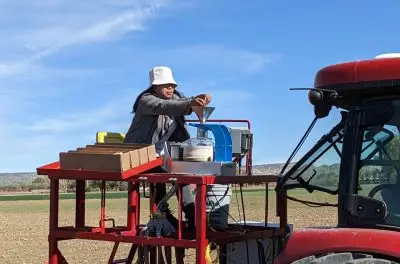
The Borlaug Scholarship Program pairs scholars with experienced plant breeders who serve as mentors. Vinarao’s mentor, Caio Vieira, is a soybean breeder at the University of Arkansas. This year, Vieira will meet with Vinarao once a month to provide feedback on her research and help her navigate potential career choices.
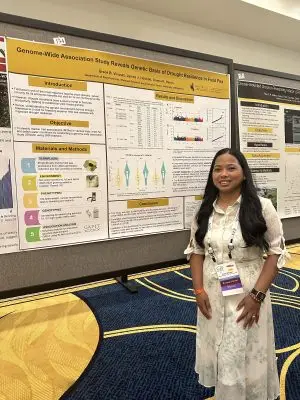
The scholarship also supports a visit to the annual meeting of the NAPB. In May 2025, Vinarao visited Kona, Hawaii, to network, learn about new plant breeding techniques and trends, and hear from other plant breeders.
“Just having that recognition among plant breeders, basically globally, is going to be very advantageous to her moving forward and whatever she wants to do for her career,” says Harris.
Field peas and cassava
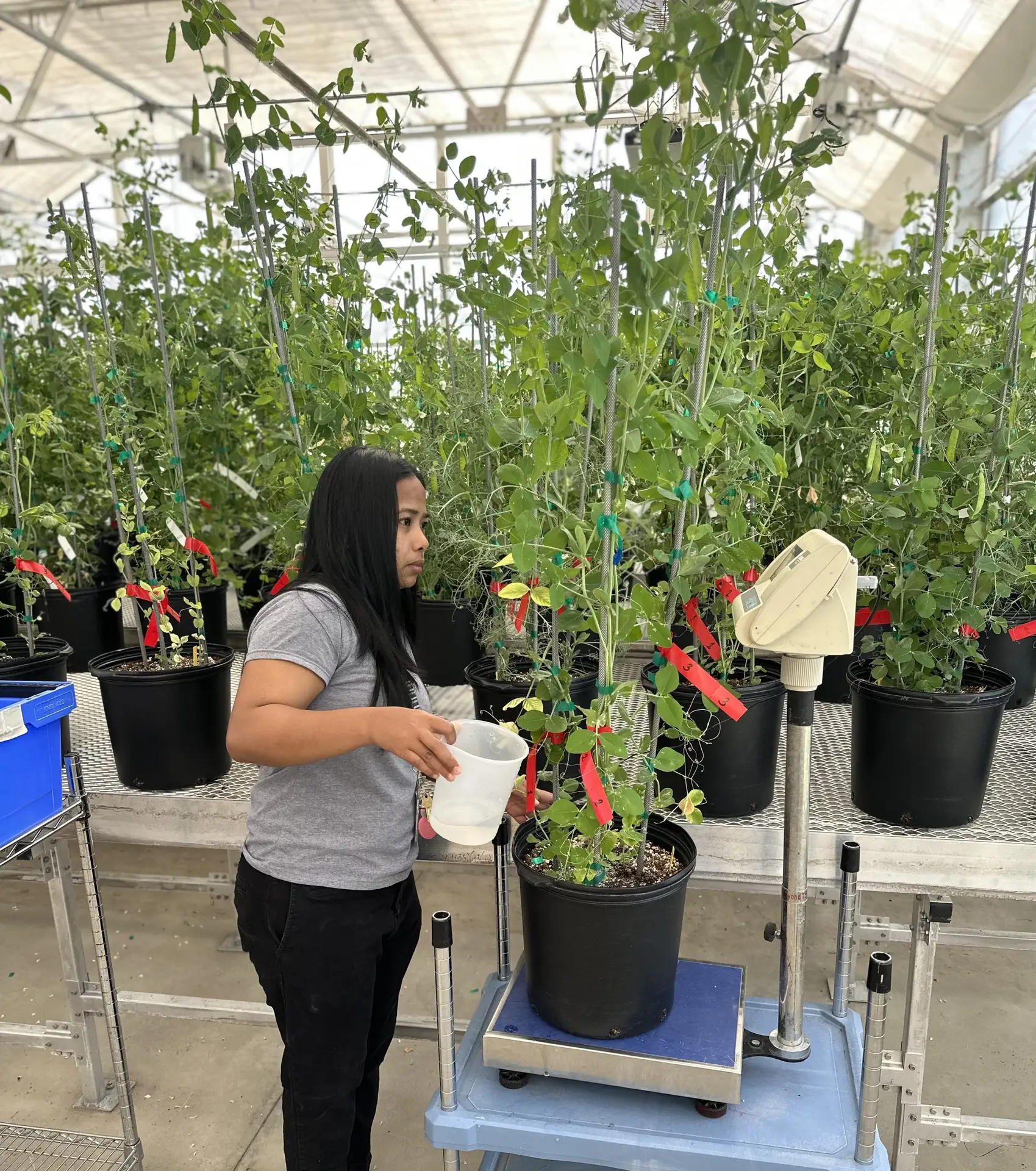
At UW, Vinarao is studying drought resistance in field peas and the genetics of prairie junegrass, which may be useful for reclamation work. During her master’s and work experience at University of the Philippines Los Baños, she studied cassava, yam, and sweet potatoes.
Vinarao is flexible about the crops she studies, where she lives, and even whether she’s working in industry or academia—as long as she’s helping people.
“[Plant breeding] gives farmers better options, helps them deal with drought and other problems, and supports food security,” says Vinarao. “For me, it’s a tool to survive and to face climate change. It’s about making life better around the world.”
This article was originally published in the 2025 issue of Roots & Ranges, an annual magazine published by the UW College of Agriculture, Life Sciences and Natural Resources.