
The Wyoming Wool Initiative, in partnership with the University of Wyoming College of Agriculture, Life Sciences and Natural Resources, is now accepting applications for its 2025–2026 Lamb-a-Year program.
This flagship program, now in its fourth year, offers UW students valuable industry experience and provides regional sheep producers with individualized lamb quality data.
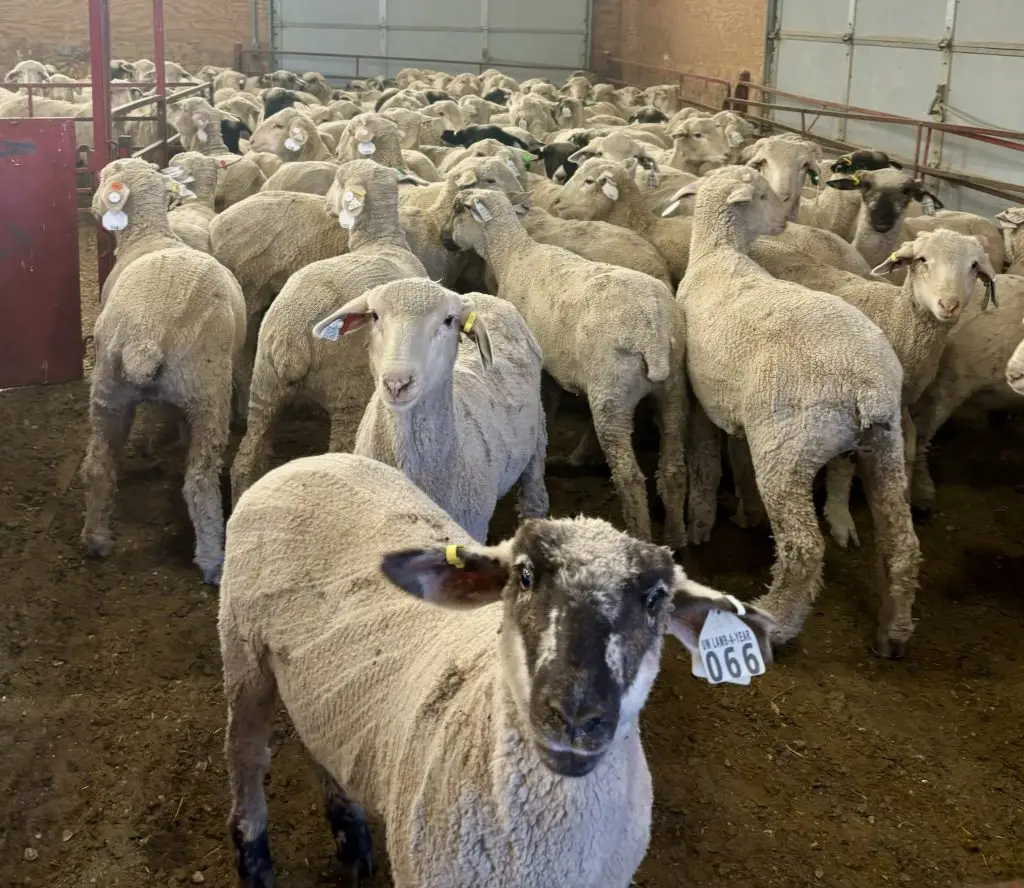
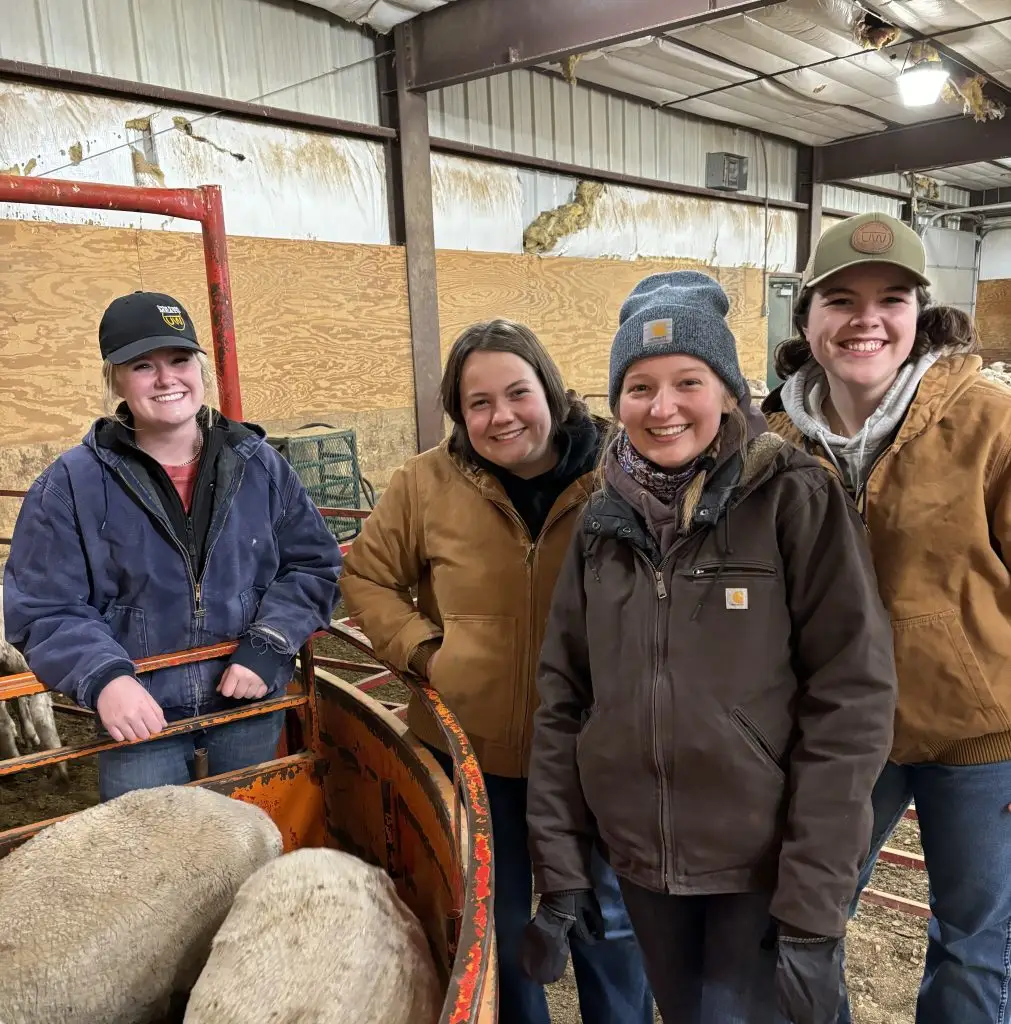
“Lamb-a-Year is a value discovery program where producers donate lambs, we feed out those lambs here at the Laramie Research and Extension Center, collect performance and meat quality information, and give that information back to producers,” says Whit Stewart, UW Extension sheep specialist. “Lamb-a-Year is an investment in the sheep industry in the state of Wyoming.”
Participating producers are asked to donate feeder lambs of 70–90 pounds. The Wyoming Wool Initiative will coordinate with donors to arrange drop-off and pick-up locations this fall, with all lambs delivered to the Laramie Research and Extension Center at the beginning of October.
In order to receive meaningful results, donors are encouraged to enter at least two lambs into the test, which begins in mid-October and runs through February 2026.
In 2024, 26 producers donated a total of 125 lambs to the program.
“Some producers have shared data from Lamb-a-Year with potential buyers as a means of marketing the genetic potential of their lambs,” Stewart notes. “Others have used the lamb quality information to better understand the optimal finishing weight of their lambs.”
Lamb sales help support educational programming for students and producers, workshops at the annual Wyoming Sheep and Wool Festival, UW meat science curriculum, lamb quality research, and more. Producers receive a tax-deductible charitable gift receipt based on the market value of their lambs.
A total of more than 150 youth and university students from UW and other institutions benefited from educational opportunities related to the 2024-2025 Lamb-a-Year program, the Wyoming Wool Initiative reports.
“Lamb-a-Year funds enhance our ability to deliver curriculum in a unique way,” says Stewart. “I think that’s when we’re doing things right, [when] we’re getting students out of the classroom.”
To learn more about the Lamb-a-Year program and its impact on students, visit https://bit.ly/lay-impact.
For those interested in donating lambs, visit https://bit.ly/lay-2025 and fill out the online form by Sept. 30, 2025.
The Wool Initiative also accepts financial contributions and in-kind donations, such as feed, to support the Lamb-a-Year program. Visit https://bit.ly/lay-2025 to make a donation.
Contact the Wyoming Wool Initiative at lstewar9@uwyo.edu with questions.