


Snakes are out and that means interaction with livestock is bound to happen. For the most part, rattlesnake bites are not very common in livestock and are rarely fatal for large animals.
In Crook County, prairie rattlesnakes are our lone venomous snake, which is fortunate. Their bite is painful at the very least and deadly at worst, but it only injects a cytotoxin which is toxic to cells. Snakes like water moccasins, coral snakes, or copperheads have a neurotoxin that affects the nervous system, and their bites are more life-threatening in animals.
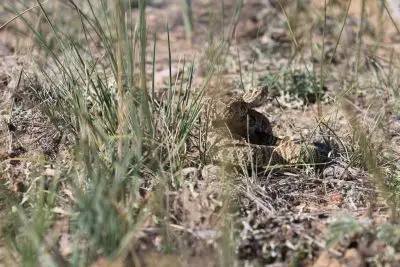
Rattlesnake bites vary in degree of seriousness. A dry bite contains no venom but may still involve puncture wounds. Next most severe is the defensive bite, most commonly seen in large dogs and livestock. Venom is released, but most likely a smaller dose than in an aggressive bite. The aggressive bite is intended to kill prey the snake can eat, mostly seen in rodents and the occasional small dog.
Most large livestock will be bitten on the legs or face. The toxins of a rattlesnake bite don’t often kill livestock, but infection at the bite site from bacteria in the snake’s mouth can cause severe complications. Signs of a rattlesnake bite include swelling, discoloration, or blood oozing from the bite. The animal may become lethargic or have black or sloughing skin at the point of penetration. Another complication of snakebite on the face, especially in horses, is swelling of the nostrils, blocking air passages.
If you see an animal get bitten, or suspect snakebite, it is best to get the animal to the vet for treatment. However, in rural areas, the distance to town often hampers getting immediate or even timely help for livestock. If you observe a horse with extreme swelling in the face and nostrils and don’t think you can get to a veterinarian before more damage is done, it is recommended to use a short piece of garden hose or a large syringe center and carefully insert it into the nostrils to keep the airways open. Administering an anti-inflammatory is also recommended.
Cattle that experience snakebite are much more resilient than horses. However, venom can trigger abortion depending on the cow’s reaction to the venom and how much is injected. Nothing can be done to stop or prevent the abortion from happening if it is induced.
With all livestock, it is best to check with your veterinarian and get an antibiotic to help prevent infection at the bite. Dexamethasone had been a popular treatment of snakebite previously, but has now been found to slow healing time. A non-steroid medicine is preferred to help with swelling.
Sheep and swine are also the occasional victim of snakebites. Like the larger animals, infection at the bite site is the most worrying part. An interesting fact is that sheep blood, along with horse, is often used in anti-venom manufacturing as it produces antibodies to the venom. This factor does not make them immune to snakebite, but it does offer a level of protection against severe reactions. Pigs have a layer of fat and hard skin that protects them from deep punctures for the most part.
Anti-venom is available for severe rattlesnake bites. However, the treatment comes with a hefty price tag. The vials are stored in the freezer and labeled for cats, dogs, and horses. A dose runs close to $500, and large animals may require more than one dose. Previously, a vaccine was available for dogs and horses that helped minimize symptoms if a bite did occur. However, the vaccine is no longer available.
While snake and livestock encounters are bound to happen, they don’t necessarily result in death and can be managed. It is important for producers and owners to be watchful of indications of snake bite and know how to respond appropriately if a bite is suspected.
Sara Fleenor is the agriculture and natural resources educator with University of Wyoming Extension serving Crook County. She can be reached at sfleenor@uwyo.edu or (307) 283-1192.