
For those interested in learning how to safely preserve food at home, a University of Wyoming Extension educator will help teach an online course in collaboration with the University of Idaho Extension.
The six-week course, titled “Preserve@Home,” is organized by Idaho extension educators. It is offered annually.
This year, the course runs from Jan. 16, 2025, through Feb. 27, 2025. Real-time discussions occur every Thursday at 1 p.m. Mountain time.
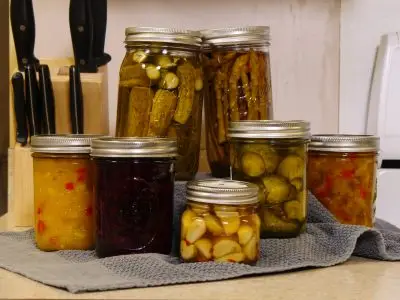
Food preservation can help consumers reduce food waste, create high-quality food products, and gain more control over food additives, such as salt or sugar.
The Preserve@Home course presents one lesson each week. Topics are foodborne illnesses; spoilage and canning basics; canning acidic food using a boiling water bath; canning low-acid foods with a pressure canner; canning specialty foods, such as jellies, salsas or fermented foods; and drying and freezing foods.
The course teaches current research-based food safety practices that may be relevant to participants of all experience levels.
“Not all of the practices on the internet are safe for consumers,” says Vicki Hayman, a course instructor and UW Extension community vitality and health educator. “We’re teaching current USDA [U.S. Department of Agriculture] guidelines — properly preserving food, whether it’s canning, freezing, or drying.”
For each lesson, class members read assigned materials, respond to a discussion board prompt, and take a quiz on the lesson topic. Weekly real-time Zoom sessions allow participants to discuss lessons and other food preservation questions with instructors. All meetings are recorded and made available to participants during the six-week course.
The course also provides supplementary information about other subjects, including canning at high altitudes, using root cellars to store food, and the nutritional value of preserved foods.
Preserve@Home is a non-credit course and cannot be taken for college credit, but participants have the opportunity to earn a certificate of completion.
Registration for the course costs $35 and closes on Monday, Jan. 13. Registration can be completed online at https://bit.ly/register-preserve.
For more information, contact Hayman at vhayman@uwyo.edu or (307) 746-3531.