

For those interested in learning how to build a geodesic dome greenhouse, the University of Wyoming Extension will offer a free four-day class in Chugwater starting Monday, Oct. 7.
Geodesic domes are a great option for Wyoming residents looking to extend the growing season and shelter their crops from snow, hail, and wind, says UW Extension specialist Jeff Edwards, who leads dome construction schools across the state. These hands-on events are designed for individuals who would like to build their own dome from scratch—or who just want to learn something new.
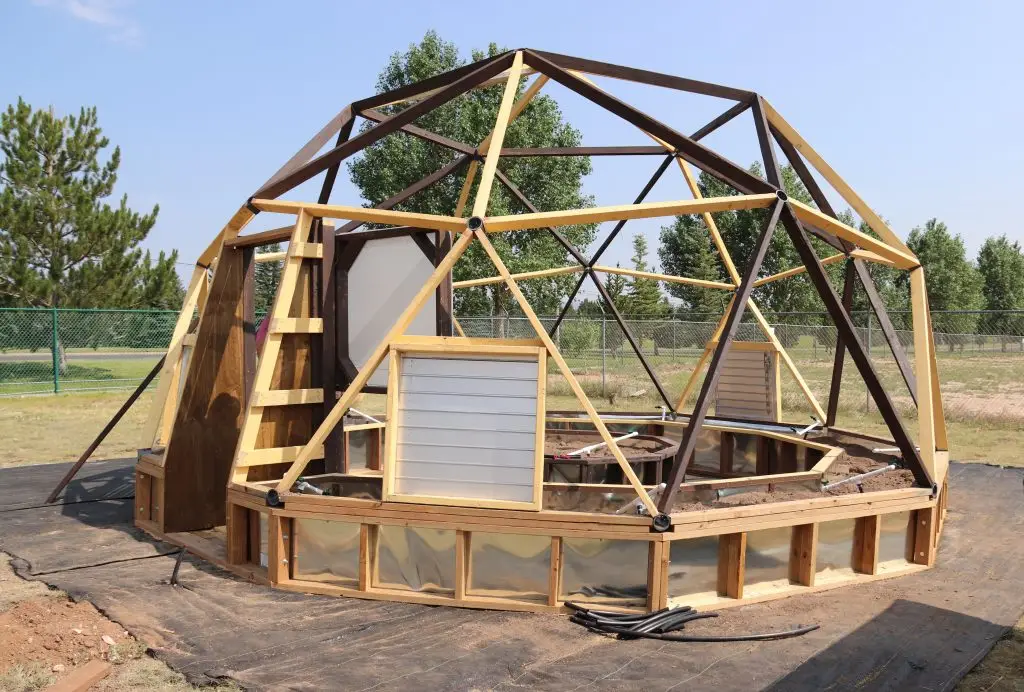
UW Extension geodome schools cover each step of the construction process, from raw materials to a completed 22-foot structure outfitted with raised beds and an irrigation system. “You will learn all aspects of building a dome, including the safe use of tools, jigs, and the fabrication of parts and pieces,” says Edwards.
The upcoming geodome school will be held at the Chugwater Community Garden, located at 404 Happy Hollow Road outside Chugwater. For those unfamiliar with the area, it is recommended to navigate to Happy Hollow Road and turn south before using GPS software for directions to the site.
Construction will take place 10 a.m. to 5 p.m. Monday, Oct. 7; 8 a.m. to 5 p.m. Tuesday, Oct. 8; and 8 a.m. to 5 p.m. Wednesday, Oct. 9. On Thursday, Oct. 10, participants will meet at 8 a.m. and disperse once the build is complete, likely before 5 p.m.
The first two days of the school will focus on preparation, staining, and initial assembly of dome components; day three will cover dome assembly, raised bed construction, and installation of the irrigation system. On the last day, participants will skin the dome and construct additional raised beds around the dome’s outside perimeter. Plans are subject to change depending on the weather.
Participants are asked to wear close-toed shoes and clothing that can get dirty, and are expected to bring their own work gloves.
Funding for the Chugwater geodome school was provided by a USDA specialty crop grant through the Wyoming Department of Agriculture. To register for the event, contact Susie Graves at susiekpratt@gmail.com.
For more information on geodome construction, contact Edwards at jedward4@uwyo.edu or (307) 837-2956.