


The University of Wyoming’s small but mighty collegiate wool judging team competed in three regional contests this year, beginning with a strong performance at the 7220 Wool Judging Invitational in Laramie and concluding with an impressive finish at the Black Hills Stock Show in Rapid City, S.D.
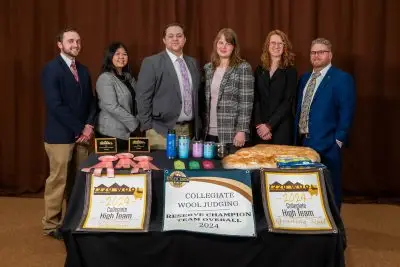
Members of the 2024 team are Sydney Camp from Grand Junction, Colo.; Elisabeth Dooley from Casper; Cameron Herrick from Laramie; Mary Thomas from Gering, Neb.; and Allie Van Why from Chugwater.
Graduate student Dylan Laverell, who competed on the team as an undergraduate, served as head coach. Joe Mills, an All-American member of the 2023 team, assisted in leading practices.
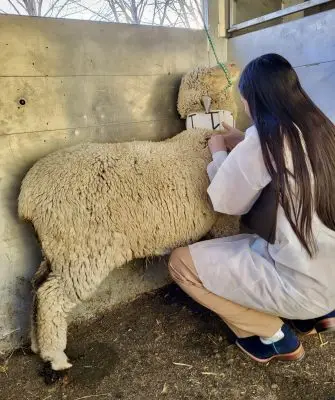
At the 7220 Wool Judging Invitational in January, which included 48 competitors from five universities, UW earned high team in the grading rail. Individually, Herrick was ranked second on the grading rail and Van Why fourth. The UW judgers also won the live animal evaluation division, with Dooley securing third place.
Later that month, the team traveled to the National Western Stock Show in Denver, where they improved their overall team ranking to fourth. In a series of outstanding individual performances, Camp ranked fourth on the grading rail, Thomas ranked ninth on the grading rail, and Van Why tied for seventh place in placings and eighth place in overall rankings. As a team, UW placed second overall in the handspinning and value-based division.
In their final competition at the Black Hills Stock Show, the UW wool judgers finished second overall. As a team, they earned second place on the grading rail and third place in placings. Individually, Dooley took first place overall and first place on the grading rail, while Herrick achieved sixth place overall and fifth on the grading rail.
While the team’s performance is certainly worth celebrating, it’s not just about winning, says Whit Stewart, UW Extension sheep specialist and wool judging team coordinator. Participation in collegiate and youth judging contests also helps students build lifelong leadership, critical thinking, and communication skills.
“The collegiate and youth wool judging programs we have diligently built extend beyond teaching the technical aspects of wool,” Stewart explains. “Most importantly, they cultivate essential soft skills that are often scarce among today’s young professionals.”
To learn more about UW’s wool judging program, contact Laverell at dlaverel@uwyo.edu or Stewart at whit.stewart@uwyo.edu.