

For those interested in artificial insemination (AI) in sheep and goats, the University of Wyoming Extension will offer educational programming in Campbell and Fremont Counties in July, followed by breeding days in August.
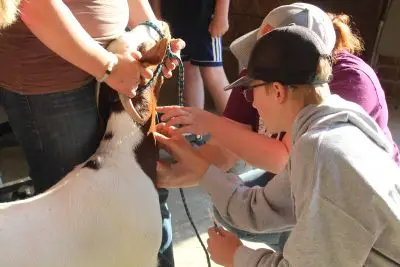
Classroom sessions will take place at the Campbell County and Fremont County extension offices Monday, July 15. UW personnel and local specialists will discuss nutrition, breeding selection, AI protocol, and pregnancy testing.
“We’ll go through the quality of the sheep and goats, what to look forward in breeding females, go over the breeding process,” says Campbell County 4-H educator Kim Fry. “It’s not as simple as cattle or swine; it’s a surgical process.”
For those attending only the classroom sessions, no payment is required. Participants interested in getting their females bred in August pay $75 per head. Attendees must purchase their own semen, since semen price can vary based on quality.
Registration, which reserves food and supplies for the July class, closes on July 8. Anyone interested in breeding their animals or attending the educational sessions should register at http://tiny.cc/24sheepgoatai. Payment must be submitted by July 15 to participate in the August breeding days.
A registered AI technician will be available at breeding days in Fremont and Campbell Counties in August. Participants will be notified once dates, times, and locations have been finalized, with lambing and kidding to be after Jan. 1.
The AI Days program is organized by UW Extension educators Kim Fry and Chance Marshall with funding from the John P. Ellbogen Foundation.
For more information, contact the Campbell County extension office at (307) 682-7281 or the Fremont County extension office at (307) 332-1018.