


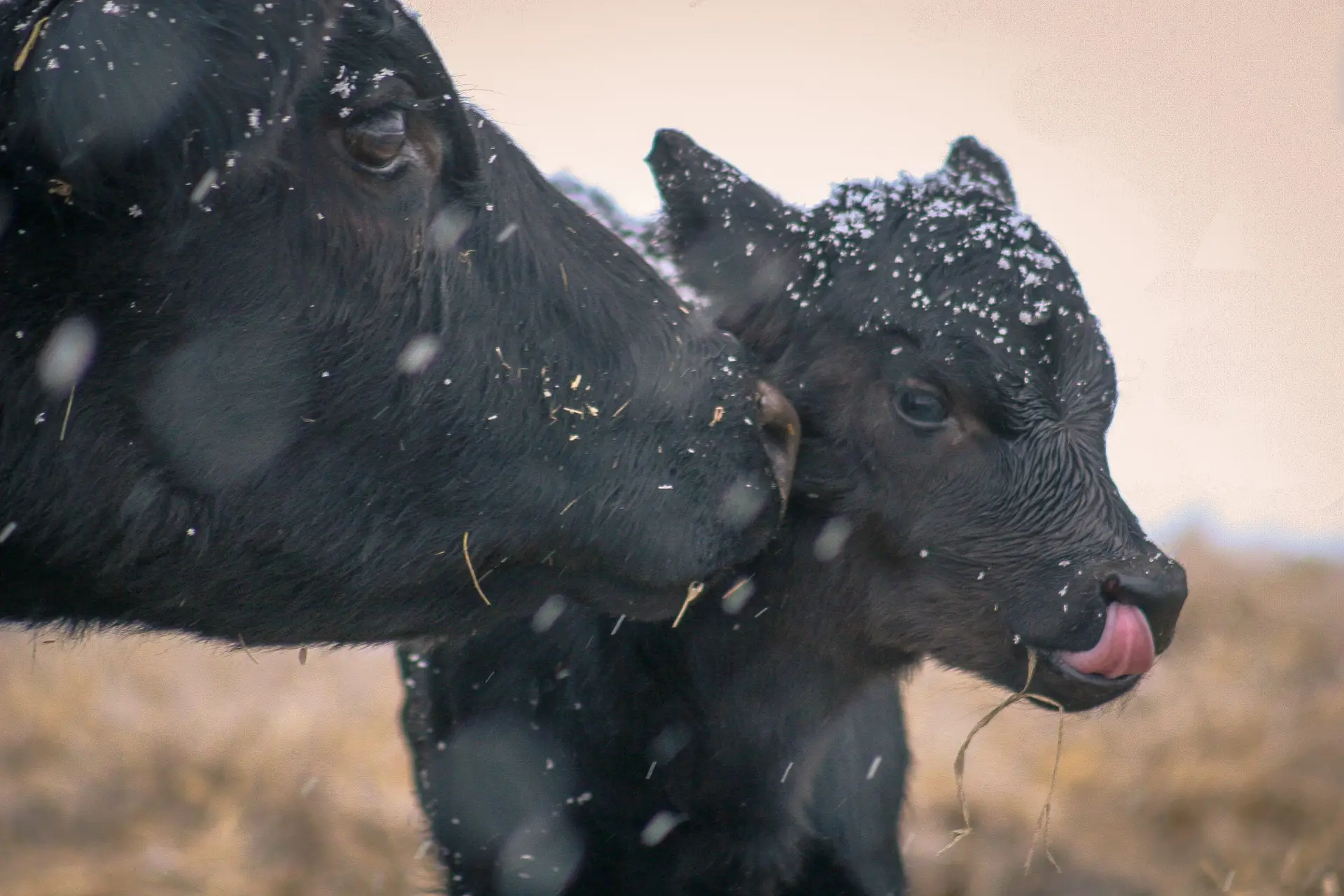
Whether you keep back your own heifers or purchase from an outside source, most ranchers have faced the challenge of breeding back a heifer that has just had her first calf.
First-calf heifers typically calve at about 24 months of age, assuming the goal is to breed for the first time at 12-14 months. Failure to rebreed can have a major economic impact, as a significant amount of time and money has already been invested in the animal.
To continue weaning a calf year after year, a cow needs to become pregnant within 60 to 85 days after calving. The time between calving and rebreeding is longer in heifers than in mature cows; certain conditions can extend the postpartum interval.
During pregnancy check, many ranchers find that an overwhelming amount of their open cows, up to one-third of the opens in a herd, are first- and second-calf heifers. Shortening the postpartum interval as much as possible can help ensure a two-year-old heifer rebreeds in time.
Higher energy demands
At her first calving, a two-year-old heifer is still growing. She does not yet have her complete set of adult teeth and is not as efficient at grazing as a mature cow. In giving birth to her first calf, she has just undergone one of her greatest physical challenges. Calving and lactation are enormous demands on her growing body.
Rebreeding for a second calf is the lowest of her physiological priorities. She first must use her resources to stay alive and continue growing herself. Secondly, she must provide milk for her calf. Only after these needs are met will she reallocate remaining energy for reproduction.
Because of these greater energy demands, two-year-olds require a higher level of nutrition than older cows. Ideally, heifers should be at least 66% of their mature weight when they are first bred and about 85% of their mature weight at their first calving as a two-year-old. It is crucial to be sure that heifers receive adequate nutrition, especially during their last trimester.
Maintaining BCS
Wyoming’s harsh winters and frequent dry years can make it difficult to rebreed heifers. Especially under range conditions, growing heifers may struggle to find adequate forage under range conditions. During these periods, provide protein supplementation and feed-quality hay if it is economically and practically feasible for your operation.
The simplest way to monitor a heifer’s nutrient level is her body condition score (BCS). On a 1 to 9 scale, try to keep heifers at a 5 or 6—in other words, in moderate to good weight with few, if any, ribs showing and some rounding to the back and tailhead.
A common misconception is that keeping a first-calf heifer at a lower BCS (below a 5) will lead to a lower birthweight calf and, therefore, fewer calving difficulties. However, this is not true. Birth weight is influenced more by genetics than BCS and will only decrease slightly if a heifer is kept underweight. Not only can a low BCS worsen calving difficulty and weaken the heifer, but it can also jeopardize her ability to breed back.
Breeding early
Another opportunity to shorten the first-calf heifers’ postpartum interval and increase the rebreeding rate involves breeding virgin heifers 20 to 30 days earlier than mature cows, if possible.
It can take 20 to 30 days longer for a two-year-old to come back into estrus than an older cow. Breeding a heifer to calve a few weeks before the main herd gives her more time to recuperate and increases the odds of a timely rebreeding the following year.
Heifers that calve late are more likely to fail rebreeding and are more likely to continue calving late throughout their life, leading to lighter calves at weaning. However, earlier calving can be challenging for Wyoming ranchers as forage may not be as available, requiring more intense management of the heifer herd.
Herd separation
If possible, bred heifers should be kept and managed as a separate herd due to their higher nutritional demands and increased care requirements, especially if you plan to breed and calve earlier. Separating the herd allows you to devise a specific feeding regimen for heifers if needed and to keep an eye out for body condition, health concerns, and calving difficulty.
Typically, 80% of calving difficulty a rancher deals with will be in first-calf heifers. Heifers that experience prolonged labor of an hour or more will be far less likely to rebreed in good time than heifers that are assisted. If it is reasonable for your operation, separating heifers will allow you to decrease unnecessarily long births and ensure a higher rate of successful rebreeding for their second calves.
By Dagan Montgomery, Agriculture & Natural Resources Extension Educator, Sublette County, Wyoming. Reprinted with permission from the Wyoming Livestock Roundup.