
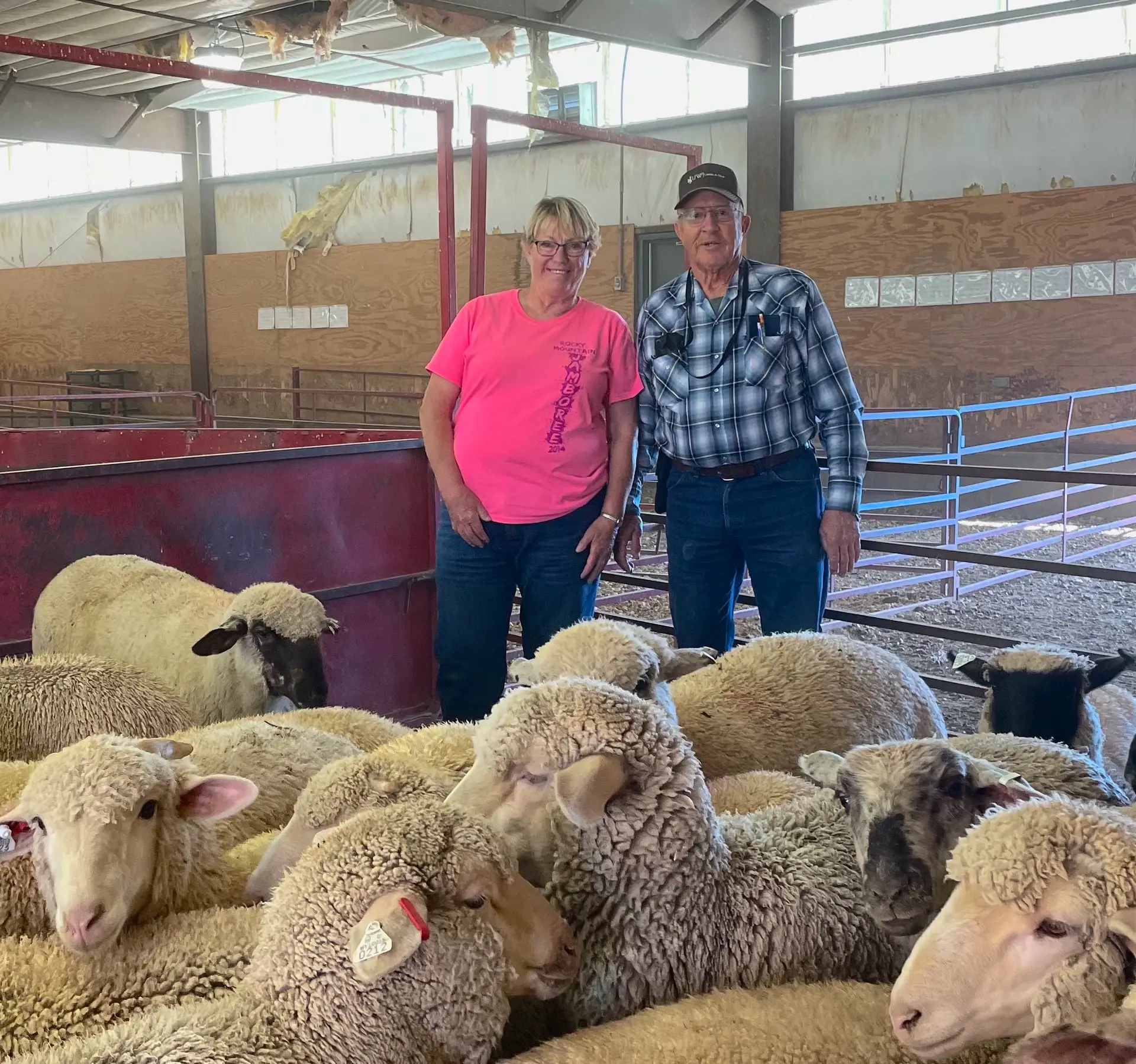
This fall, the University of Wyoming and Wyoming Wool Initiative launched the state’s first Lamb-a-Year program.
Thanks to the generosity of 25 Wyoming producers and NexGen Feed Solutions, 143 lambs, 10,000 pounds of feed and several cash donations have made it possible for UW students to learn firsthand about the feeding, finishing, and harvesting stages of lamb production.
Last month, donated lambs were transported to UW’s Laramie Research and Extension Center, where students helped with backgrounding and vaccination.
“I’m already blown away by what this year has become, which is a direct result of the generosity of the industry, especially during a challenging economic time,” says Whit Stewart, UW sheep extension specialist and associate professor of animal science.
Stewart is the instructor for the inaugural Lamb-a-Year class, a hands-on, one-credit course that introduces UW students to the lamb production industry. In addition to feeding, weighing, and checking the lambs throughout the semester, students have the opportunity to engage with producers, direct marketers, lamb processors, and feed and pharmaceutical company representatives.
“My favorite part of the class so far and also what I am looking forward to the most is the discussions we have with people in the industry,” comments Elisabeth Dooley, a junior in animal and veterinary science. “In agriculture, hands on experience is priceless.”
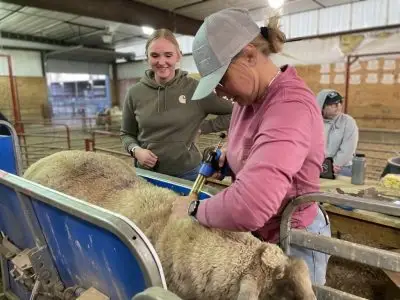
A key goal of the program is to offer Lamb-a-Year donors with information they can use to inform decision making on their individual operations. This includes sharing growth performance, meat quality, and carcass data with donating producers.
Under Stewart’s guidance, the ten students in the program are experimenting with cost-effective feeding and management options compared to traditional feeding and market timing. They will also analyze costs and returns to determine the profitability of different management strategies.
“Exposure to the feeding and harvesting sectors offers these future producers an important perspective for their future success,” comments Brad Boner, a Glenrock producer who donated to the 2022 Lamb-a-Year program.
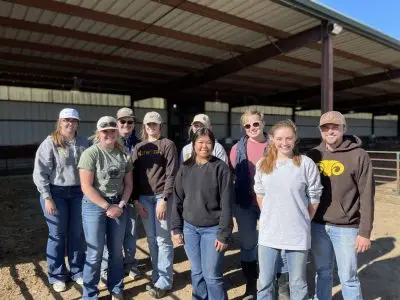
Proceeds from the sale of the lambs will sustain and expand programming for Wyoming students and producers. These educational and outreach programs include travel for UW’s collegiate wool judging team; undergraduate internships; graduate research on value-added components for wool and direct marketing for lamb; the annual Wyoming Wool Growers conference; the 7220 Wool Invitational; sponsorship of the State Fair wool show; and the inaugural Sheepherder’s Come-Bye.
A second one-credit course, designed to complement fall programming, will be offered in spring 2023. Co-instructed by Stewart and Cody Gifford, assistant professor of meat science, the class will address topics like lamb meat evaluation, marketing, and merchandising.
For those interested in learning more about the Lamb-a-Year program or donating next year, contact project coordinator Lindsay Conley-Stewart at woolinitiative@uwyo.edu.