



Retired University of Wyoming Department of Botany chair Dennis Knight is co-author of a book that highlights the Northern Great Plains and blends the natural and human histories of the region.
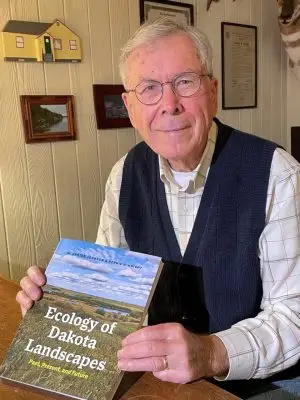
Knight, a professor emeritus of botany and former president of the Ecological Society of America, co-wrote the book with W. Carter Johnson, a professor emeritus at South Dakota State University. Titled Ecology of Dakota Landscapes: Past, Present and Future, this book was published by Yale University Press this year with support from UW’s Biodiversity Institute.
Knight and Johnson describe the natural and human histories of the Northern Great Plains in their comprehensive and well-illustrated book. Covering a vast period, they move from geological developments millions of years ago and the effects of glaciers to historical and ecological developments in recent centuries, including the effects of agriculture and climate change.
The two retired professors bring decades of experience to chapters on the major ecosystems of the Dakotas. Written for readers with varying backgrounds, and with discussions of the Prairie Pothole Region, the Missouri River, grasslands, croplands, woodlands, the Black Hills, badlands, rivers, lakes, and wetlands, the book is intended as a long-lasting source of information. The book contains more than 200 color photographs, maps, and other illustrations.
The book ends with a discussion of the future of the Northern Great Plains region, with recommendations on how to balance agriculture and other pressing needs in the 21st century.
“Ecology of Dakota Landscapes is simply a grand and wonderful book. If some apocalypse removed all libraries and repositories of knowledge, this one volume would preserve the most important knowledge and insights about the Dakotas,” says reviewer Dan Binkley, who wrote Forest Ecology: An Evidence-Based Approach.
A UW faculty member from 1966–2001, Knight taught courses in ecology, ecosystem analysis, and the application of ecological concepts to land management. The Dakota book is similar to the one he wrote about Wyoming, Mountains and Plains: The Ecology of Wyoming Landscapes, also published by Yale University Press. First published in 1994, the book was revised and expanded for the second edition, which was completed in 2014 and co-written with George Jones, retired associate director of the Wyoming Natural Diversity Database at UW; William Reiners, a UW professor emeritus of botany; and William Romme, a UW alumnus and Colorado State University professor emeritus.
“We write this kind of book for anyone wanting to know more about the environment and land management issues of the place where they live, not just for card-carrying scientists,” Knight says. “In both books, nearly every chapter has a section on the implications of climate change in the future, and we describe how farmers, ranchers, wildlife managers and the public at large have benefited from using ecological information.”
This story was originally published on UW News.