

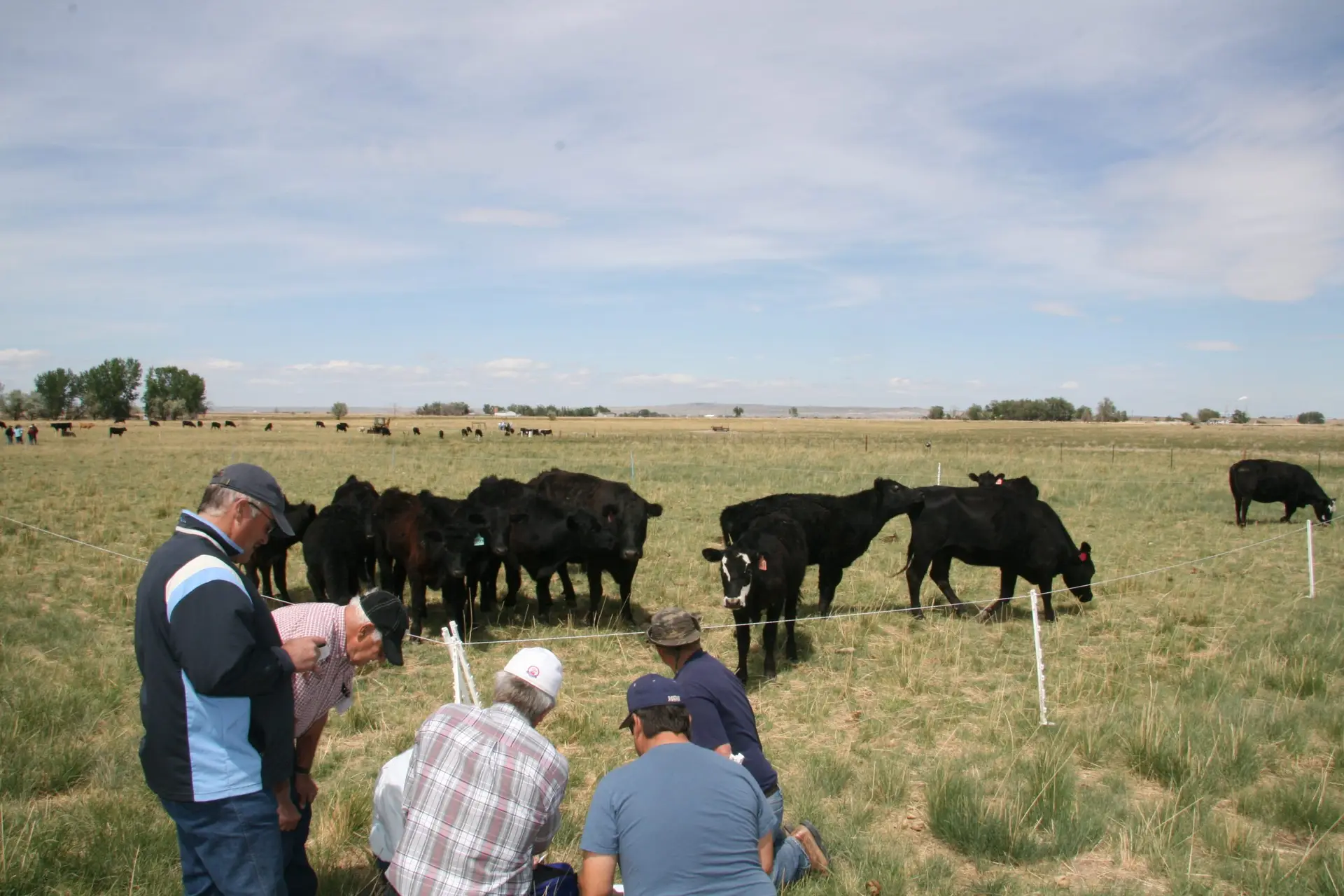
Anthrax is a serious infectious disease that is caused by Bacillus anthracis (a spore-forming bacteria) that occurs naturally in soil. Although outbreaks are less common in the U.S. than in other countries, sporadic outbreaks do occur, especially in cattle and deer. Sporadic outbreaks are possible because spores allow the bacteria that causes anthrax to survive in the soil for years to decades.
The American Veterinary Medical Association (2001) states that in the United States, natural incidence is extremely low, although outbreaks have been reported in California, Louisiana, Mississippi, Nebraska, North Dakota, Oklahoma, South Dakota, and Texas. Cases in Montana and Wyoming have also been reported (Wyoming Livestock Roundup, 2020).
Cause of outbreaks
Domestic and wild animals can become infected when they breathe in or ingest spores in contaminated soil, plants, or water. Anthrax outbreaks usually occur after periods of drought followed by heavy rains.
Animals are at higher risk of contracting anthrax when they are around disturbed soils as this increases the chance the bacteria will become airborne. Livestock and wild animals may become infected by ingesting spores while grazing in areas of high soil contamination or through the bite of certain flies. The route of infection in animals is most often ingestion, rather than inhalation or inoculation via skin lesions.
Prevention & treatment
The most effective control strategy for animals in widespread areas where the bacteria may be present is vaccination (Merck Manual, 2022). In areas where anthrax has occurred in the past, it is recommended to work with your veterinarian to create a yearly vaccination protocol to minimize the risk of an outbreak. A proper vaccination program reduces animal mortality and minimizes the spread of an anthrax outbreak.
If an outbreak occurs, working with your veterinarian promptly is critical because the course of the disease is very rapid. Prompt administration of appropriate antibiotics is essential.
The Merck Manual (2022) states that animals at risk should be immediately treated with a long-acting antimicrobial to stop all potential incubating infections, followed by vaccination approximately 7–10 days after treatment. Any animals that become sick after initial treatment or vaccination should be re-treated immediately and re-vaccinated a month later.
The American Veterinary Medical Association (2001) recommends that livestock such as cattle, sheep, goats, and horses that are affected by natural anthrax be treated with antibiotics such as penicillin and oxytetracycline (i.e. Bio-Mycin 200 and LA-200). Consider consulting your veterinarian on what they recommend as well.
Additional management practices to prevent and treat anthrax in livestock includes quarantine of the affected herd, removal of the herd from the contaminated pasture (if possible), disposal of contaminated carcasses (preferably by burning), and decontamination of contaminated materials (Merck Manual, 2022).
Symptoms
Symptoms in livestock and wildlife include:
- Sudden death
- Staggering
- Difficult breathing
- Trembling
- Uncontrollable movements
- Fever
- Bloody diarrhea
- Colic (in horses)
It is important to work with your veterinarian for a proper diagnosis, as the symptoms listed above are symptoms for other diseases as well.
Summary
Anthrax is a serious infectious disease that is caused by a spore-forming bacteria. Livestock and wild animals may become infected by ingesting spores while grazing in areas of high soil contamination.
To prevent and treat an outbreak, it is important to work closely and promptly with your veterinarian to create a vaccination protocol for areas at higher risk of an outbreak (i.e. areas with a prior outbreak), implement proper treatment using antibiotics such as penicillin and oxytetracycline, and properly diagnose the disease.
Make sure to decontaminate all contaminated feed and materials. Proper disposal of carcasses, moving animals out of the contaminated pasture, and quarantining sick animals are good management practices to help reduce mortality from anthrax.
Sources for further information on anthrax
American Veterinary Medical Association. 2001. Anthrax Facts. https://www.avma.org/anthrax-facts#:~:text=Cattle%2C%20sheep%2C% 20and%20goats%E2%80%94,bloated%2C%20and%20without%20rigor%20mortis.
Center for Disease Control and Prevention. 2022. Anthrax. https://www.cdc.gov/anthrax/basics/index.html
Merck Manual. 2022. Veterinary Manual- Anthrax in Animals. https://www.merckvetmanual.com/generalized-conditions/anthrax/anthrax-in-animals.
Wyoming Livestock Roundup. 2020. Anthrax is an Ancient and Deadly Bacterium for People and Livestock. https://www.wylr.net/2020/04/20/ anthrax-is-an-ancient-and-deadly-bacterium-for-people-and-livestock/