

A Carbon County 4-H educator is using MakeHERspace workshops to erase that girls’ bland sugar-and-spice stereotype and replace with accomplish and aspire.
Trained through the MakerHER Scholar Program at the University of Wyoming, Emily Haver was a member of the first group of volunteers who took what was learned back to their communities.
The volunteers delivered STEM/Maker workshops and camps aimed at inspiring young girls to get back up when they fall — however many times it takes to succeed.
“They are out there now delivering programs across the state,” said Jane Crayton, director of the Coe Innovation Center at UW.
The MakeHER Scholar Program was created by the center and 4-H in partnership with the Wyoming Afterschool Alliance. Funding is through the STEM Next Foundation as part of the Million Girl Moonshot Program.
The volunteers received $1,500 grants.
Makerspace is a term for the space where making happens, and MakeHER is the program she directs to inspire girls to opt-into making and STEM (Science, Technology, Engineering, Mathematics), Crayton said.
“The volunteers learned how to engage girls in STEM education, design thinking and maker education, with a focus on opting into learning experiences,” she said. “MakeHER Scholars learned best practices for delivering single-gendered programs for girls and co-gendered programs where boys also learn behavior to empower their female peers.”
Crayton is seeking participants for the second group of MakeHER Scholars to be trained in 2022. For more information and to apply, go to bit.ly/makeher-scholars.
MakeHER Scholars completed a remote class that included finishing hands-on, project-based activities that encourage learning by doing, a 4-H motto.
“They sent us a whole box of kit materials so we could actually do the hands-on projects that we were then going to turn around and teach,” said Haver, based in Rawlins. “And that made all the difference and made me a believer in STEM and the maker movement.”
Haver said she is passionate about advancing girls’ education.
“We all used to be makers, and we can all be makers again,” Haver said. “And then, just encouraging girls to fail. Try, try; fail, fail; try again. It’s the incapable part that the maker movement works to totally demolish. If you believe you are capable, you are automatically less vulnerable to outside dissenting voices and natural obstacles.”
The MakeHER Scholar training trained the trainer.
“That sense of discovery, that ‘I can do this’ feeling is exactly what that grant was meant to create in young girls and making sure that that is created in the teacher,” Haver said.
She added the 4-H MakeHer grant was an opportunity for the Carbon County 4-H program to reach youths who do not participate in traditional 4-H projects.
“I especially enjoyed the chance to interact with members of communities I don’t work in very often because they are remote or very small,” she said.
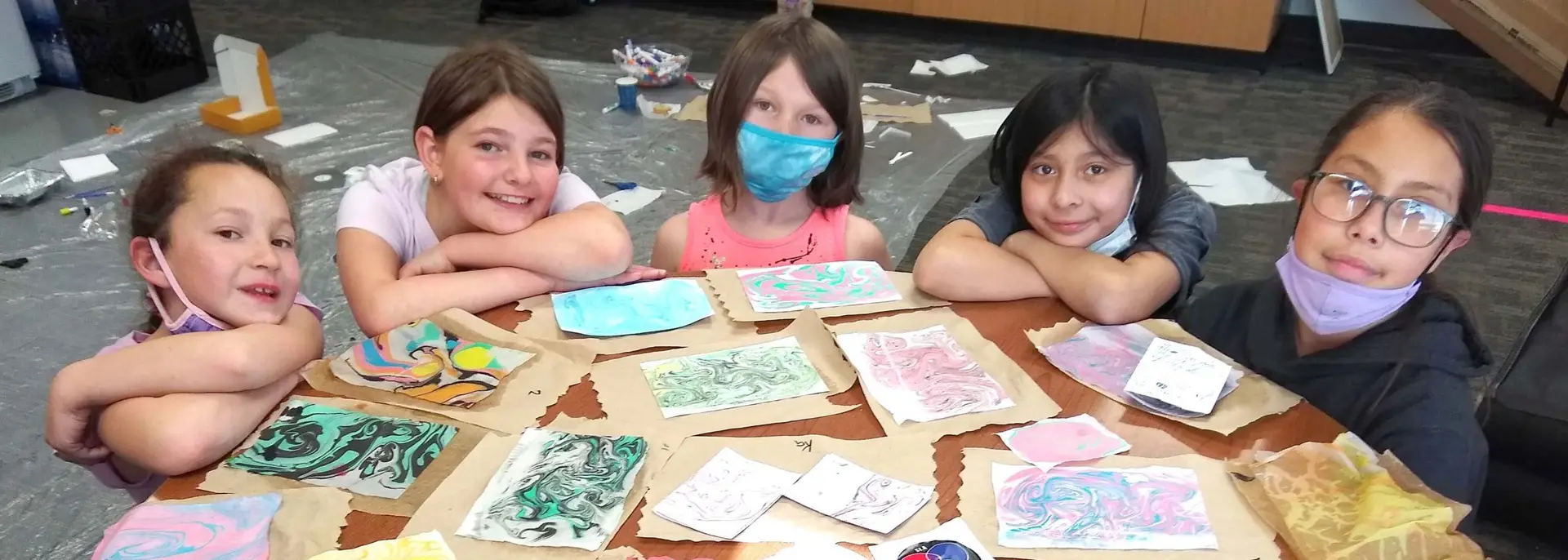
Haver partnered with the Boys & Girls Club of Carbon County to organize a girl’s camp in Rawlins, and she directed a girls and boys camp in Hanna, which was combined because of overall fewer numbers there.
All camp equipment and snacks were funded through the 4-H MakeHER Scholar program.
“I love to create that self-confidence in being able to make things with your hands that I think kids in general don’t get a lot of these days,” Haver said. “That’s the thing that really turned me on to the maker movement is we used to all be makers. If something broke, you fixed it. If you needed something, you made it.”
The goal is to develop the belief in girls they are capable through experiences that teach skills in an encouraging environment that allows a girl to fail and try again, she said.
“That’s something that is hard,” Haver said. “It’s hard for adults to do, too. We’re scared. We don’t want to fail. But you don’t succeed unless you fail a few times first.”