


Fearsome cheatgrass taking over land can generate enough horror to cause landowners to reach for silver bullets.
But there are no silver bullets for cheatgrass, University of Wyoming Extension specialist Dan Tekiela told those attending the summer cheatgrass management field day in Sybille Canyon.
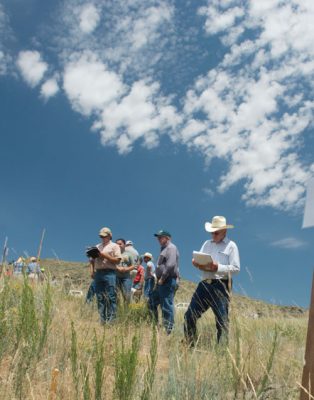
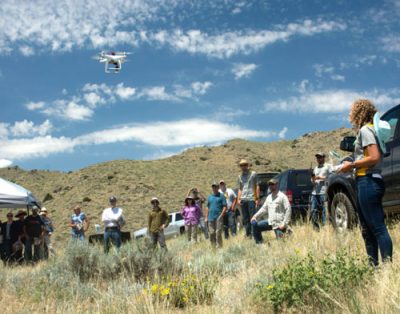
More than 45 people attended the event in the relatively isolated Solution remains elusive for landowners undergoing cheatgrass assault Tom Thorne/Beth Williams Wildlife Habitat Management Area between Laramie and Wheatland, representing producers, government agencies and the herbicide industry.
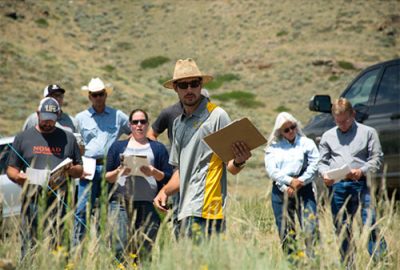
Pickups and SUVs parked near the herbicide test plots, the attendees having heard Tekiela earlier discuss management options and the importance of managing the soil seed bank.
They saw results – or lack – of herbicide trials in a heavily cheatgrass-infested area, which the Wyoming Game and Fish Department and state lands had treated more than a decade ago.
The cheatgrass shrugged off the earlier treatments and returned, and agency representatives wanted to see what alternatives could eradicate, or at least lessen, the cheatgrass.
Cheatgrass a Problem for Everyone
Tekiela partnered with them on the project and wasn’t perplexed at the higher-than-thought turnout to the isolated area, because cheatgrass isn’t selective – everyone has a problem with it. Researchers across the nation are studying the invasive grass.
“It’s the poster child of invasion in the West,” he says. “People are scrambling for information, but we don’t have the silver bullet.”
There will likely never be a one-size-fits-all solution, but Tekiela had specific takeaway messages during the day.
He fields lots of bioherbicide questions for cheatgrass control.
“If you Google bioherbicides and cheatgrass, the top 10 stories that may come up are popular press articles that say such and such new bioherbicide is great,” he says. “Then, the scientist in me looks and sees there is no research on this. The takeaway is to be a little bit skeptical and really seek out reliable resources, such as universities, on how to manage what you are trying to do.”
His test plots were examples of using research-based information. The test plots showed the effects of herbicides and bioherbicides targeted for cheatgrass control.
There can be other viable tools, he said, such as Integrated Pest Management techniques.
Managing the seed bank is another takeaway message. Tekiela said giving the resident plant community a chance to repopulate and managing seed banks are his goals when confronting invasive plants.
Research has shown once a seed bank becomes established, the likelihood of eradicating cheatgrass or any other invasive plant species is unlikely.
Controlling cheatgrass early before it becomes a problem is best, “But people d
on’t respond to things until there is a problem and don’t know how to deal with it anymore,” Tekiela says.
Precautions can Prevent Costly Problems
Tekiela promotes the “Play, Clean, Go,” recommendations, a movement whose partners include weed and pest districts, state and federal agencies and departments, and even school districts. The program urges removal of plant material from boots, pets, and vehicles and cleaning equipment before entering and leaving areas.
Tekiela cited a northern Colorado producer he had met with about leafy spurge spreading across tha
t region. The producer told Tekiela he was advised years ago to clean his equipment before moving from location to location.
“He said things that were not there then are now, and the only way they could have gotten there is because he moved them in his practices,” says Tekiela. “He devalued his land. That’s why prevention is so critical. That’s what really motivates me to push that message.”
Still, producers with thousands of acres of cheatgrass on rangelands are struggling to solve the already-established cheatgrass assault.
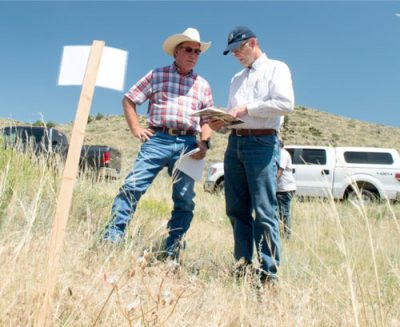
“We had people (at the field day) with less than 5 acres and they have the problem and there was one person who has thousands of acres,” he says. “I deal with people in that spectrum of land ownership day in and day out.”
The examples may seem different, but Tekiela believes there are similarities in the challenges and solutions.
“It’s not all herbicides,” he says. “I tried to convey the point prevention is incredibly important, and I think everybody was responsive to that, from those with small acreages to huge ranches.”