

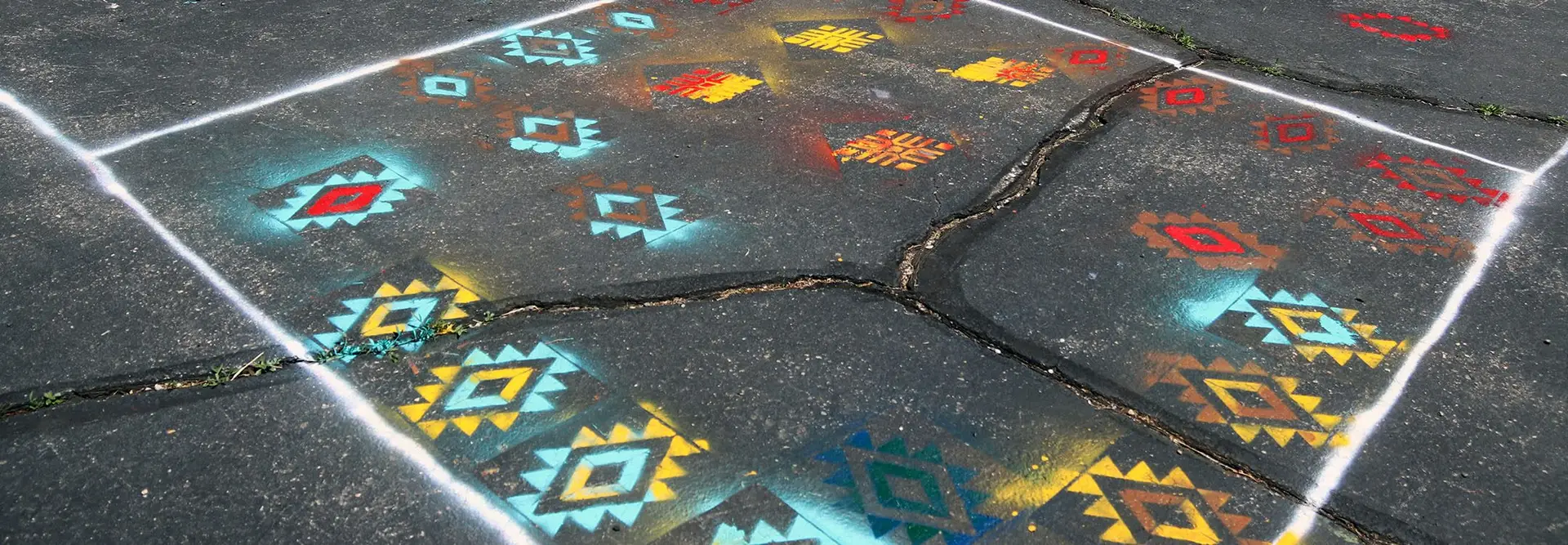
The first family event in over a year at St. Stephens Indian School had the students moving through sidewalk stencils, designed to increase physical activity while on the school playground.
The stencils are a collaborative effort between St. Stephens Indian School and the Cent$ible Nutrition Program in the University of Wyoming Extension and supported by several programs, including the Arapaho Council.
Billie Spoonhunter, a CNP educator for the Wind River Indian Reservation, had approached St. Stephens School about the stencil project in early 2020. Plans were under way to paint the stencils in May 2020 but were put on hold when the COVID-19 pandemic shut down the school.
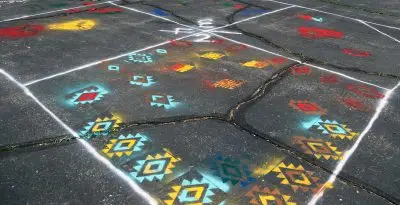
“When the school opened this spring and they started letting kids go back, I thought this would be a great time to do it again,” said Spoonhunter.
Family events at the school connect students, teachers and parents. The stencil project also provided a way for everyone to express their creativity while adding enhancements designed to increase physical activity while on the school playground.
“We didn’t have a family event for 13 months,” said Frank No Runner, superintendent of St. Stephens Indian School. “The stencils with Billie from the Cent$ible Nutrition Program seemed like a good way to start again.”
CNP director Mindy Meuli said the program is excited to share the stencils with St. Stephens.
“The stencils have been useful in increasing opportunities for physical activity in many locations throughout the state and have been fun for youths to be active on the playground through the games like hopscotch and mirror me,” she said.
After talking with school principal Greg Juneau and getting teachers on board to do the stencils, Spoonhunter, No Runner, and Juneau presented the idea to the Arapaho Council. The school is a Bureau of Indian Affairs school and has a long history with the Arapaho tribe. The council liked the idea and encouraged Spoonhunter to submit a request for funds to help buy materials for the project.
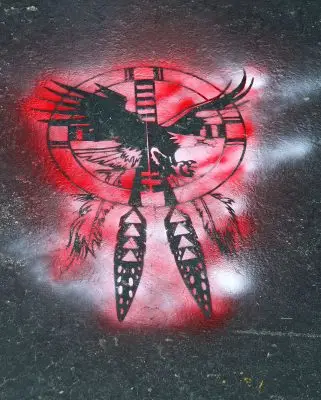
In addition to connecting with the Arapaho Council, Spoonhunter talked with Eddie Wadda, a local artist and janitor at the Frank E. Wise building where CNP offices are housed. Spoonhunter was interested in creating some stencils that portrayed traditional designs and imagery to go with the standard stencils.
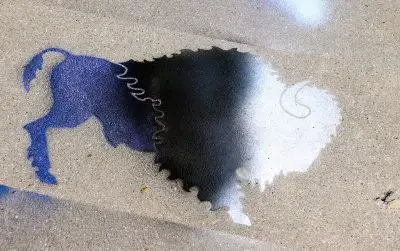
Wadda designed over two dozen stencil patterns including bison, teepees, wild horses, bears and feathers.
“Creating new stencils with Native art was a great way of incorporating culture with physical activity,” said Meuli.
Through funds from the Arapaho Council, the school, the Johnson O’Malley program, and CNP, the family event included painting stencils and a meal for all participants. A traditional prayer was said before the painting began.
“One of our traditions is that we always pray before we do stuff. The one who prayed was Eugene Ridgley Senior,” said Spoonhunter.
Ridgley is a former teacher at St. Stephens School.
“Three members from tribal leadership came and a lot of parents and employees from tribal child programs,” said No Runner.
A third-grade class used the event to apply their math skills through laying out a four-square game. Students and teachers outlined the border then filled the squares with the school logo and patterns.
As the year progresses and weather improves, the physical education teacher plans to use the new hopscotch boards, mirror me game and four square during class.
“This was a good event and opportunity to bring together our parents and community,” said No Runner. “The kids are already playing on the games.”
Plans are in the works to add more games to the school grounds. Other elementary schools in the area are also looking to add stencil games to their outdoor spaces.
“It was wonderful to see all of the students and families enjoying the painting of the stencils,” said Meuli. “It created a sense of excitement that I hope translates into continued active use of the stencils on the playground. I really appreciate the partnerships that came together to make the day such a success.”