

A University of Wyoming scientist’s work aimed at stabilizing medical biologics like COVID vaccines is highlighted in the March 20 edition of The Guardian.
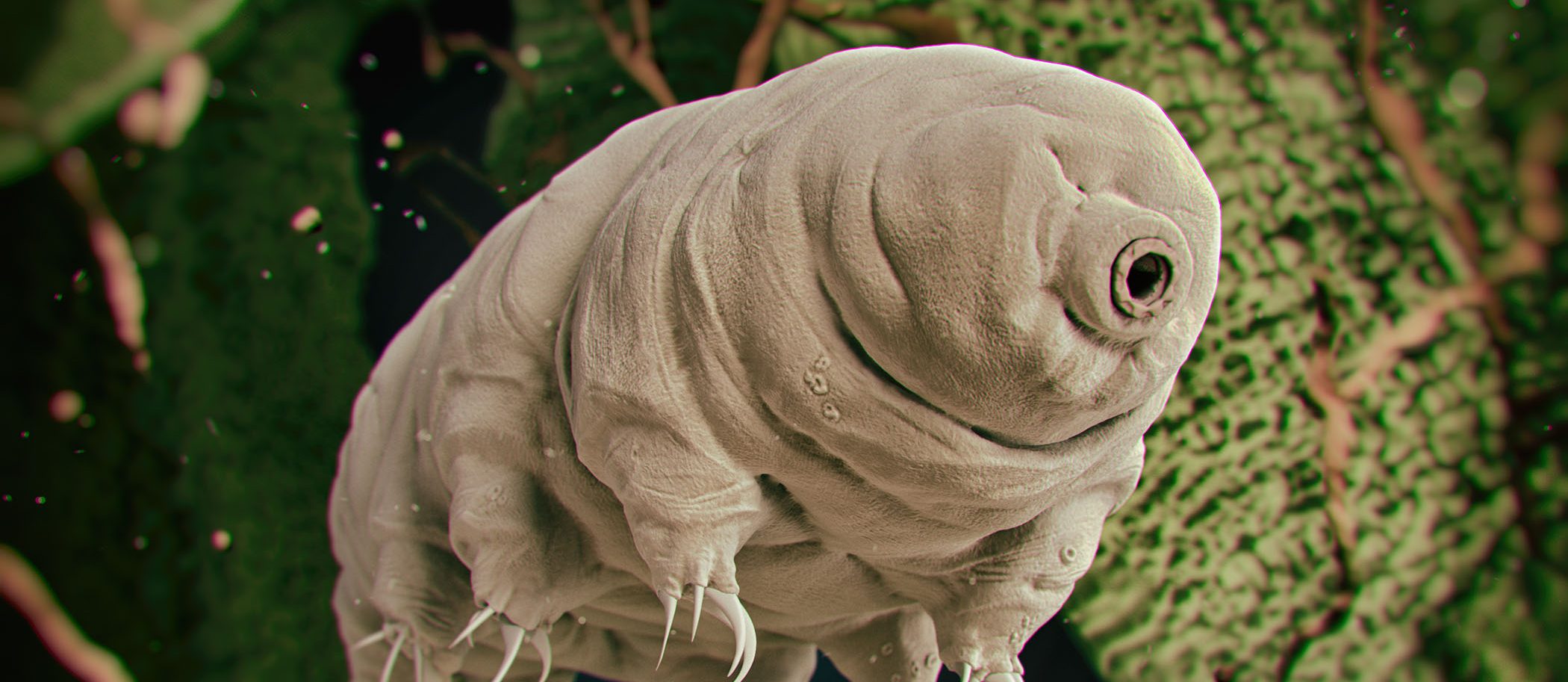
Biologist Thomas Boothby’s laboratory in the Department of Molecular Biology studies the minuscule but nearly indestructible tardigrade, eight-legged micro-animals also known as water bears, to glean secrets of their toughness and how they might utilize these secrets to stabilize medical biologics.
The diminutive, less than half a millimeter long, creatures can survive being completely dried out, being frozen to just above absolute zero (about -458 degrees F, when all molecular motion stops), heated to more than 300 degrees F, irradiated several thousand times beyond what a human could withstand and even survive the vacuum of outer space, said Boothby.
Tardigrades can enter into suspended animation, called a “tun” state, for years and only revive when they encounter water.
Other creatures can also go into a suspended state but don’t have the survivability of tardigrades. Those creatures manufacture a sugar called trehalose to survive stresses such as drying out or freezing.
Tardigrades don’t appear to make this sugar in high quantities, but they do something else, said Boothby. They make special proteins called intrinsically disordered proteins, which have no stabile three-dimensional structure.
These proteins allow the tardigrades to slow down and ultimately halt the biological processes going on inside their cells when they dry out. The process could lend itself to storing medicines like vaccines, which need to be kept cold, in a dry state at normal or even elevated temperature, said Boothby.
The article is at bit.ly/boothby-guardian. More about Boothby’s laboratory, personnel, and research is at www.boothbylab.org.