

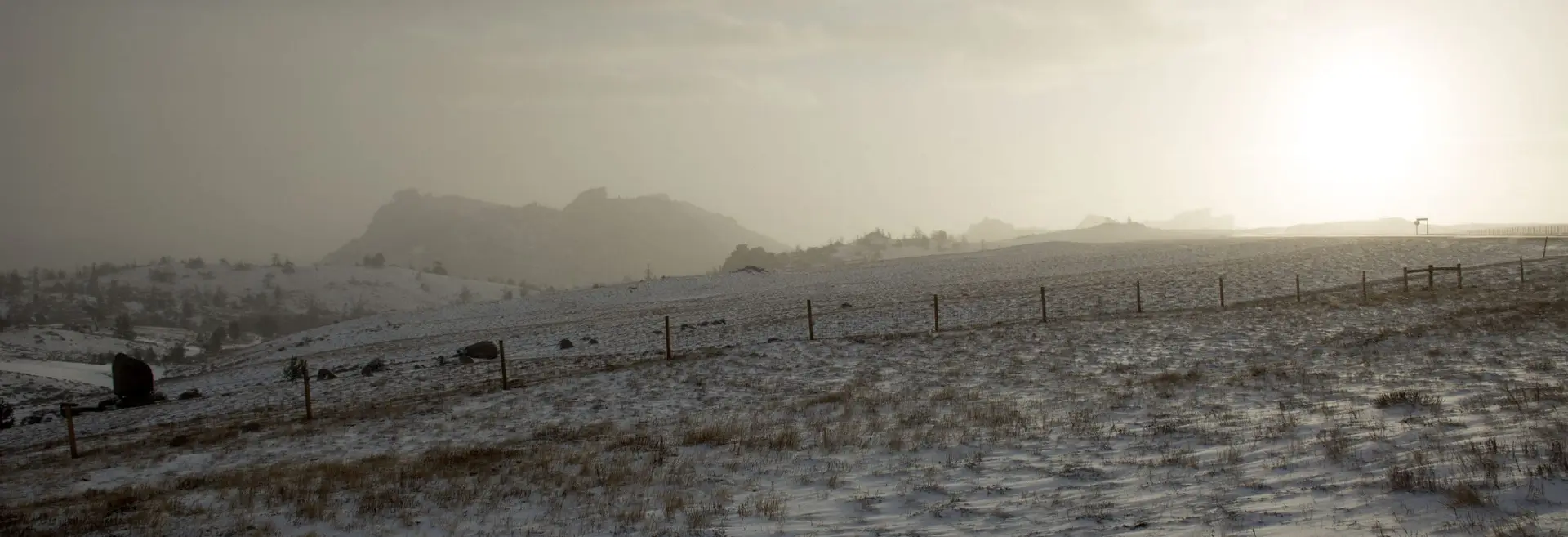
 This week’s dramatic polar plunge is not only pummeling plants now, but expect damage and dieback next spring, according to the University of Wyoming Extension horticulture specialist.
Annual plants will not survive the unusual for this time of year low temperatures, but some herbaceous perennials might, said Karen Panter in the Department of Plant Sciences in the College of Agriculture and Natural Resources at UW.
Covered plants might survive, but the temperatures will be too cold for most. She said plants in containers may manage if taken into a protected structure like a garage or shed.
Panter said leaves will freeze-dry on trees and shrubs and will probably turn brown and stay on plants longer than normal. Frost may cause blackened leaf tips and possibly whole leaves and branches.
The snow, forecast to end tonight and Wednesday morning for most Wyoming areas, will accumulate on trees and shrubs and can cause broken limbs and branches.