

Knowing the quality of range forage throughout the year is important to ensure the livestock nutrient needs are being met and if not, what needs to be supplemented.
How do some common rangeland grasses and an upland sedge compare in their crude protein and total digestible nutrient (TDN) contents?
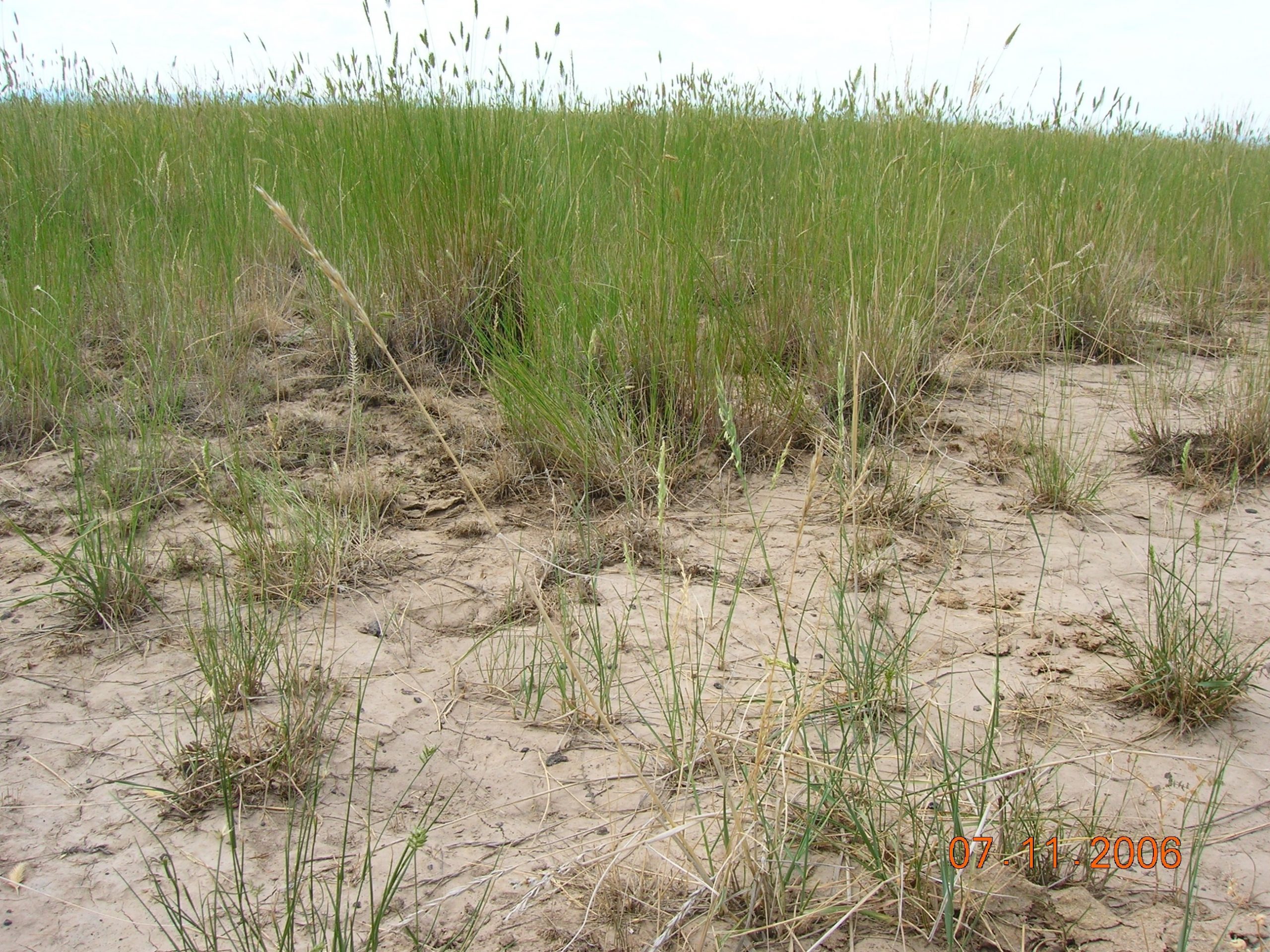
We sampled western/thickspike wheatgrass (AKA rhizomatous wheatgrass), needle-and-thread grass, green needlegrass, bluebunch wheatgrass, and threadleaf sedge, which are common throughout Wyoming’s eastern plains and western basin.
Monthly samples were collected from pastures in northeast Johnson County (Powder River Breaks) and along the Red Wall and foothills of the southern Bighorn mountains in northwest Natrona County between July 2015 and October 2018.
The Texas A&M University Soil, Water, and Forage Lab analyzed samples for crude protein and acid detergent fiber (ADF) amounts. TDN levels in the plants were determined from their ADF values.
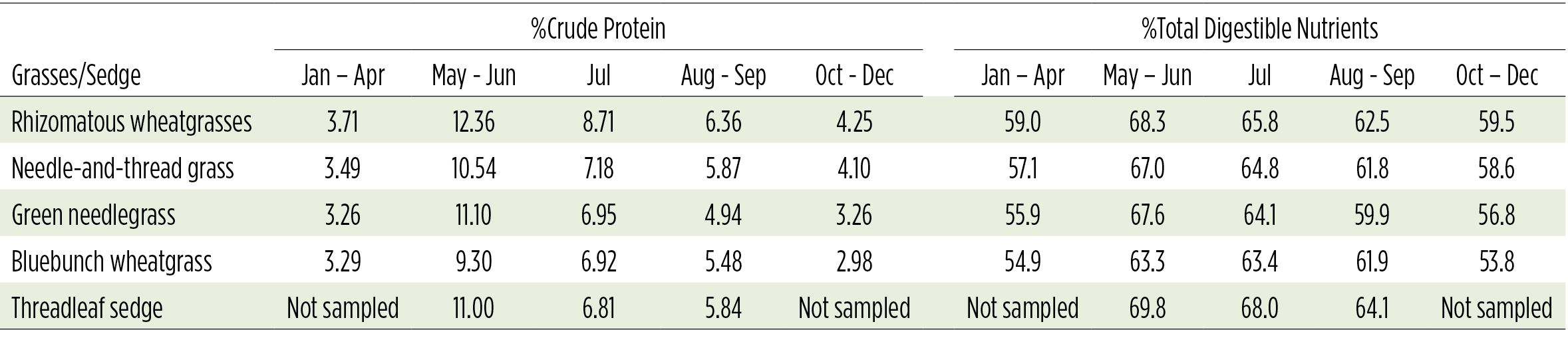
The table below shows crude protein and TDN of the rhizomatous wheatgrasses, needle-and-thread grass, green needlegrass, bluebunch wheatgrass, and threadleaf sedge for January through April, May and June, July, August and September, and October through December.
Combining months, except July, was due to the similarity of the quality values throughout those months. Crude protein and TDN were highest in May and June and lowest during the dormant season of October through April.
Rhizomatous wheatgrasses contained more crude protein compared to the other grasses and the sedge, and its TDN levels were higher, except for that of needle-and-thread. However, dormant season TDN levels of all were satisfactory for non-lactating beef cows in mid-gestation, and growing season amounts were sufficient for a cow in late gestation and when lactating.
Crude protein levels were only adequate in late spring and early summer in all the grasses and sedge for cows in all stages of production, and the rhizomatous wheatgrasses contained enough in late summer to meet the needs of a dry cow in mid-gestation.
Knowing the quality of range forage throughout the year is important to ensure the livestock nutrient needs are being met and if not, what needs to be supplemented. The results indicate that if a rancher chooses to sample their rangeland grasses and upland sedges for crude protein and TDN analysis, they need only sample the predominate plants and combine them, saving time and costs.
In addition, sampling would only need to occur in late summer and the dormant season to assess potential nutrient shortfalls, especially for crude protein.
Blaine Horn is the University of Wyoming Extension educator based in Johnson County and serving northern Wyoming. He can be reached at (307) 684-7522 or bhorn@uwyo.edu.