

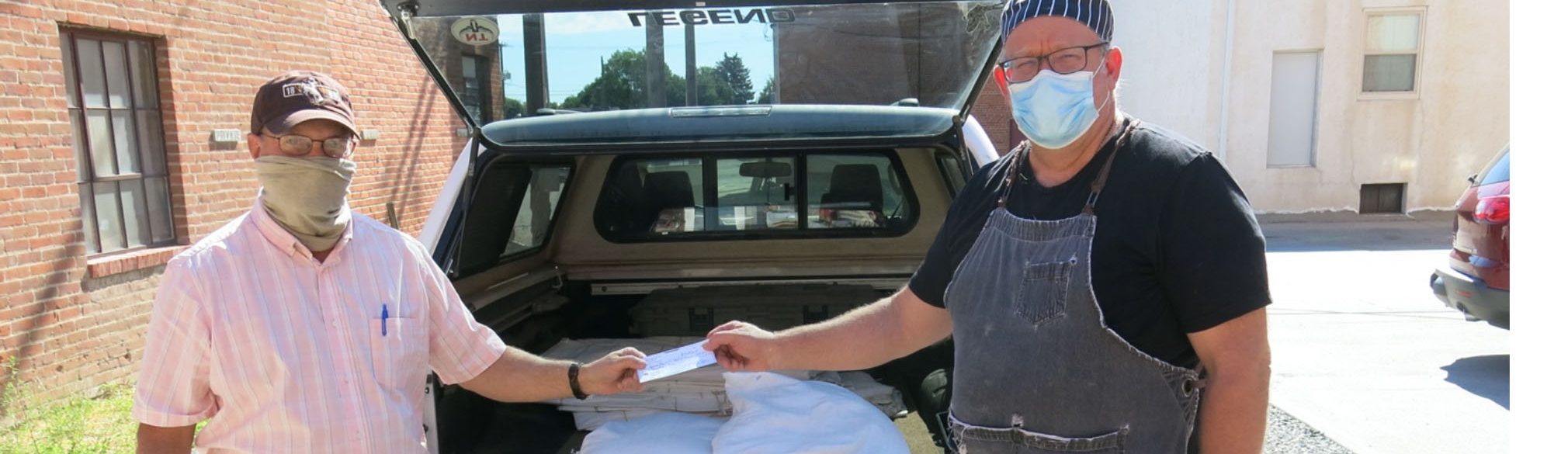
The Wyoming First-grains Project hit a milestone Wednesday making its first sale of Neolithic Brand spelt when The Bread Doctor in Torrington bought 200 pounds.
“It’s been a long road, but we are finally able to deliver the high-quality product we have been working toward,” said Tom Foulke, the project director.
The Bread Doctor owner Ezdan Fluckiger said his customers like the rustic, nutty flavor of spelt loaves, and he sells out every time he makes them. When asked about what he likes about the Neolithic Brand grain, he said, “I like that it is local. And my customers appreciate it, too.”
Fluckiger founded The Bread Doctor in 2013. He said he is especially glad to now have a reliable source of locally grown spelt for his business.
Foulke, a research scientist in the Department of Agricultural and Applied Economics, said the First-grains Project is a novel research and economic development project from the University of Wyoming College of Agriculture and Natural Resources. The goal is to create a profitable niche industry around first-grains, sometimes called ancient grains, and in the process create jobs and enhance incomes in Wyoming’s agricultural sector, he said.
Neolithic Brands will eventually be spun off as a standalone business.
Spelt has been cultivated in Europe and the Middle East for about 8,000 years but is just becoming more popular in the U.S, said Foulke.
“Americans are just waking up from a hundred-year slumber where we ate mostly just wheat and white sandwich bread,” he said. “People are now asking more of their bread in terms of taste and texture.”
Foulke made a special trip to The Bread Doctor to close the first sale but said there is plenty more spelt where that came from.
“The 2020 crop is almost in, and then we have the de-hulling and sacking operations to complete,” said Foulke.
The First-grains Project is targeting the wholesale market with 50-pound sacks of whole grain, or “berries” as they are called, said Foulke.
Artisanal bakers like The Bread Doctor have their own small mills and grind their own flour.
More about the project is at www.uwagec.org/neolithicbrand.