



Extension entomologist suggests 2020 could have high grasshopper numbers

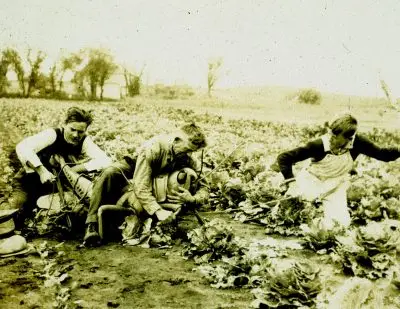
This was just too much fun to not use with this story. No, these are not entomologists, and that (we hope) is never the size of a real grasshopper. While a hoax, the giant grasshopper caused quite a swarm of interest during the 1930s. The “Whopper Hopper” was on a number of postcards. Thomas Talcott Hersey of Mitchell, S.D., made the grasshopper; he’s the one holding it down. Hersey’s hobby was making giant insects out of various media. The information states: “Captureing Whopper Hopper near Mitchell, S.D. The largest grasshopper in existence 54 inches weighs 73 pounds.”

Landowners should be on the lookout for a high grasshopper year, said University of Wyoming Extension entomologist Scott Schell.

He said mid-May through June is the best time to check for grasshoppers hatching in large numbers to prevent them from causing extensive damage this spring.

“If you had lots of grasshoppers last year or already have them hatching this spring, then treating the grasshoppers early in the season before they become adults is the best way to reduce their numbers,” said Schell.

Schell suggests looking in areas that warmup first, like south-facing slopes or borrow ditch banks.

Grasshopper outbreaks are difficult to prevent when spring weather is favorable to their survival, and conditions that may have reduced grasshopper predators or pathogens are beyond the landowners’ control, explained Schell.

Good grazing management to reduce bare ground is one possible prevention method. Bare ground favors some pest grasshopper species, said Schell. Working with neighbors who have infestations is the best way to get comprehensive control.

Contact your local county weed and pest control district for treatment options, http://bit.ly/weedandpestoffices.

For more information, check out the recent article published in Barnyards and Backyards magazine, bit.ly/2020-grasshoppers, or contact Schell at sschell@uwyo.edu.


Share the Post:

Related Posts

From left to right, Harmony Hustler members Caden Miller, Connor Kimzey, Taylor Kimzey, Landon Olson, Kaleb Strain, and Wyatt Strain shop for a family during their annual Adopt-a-Family community service event. Photo by Jessica Kimzey.

4-H Program Cultivates a Life-Long Commitment to Volunteer Work

In today’s world, it’s easier than ever to travel to new places and talk to new people, and yet paradoxically, it’s common to feel isolated from our closest neighbors.
But in the Wyoming 4-H program, watching out for those around you is still a cultural norm.
From the ground up, community service is part of the DNA of 4-H. Across the country, this organization is sustained by adult volunteers who serve as mentors, teach real-world skills, and organize events like county fair.

Read More
Man holding a garden hose waters a small shrub surrounded by a ring of mulch in a fenced yard with yellow grass

What Does a Warm, Dry, Windy Winter Mean for Wyoming Landscape Plants?

We’ve had unusually warm and dry weather in many parts of Wyoming this fall and winter. If this trend continues and brings with it our typical western region yo-yoing temperatures (warmer spells followed by deep freeze events), we are likely to see a variety of effects on plants as spring and summer roll around. Here are some issues you might encounter this spring and summer and what, if anything, you can do about them.

Read More

Help us improve this website!

We’re working to make AgNews easier to use and more useful for you. This quick survey takes about 1–2 minutes.