

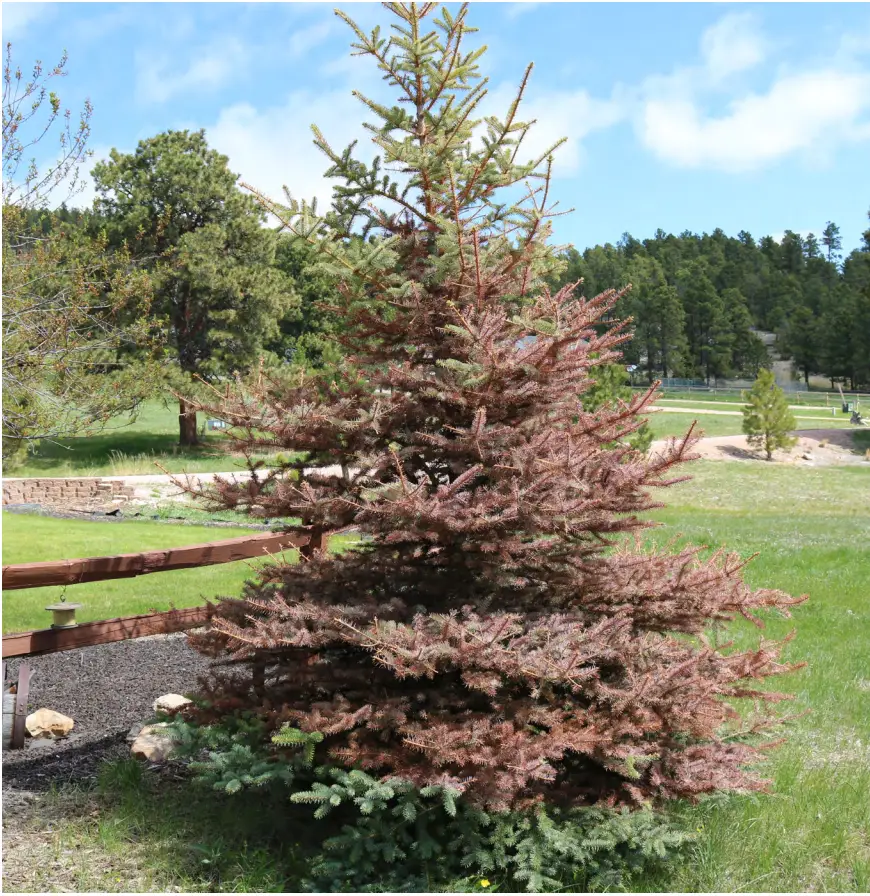
Each spring people across Wyoming notice injuries in their evergreen trees and shrubs from the long winter.
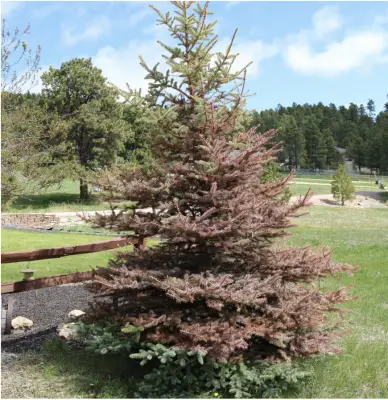
“Winter injury appears as dead, brown or purple discoloration in the needles of evergreen trees and shrubs, and it often shows up in the spring,” said Chris Hilgert, University of Wyoming Extension state Master Gardener program coordinator. “Winter injury to spruce is the most common, but we also see winter injury in pine, fir and juniper.”
Winter injury can be a result of extreme cold temperatures, drought stress, winter desiccation (cold dry winds draw moisture out of the needles when the ground is frozen and unable to replace moisture) or a combination of these problems, said Hilgert.
Evergreens, ideally, should be watered year-round including during a winter thaw, said Hilgert.
For more information about winter injury to spruce trees, check out Spruce Trees Winter Injuries at https://bit.ly/wyo-spruce. The UW Extension publication is available for free viewing and download in pdf, HTML or ePub formatting.
For more information, contact Hilgert at chilgert@uwyo.edu.