

The University of Wyoming’s Institute for Managing Annual Grasses Invading Natural Ecosystems (IMAGINE) has released a short film highlighting a decade of collaborative efforts to manage invasive grasses in northeast Wyoming.
The film, titled “Northeast Wyoming Holds the Line Against Ventenata & Medusahead,” features the Northeast Wyoming Invasive Grass Working Group (NEWIGWG), one of the largest invasive grass working groups in the U.S.
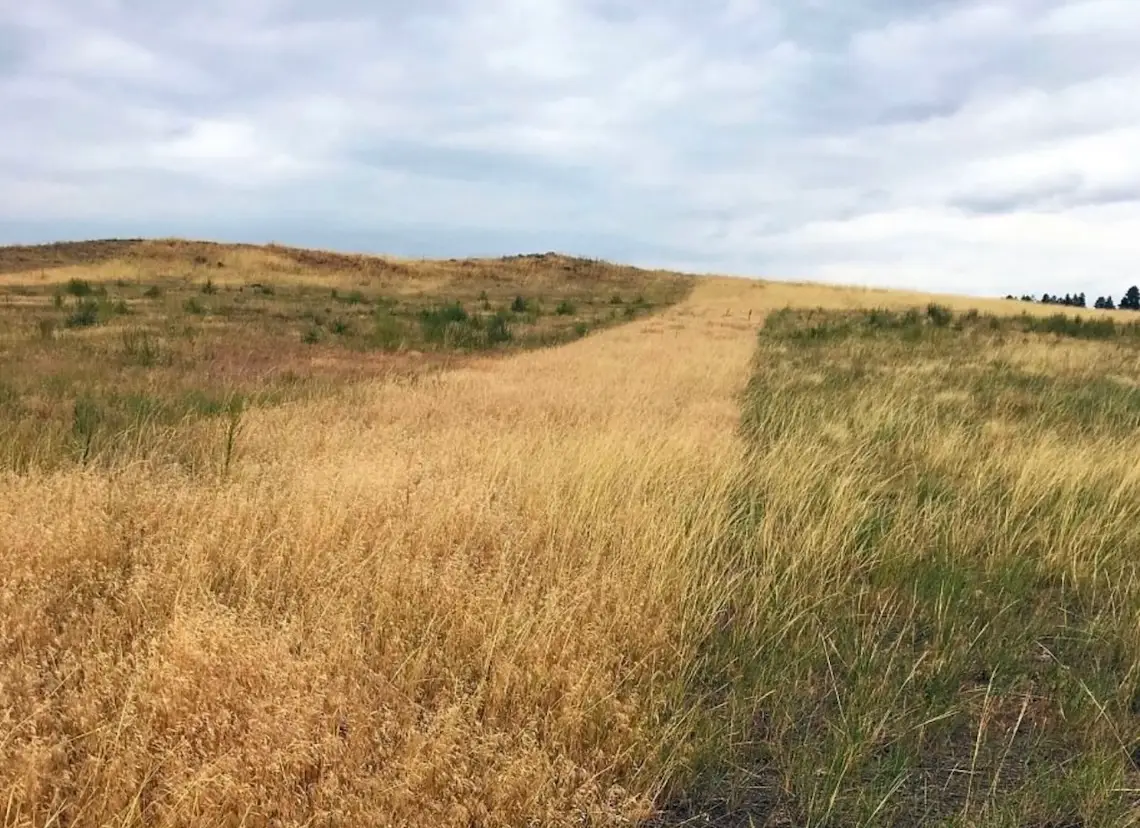
NEWIGWG was formed in 2016 in response to the detection of the invasive annual grasses medusahead and ventenata in Sheridan County.
“Since then, we’ve had a lot of different agencies and private landowners working together in a really successful collaborative mission to manage both ventenata and medusahead,” says Jaycie Arndt, NEWIGWG coordinator and interim director of IMAGINE. “We continue to learn, conduct outreach events, and support landscape-scale invasive grass management.”
For the past decade, NEWIGWG has brought together landowners, agencies, and researchers to detect, monitor, and manage invasive annual grasses. Together, these partners have surveyed and treated more than 400,000 acres of public and private land; invested nearly $30 million in management; and led ongoing research and monitoring efforts.
IMAGINE collaborates closely with NEWIGWG, supporting research, monitoring, and outreach activities as well as providing input on management decisions. The UW-led institute’s new film chronicles NEWIGWG’s decade of progress, from the initial discovery of ventenata and medusahead to the ongoing impacts of successful monitoring and treatment.
“We have seen our carrying capacity triple since we have treated,” comments Doug Masters, a Sheridan County rancher featured in the film.
The film is the fourth episode of a five-part series showcasing successful efforts to “defend the core” from invasive grasses disrupting native ecosystems across the West.
“As interim director of IMAGINE and coordinator of NEWIGWG, I am proud to see the dedication of our partners and a decade of collaborative work highlighted through this film series,” Arndt says. “I hope our experiences and lessons learned inspire and support land managers across the West in their efforts to address invasive annual grasses.”
To view the new film, visit https://bit.ly/newigwg-26. Additional episodes can be found at www.invasivegrasses.com/films.
IMAGINE will host its first public viewing of the NEWIGWG film Wednesday, Aug. 12., at UW’s Sheridan Research and Extension Center, located at 1090 Dome Loop in Sheridan.
The film showing is part of an educational workshop recognizing NEWIGWG’s 10th anniversary.
The free event, which will take place from 9 a.m. to 2 p.m., will include both classroom and field components. Landowners, land managers, and anyone interested in learning more about invasive annual grasses are encouraged to attend.
To RSVP, contact Arndt at jarndt1@uwyo.edu or (307) 217-1985 by Wednesday, Aug. 5.
Funding partners for the film series include the Bureau of Land Management, Intermountain West Joint Venture (IWJV), National Park Service, Natural Resources Conservation Service’s Working Lands for Wildlife (WLFW), U.S. Fish and Wildlife Service, and the Watt Foundation.
Collaborators also include NEWIGWG and the Sheridan County Weed & Pest District.