

This year, the weather has been very challenging across most of Wyoming. Despite some recent welcome precipitation, many of our communities are still dealing with drought and/or water use restrictions. The tips below can help you make the most of the water you have.
Water wisely
First, follow whatever water use restrictions are in force in your area. They override any suggestions for watering given here.
To keep water from being lost to evaporation, water when temperatures are cooler and it is not windy. The evening or early morning hours (6 p.m. to 10 a.m.) are generally cooler and less windy. Don’t let your sprinkler system run if it is raining or just about to rain or snow.
Prioritize which plants take the most time to grow and which you value the most. Trees often take the most time to grow and provide large benefits (shade, energy savings, wind protection, screening, etc.). Young trees that haven’t established their root systems need the most consistent watering. Shrubs often take the next longest amount of time to grow in our landscapes, followed by perennial plants and then annuals. You may want to prioritize your watering in this order.
If you are on a well and have a limited water supply, you may need to break your watering into different zones and stagger your watering times over a number of days so that enough water can be supplied to one area at one time.
If you have a large vegetable garden, consider reducing its size to grow the vegetables you most love fresh from the garden.
Regardless of your garden’s size, consider using drip irrigation, as this can be one of the most efficient ways of watering without promoting weed growth. In general, vegetable plants do not produce well without adequate water.
How do I know if I’ve watered enough at one time?
To make best use of any water you have in drought, you should wet the soil just where the roots are. Roots reach different depths depending on the type of plant. Trees tend to have deeper water-absorbing roots than, say, vegetables.
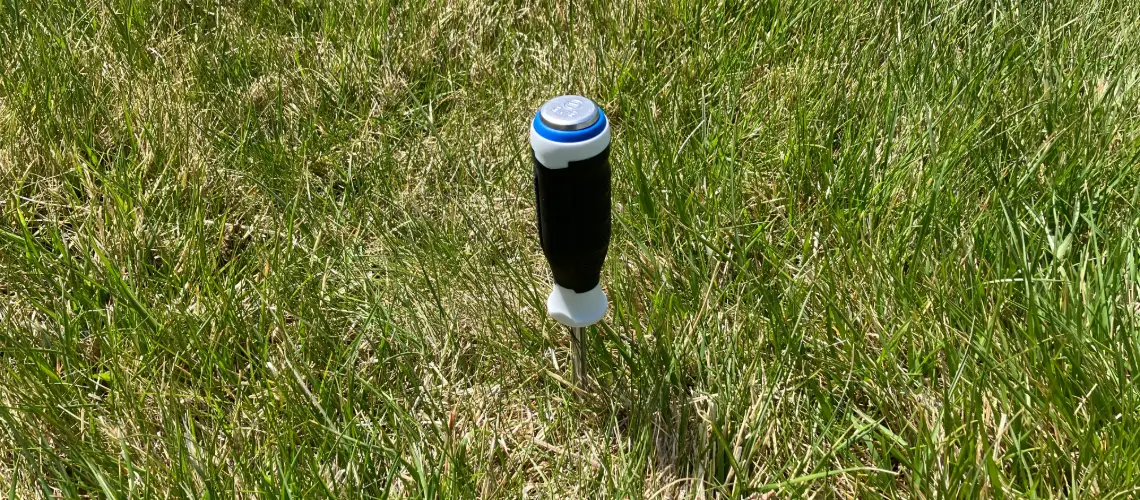
After determining how deep the roots are, you’ll want to know how far your irrigation water has gone into the soil. In more permanent plantings, such as turf, trees, and landscaped areas, you can use a screwdriver to check how deeply irrigation water has penetrated the soil. To see if the screwdriver method will work for your soil type, try the following procedure.
When you know your soil is dry, select a small area and water it for ~10 minutes (at a rate that keeps the water from pooling or running off). Let it sit for half an hour. Return to the site and try to push a screwdriver that is at least 6 inches long into the soil. See how far you can push it down before you have much resistance. Try this again on a nearby patch with similar soil that has not been watered.
If the screwdriver goes into the watered soil more easily, you know that you can now judge approximately how deeply the soil is moist with the screwdriver. If there is little resistance in both sites (such as in very sandy soils), this method may not be useful for you.
Retain moisture with mulch
Use mulch to help retain soil moisture and to keep equipment away from plants (trees in particular). Use up to 3–4 inches of mulch around trees in a circle underneath them that extends out 3–4 feet from the trunk or to the edge of the tree’s canopy (where the branches end). Keep a little area around the trunk where the mulch doesn’t touch the trunk to reduce potential issues with excess moisture or pests.
Mulch shrubs, perennials, annuals, and vegetables as you are able. If watering from overhead, make sure your method provides enough water that it penetrates the mulch and goes into the soil to an adequate depth.
Irrigate your lawn efficiently
Water needs for turf vary by elevation and the time of year. In most of Wyoming, 1–2 inches of irrigation water per week is sufficient for most lawns in summer. Water requirements are significantly less during the cooler times of the year.
Many lawns are overwatered. The best step homeowners with irrigation/sprinkler systems can take to save water is to examine the system to make sure they are not overwatering.
Sometimes the irrigation system gets set when the lawn is planted and is never adjusted again. Carry out a simple irrigation audit to make sure you know how much water your system is putting out and if you need to make repairs. An audit involves placing containers out across the lawn and seeing how much water they collect over a given period.
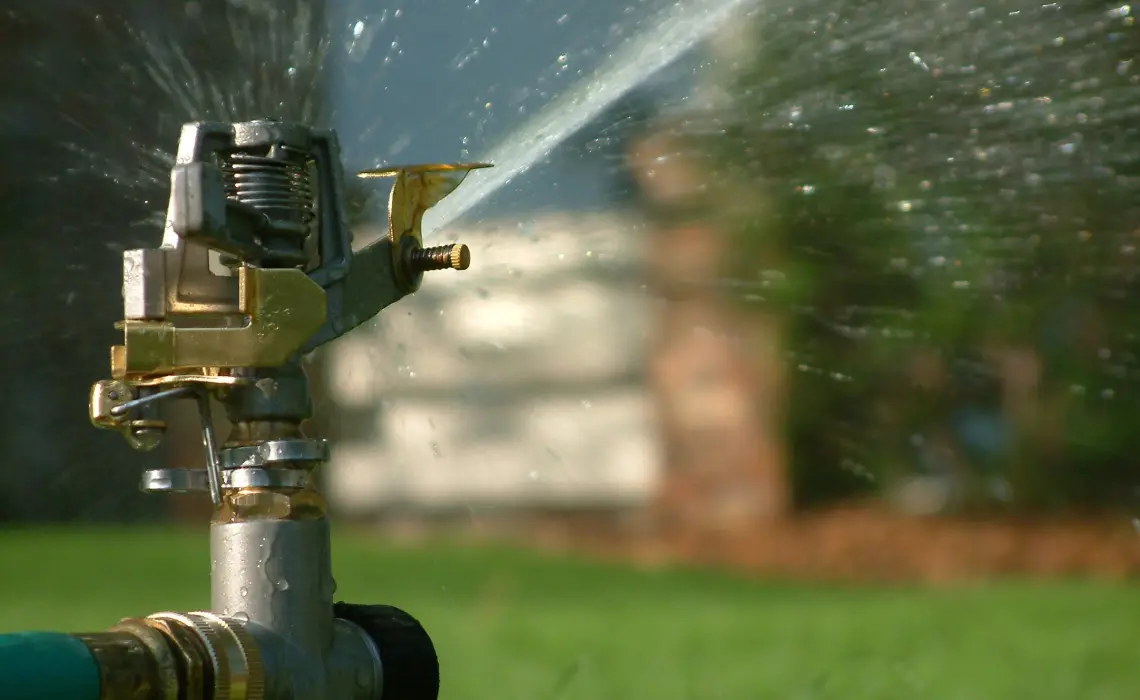
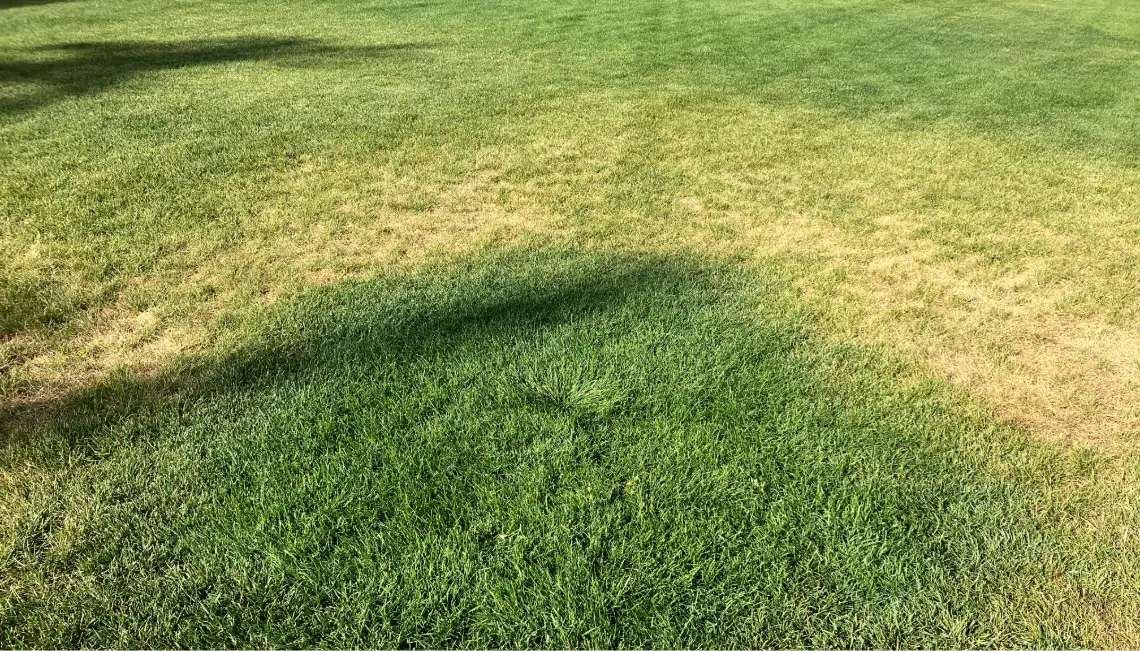
Examine the irrigation system to make sure that none of the sprinkler heads are broken or leaking. See if the sprinkler heads need adjustment or replacement if they are not putting out water in the proper pattern. You don’t want to be overwatering ¾ of your lawn because ¼ of it is drought stressed due to easily fixed sprinkler head problems.
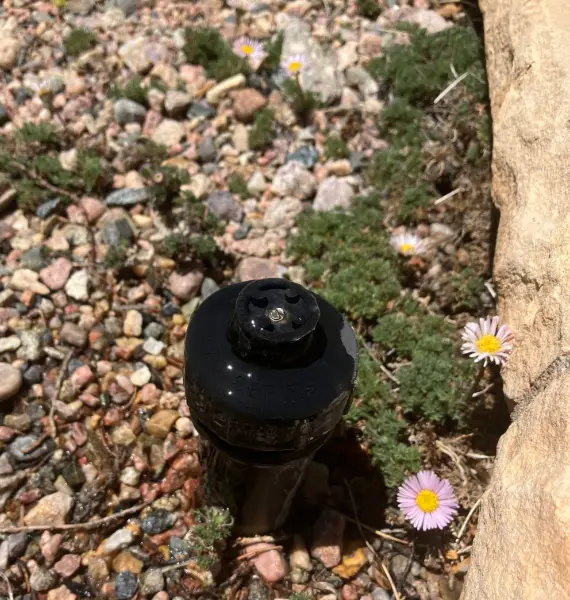
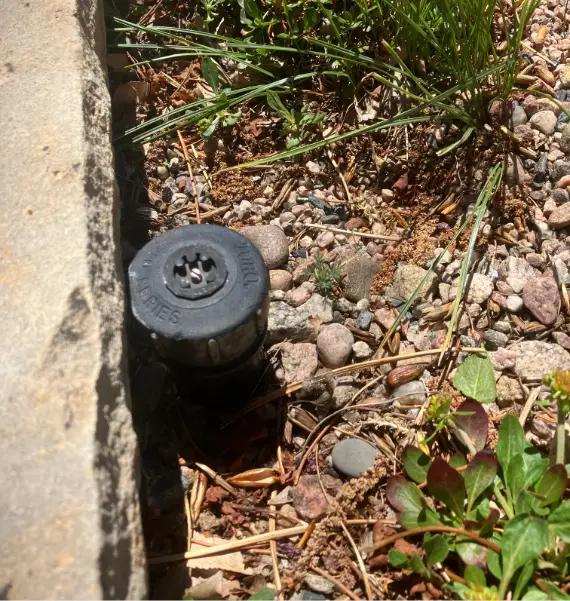
Make sure that spray heads are adjusted so that you are not watering hard surfaces—sidewalks, driveways, town streets, etc. Also make sure you are not watering areas where the water is not needed and will just promote weed growth.
Finally, make sure that no water is running off the surface of your lawn. This tends to occur most often in clay soils.
If you’re encountering runoff issues, the cycle-and-soak method can help ensure you are making the best use of the water available to you. Set your system to apply water for 5–10 minutes in one area, then have it turn off in that area so that it can soak in. Repeat this cycle for the time necessary to apply the appropriate amount of water. If you see water running off the lawn area, shorten the time the water is on in each cycle.
Minimize drought damage in turf
You can often visually tell when turf grass is beginning to be drought stressed. The grass blades will slightly change color (many of them becoming gray-blue) and when you walk across the grass, the leaves will not spring back up as they usually do, even after several minutes.
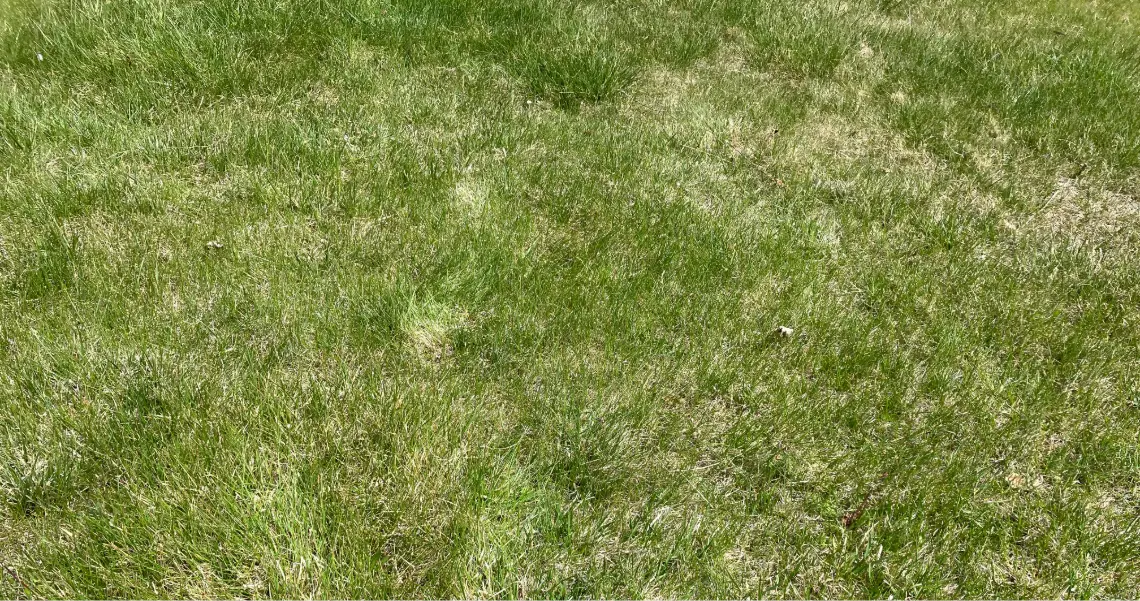
Many cool season turf grasses, such as Kentucky bluegrass and some native grass types, have developed so they can go dormant (stop growing and leaves turn brown, but crown of plant stays alive) without long-term harm. When temperatures cool down and/or irrigation starts again, the leaf blades will regrow.
The goal during deep drought is to water these lawn grasses enough so the crown (the base of the plant where the grass blades connect to the rest of the plant) stays alive. If it dies, the grass will not regrow.
When temperatures are above 80oF, damage can start to occur after 3 to 6 weeks without irrigation, depending on turf type and previous soil moisture levels. It has been observed that applying ½ inch to 1 inch of water every 4 to 6 weeks can help keep Kentucky bluegrass crowns hydrated without making them come out of dormancy. This water can be applied all at once or in multiple applications. If you have water enough to apply 1 inch every 4 to 6 weeks, you can apply ¼ inch of irrigation water every week or approximately ½ inch every two weeks. It’s recommended to apply ½ inch every 4 to 6 weeks at minimum.
Grass species such as tall fescue try to avoid drought by growing long roots rather than going dormant. If possible, water this type of grass deeply but infrequently in drought.
You can determine how deep the grass roots go by using a shovel to take a look. This is the depth to which you will want to irrigate if water is available. In many soils you can use the screwdriver method to determine how deeply you have watered.
Lawn recovery
If small holes develop in the lawn, Kentucky bluegrass can fill them in after the drought ends because it is a rhizomatous grass. Bunch grasses, however, usually cannot grow to repair holes in a lawn. All lawns are likely to become weedier when not receiving optimal amounts of water.
Tall fescue is a bunch grass. These types of grasses naturally space themselves out when water is scarce so holes will develop in lawns. They will likely need to be reseeded after the drought ends to fill in the holes. If they are not reseeded, these areas are more likely to be colonized by weeds. Grasses such as tall fescue will start dying after they have used up all the water available to their root systems.
In a previous drought year, water restrictions were implemented in Colorado. Turf received no irrigation for an entire summer. A Colorado State University turf specialist stationed in Fort Collins observed that Kentucky bluegrass lawns came back when that drought year was over, but tall fescue lawns did not.
How drought affects turf grass varies and depends on the type of grass, the variety, soil type, the health of the grass going into the drought, and how long the drought lasts.
Other steps you can take:
- Limit foot and other traffic on drought-stressed lawns to prevent more holes from developing.
- Mow high (2½ to 4 inches high).
- Use a mulching mower rather than removing grass clippings. Make sure your mower blades are sharp, as dull blades can damage grass leaves.
Take care of your trees
As mentioned previously, young or newly transplanted trees require consistent watering until established and are vulnerable to drought. In many circumstances, it takes at least one year for each inch of trunk diameter before a young tree has an established root system after transplanting.
If possible, provide ~ 10 gallons of water per inch of tree trunk diameter per week during the summer. An even better method is to see how deep the water penetrates the soil when you water for a certain amount of time—the tree roots that absorb the most water tend to be in the top foot of soil.
For more information on watering trees, see our publication “Watering Landscape Trees in Wyoming”.
A few words of caution
If your plants are drought stressed, do not fertilize unless you see signs of deficiency. Fertilizer often contains salts that can increase drought stress in plants unless they are thoroughly watered after fertilization.
Drought is not a good time to do large landscape renovation projects, even if you are converting from high water use plants to low water use plants. Almost all plants need extra water when they are first planted.
Drought is a time to make the best use of the water available to us and to start thinking about changes we might want to make in the future to have more drought-resistant landscapes. In the meantime, we persevere and look forward to a greener time ahead.
If you have questions about managing drought in your landscape, contact a local UW Extension office.