

In today’s world, it’s easier than ever to travel to new places and talk to new people, and yet paradoxically, it’s common to feel isolated from our closest neighbors.
But in the Wyoming 4-H program, watching out for those around you is still a cultural norm.
From the ground up, community service is part of the DNA of 4-H. Across the country, this organization is sustained by adult volunteers who serve as mentors, teach real-world skills, and organize events like county fair.
In turn, 4-H members themselves regularly carry out volunteer projects.
From student to teacher
For 4-H’ers, volunteering can take many forms, including peer mentorship. More experienced 4-H’ers are encouraged to share their knowledge with younger members.
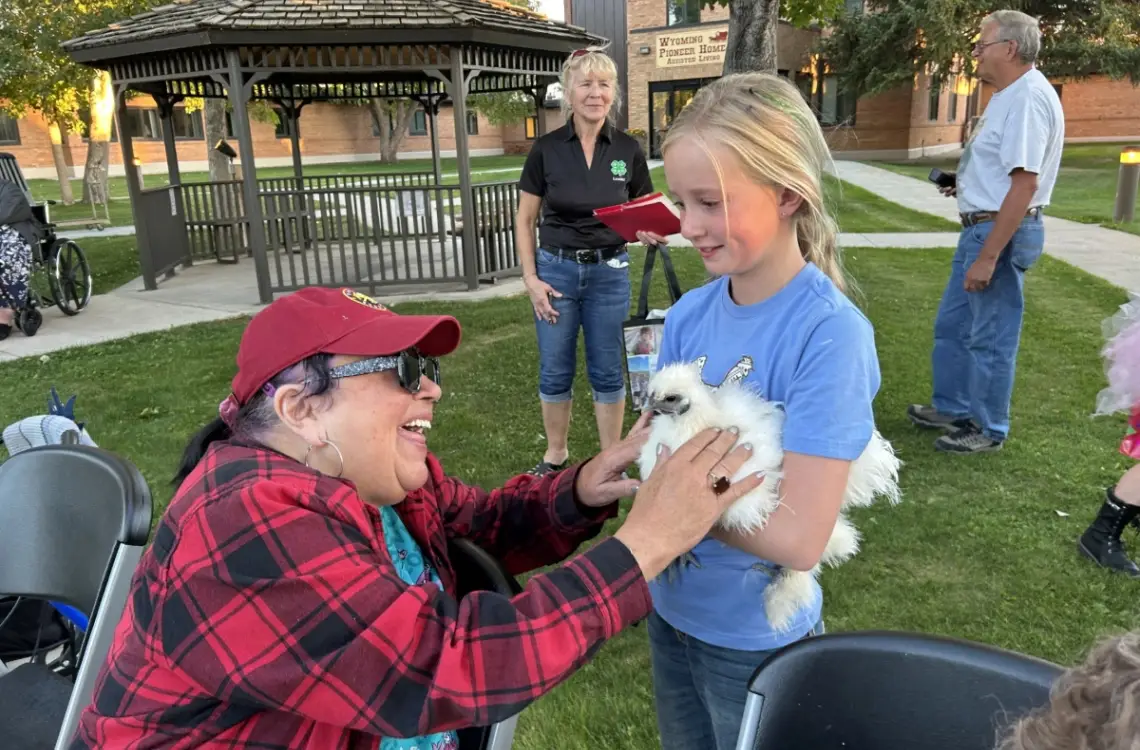
Curtis Muecke, an 18-year-old member of the Off the Grid 4-H club of Park County, frequently serves as a peer mentor. He learned how to show small animals like cats, rabbits, and chickens through 4-H, and now he hosts clinics for younger kids, teaching them how to set up a space for their animal, take care of it, and monitor it for pests and diseases.
Muecke hopes to become a teacher after he graduates from 4-H. “4-H has been so influential in my life, and I want to continue giving back to the community that gave me so much,” he says. “I wouldn’t be where I am if it wasn’t for 4-H volunteers. It’s such an amazing community of people willing to help kids of any age, and that’s something that can’t be understated.”
The 4-H ethos goes beyond the idea of giving charity to those “in need,” instead demonstrating that everyone sometimes gives, and sometimes receives.
Muecke, for instance, points out that he is able to teach younger 4-H’ers today because a 4-H volunteer once helped him learn about small animal showmanship.
“You receive so much help throughout your life even if you don’t really see it,” says Muecke. “Volunteering gives you a chance to give back to your community.”
Taking ownership of communal spaces
Across Wyoming, many 4-H clubs give back by assisting with highway and fairgrounds cleanup efforts.
Josie Despain, a 17-year-old member of the Albany County Mavericks club, comments, “It’s our fairgrounds; we want to keep it nice. Cleaning up the fairgrounds shows our community that we care about our space [and] our community.”
As a junior leader, Despain helps organize these cleanups by reaching out to other Albany County youth. She has created flyers to advertise cleanup events, building artistic, technological, and social skills in the process.
Inspired by her 4-H experiences, she plans to continue volunteering after graduation. “It makes me feel good to know I’m helping someone,” she says. “It’s something that’s always been big to me.”
A tradition of volunteerism
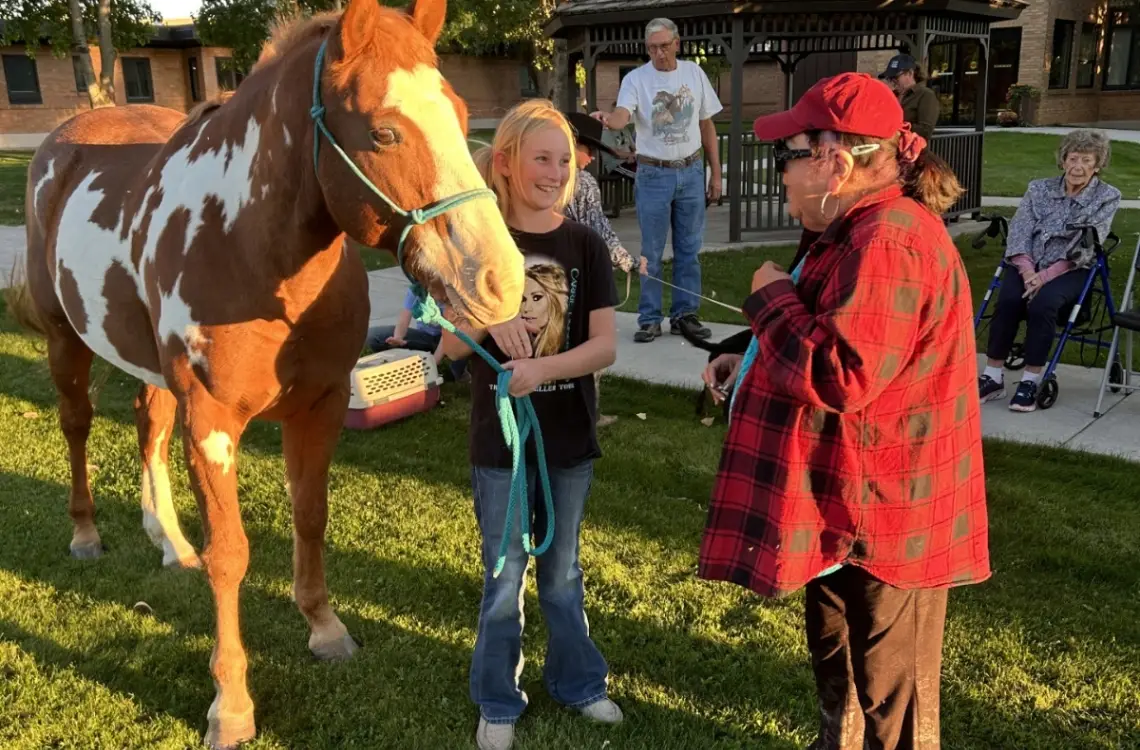
Cowpokes 4-H members at the annual senior center petting zoo. Photo courtesy of Hannah Welfl-Postma.
Some Wyoming 4-H clubs have been around for decades, and year after year, many of these clubs return to specific volunteer projects.
For members of the Cowpokes Club in Hot Springs County, one of these annual projects is a petting zoo created for residents of the Pioneer Senior Center in Thermopolis. Every fall, 4-H’ers bring their pets to the senior center’s lawn to meet the residents.
“We’ve had all kinds of [animals]. We just tell the kids, as long as it’s safe, calm, and nice, you can bring it,” says Hannah Welfl-Postma, volunteer leader of the Cowpokes Club. Petting zoo animals have included cats, dogs, donkeys, chickens, horses, and guinea pigs. Senior center residents get a chance to go outside, interact with furry (or feathered) friends, and hear 4-H’ers talk about their beloved pets.
In 4-H clubs across Wyoming, youth vote on the projects they’d like to pursue using parliamentary procedures. 4-H’ers actively choose to support volunteer work, year after year.
But 4-H’ers are also open to new projects. Cindy Lentsch, leader of the Roadrunners Club in Washakie County, encourages community members to ask 4-H clubs for support. “I think as members of 4-H, we’re always open to new ideas, whether it’s sponsoring a row of vegetables or moving a set of shelving in the local library…Reach out to organizations like 4-H, because there are probably kids that would love to help.”
Supporting those in need
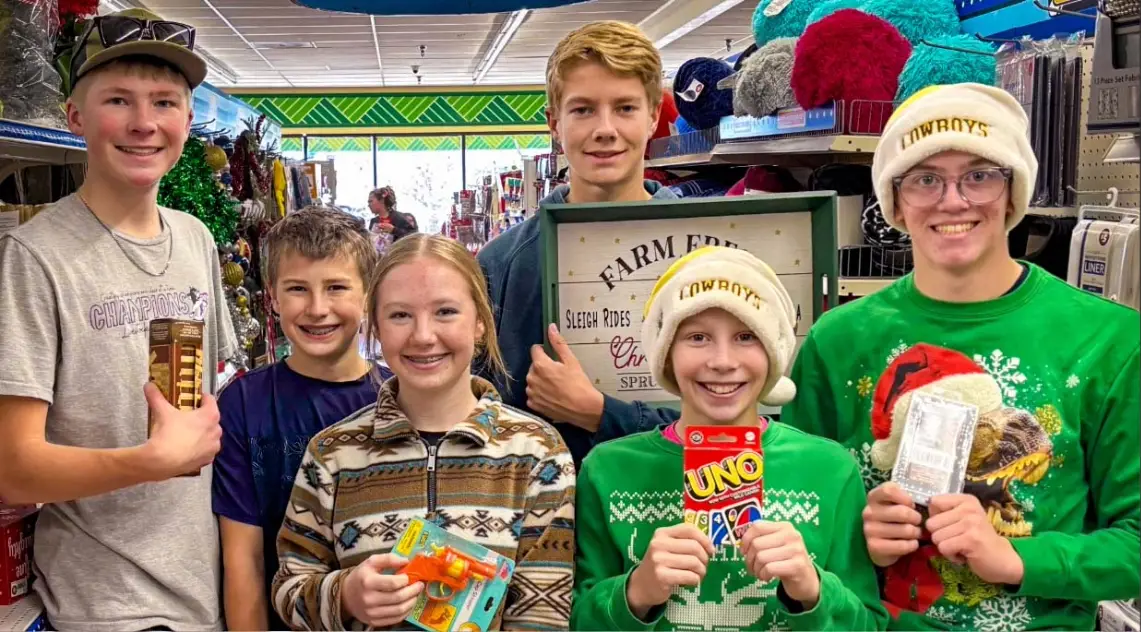
4-H’ers frequently participate in fundraising efforts for Wyoming residents with limited resources. Clubs conduct food drives, diaper drives, and quarter collections.
“[By volunteering], kids realize even small acts can have a big impact. There’s nothing that’s too small,” says Lentsch.
Clubs also regularly carry out more time-intensive fundraisers.
The Harmony Hustlers of Albany County, for example, take part in an adopt-a-family program during the holiday season. School counselors put together anonymous profiles of families who might struggle financially over the holidays. 4-H’ers from the Harmony Hustlers then raise money to buy gifts for these families. “Kids are actually picking out stuff for other kids, and so they usually end up with some pretty cool items that we didn’t even know existed,” says leader Jessica Kimzey.
Since the program is entirely anonymous, 4-H’ers don’t know who will receive their gifts. They learn to give to others without expecting anything in return. That important lesson extends beyond the holidays and beyond 4-H, showing kids how rewarding helping can be on its own merits.
4-H projects can incorporate surprising skills, from financial literacy to carpentry. The Roadrunners 4-H Club regularly participates in the Sleep in Heavenly Peace program, a bedding drive that aims to ensure no kids in Washakie County are sleeping on the floor. In the process, the Roadrunners work on money management skills, using donations to purchase bedding from a local store.
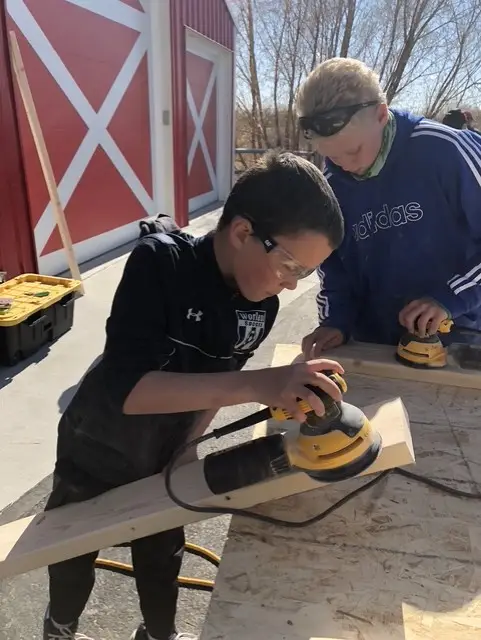
As part of the same program, 4-H’ers have also participated in a “build-a-bed” day, where they practiced safely operating power tools.
A culture of caring
4-H volunteer leaders emphasize that volunteerism has an enduring impact on the way youth think about the world. “Giving is embedded in [4-H],” says Harmony Hustlers leader Jennifer Utecht-Miller. “It just seems like a natural connection, that that’s what you do.”
4-H’ers learn to look out for their communities. They also become more aware of how to help their communities. Through volunteer projects, 4-H kids get practical experience with leadership, managing money, even using power tools. “They are armed with knowledge about things that they can do because they’ve done it,” says Kimzey.
And this impact is far-reaching, becoming something that kids naturally reach for throughout their lives. “I grew up in Thermopolis as part of 4-H program. Now that I’m a grown up, I’m always looking for ways that I can do things for others,” says Welfl-Postma. “You learn to love giving to others.”