


University of Wyoming entomology professor Scott Shaw recently contributed to a comprehensive new book on Darwin wasps, insects that have a vital role in agriculture.
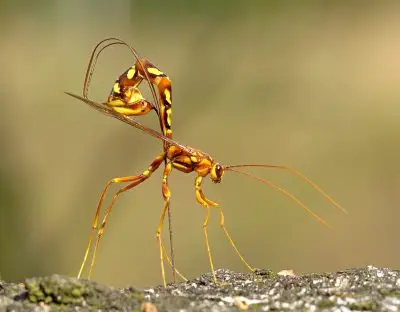
Published in December 2025 by Springer Press, “Darwin Wasps of the Middle East” is an in-depth resource for those involved in agricultural crop protection, entomologists, students, and researchers.
Shaw describes the Ichneumonidae family, also known as Darwin wasps, as “one of the most economically and ecologically important of all insect families.”
Wasps from this family feed upon and kill many kinds of plant-feeding insects, regulating potential pests in forest and rangeland ecosystems. Many ichneumonid wasp species have been used in integrated pest management and biological control programs to suppress insect pests without using insecticides. For example, the wasp Bathyplectes anurus is widely used as a biocontrol agent to suppress alfalfa weevil pest populations in the western United States.
“Darwin Wasps of the Middle East” provides a global perspective on the biology, ecology, distribution, and potential biocontrol applications of this wasp family. The book also describes more than 2,300 Darwin wasp species found in the Middle East.
“At the present time, in my opinion, this is the best introduction for new students desiring to learn about the beneficial wasp family Ichneumonidae,” says Shaw.
Organized into two volumes, the book features 28 contributing authors from 16 countries. Shaw served as a contributing author for 19 of the book’s 38 chapters as well as co-editing the entire work, which contains more than 1,500 pages.
To learn more about Darwin wasps or the new book, contact Shaw at Braconid@uwyo.edu.