


Depression is one of the most common mental illnesses in the United States. Unfortunately, while contemporary medicine has developed medications for mood disorders like depression, most target only one form of depression. Medications like SSRIs (selective serotonin reuptake inhibitors), for example, work best for mild or moderate depression and don’t have much effect on those suffering from severe depression.
“Depression is a spectrum disorder,” says Ram Shukla, assistant professor in the UW Department of Zoology and Physiology. “To explain this spectrum nature, we need to have a component that is equally diverse.” Shukla and graduate student Karthik Swaminathan propose that ribosomes could be this component.
“Ribosomes are the internal machinery that translate DNA info to proteins,” explains Swaminathan. Proteins make up everything from hormones to enzymes like serotonin to muscle cells. The purpose of DNA is to encode information that is used to build a person’s body. DNA can create several kinds of ribonucleic acids (RNA) in order to do this. One of these is “messenger” RNA (mRNA), which in turn uses ribosomes to make a protein.
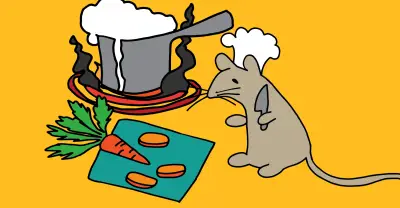
As an analogy, DNA and mRNA are the recipe, ribosomes are a cook, and proteins are the meal.
Past research into depression has focused on neurotransmission and receptor-based theories. In essence, these theories argue that someone who is depressed does not have enough serotonin, a neurotransmitter, in their brain, or the receptors in their brain are not sensitive enough to serotonin or other neurotransmitters. However, this does not adequately explain the complexity of mood disorders, particularly treatment resistance. If the problem is “not enough carrot,” then it is unclear why current “carrot-boosting” drugs do not work reliably.
Since serotonin and other neurotransmitters are made in part by ribosomes, Shukla and Swaminathan suggest, instead of figuring out one recipe for one ingredient for one kind of depression, why not try to understand how one of the cooks is cooking?
Using this framework, Swaminathan is investigating ribosomal heterogeneity in stressed mice. As mice become stressed, their ribosomes may begin “cooking” in a different way, which could explain some of the complexity of mood disorders. Swaminathan and Shukla’s current study builds on their previously published research, which established similarities between human depression and mouse stress.
If ribosomes are involved, their research could be used to create drugs that work across the spectrum of depression, helping with both very severe and more mild forms of the illness.
And if ribosomes in one part of the brain play a role in depression, ribosomes might be a factor in other mental illnesses as well. Though their current research focuses on mood disorders, Swaminathan and Shukla also see the possibility of generalizing this research to other mental disorders, such as schizophrenia.
To learn more, contact Shukla at rshukla@uwyo.edu.
This article was originally published in the 2024 issue of Reflections, the annual research magazine published by the UW College of Agriculture, Life Sciences and Natural Resources.