

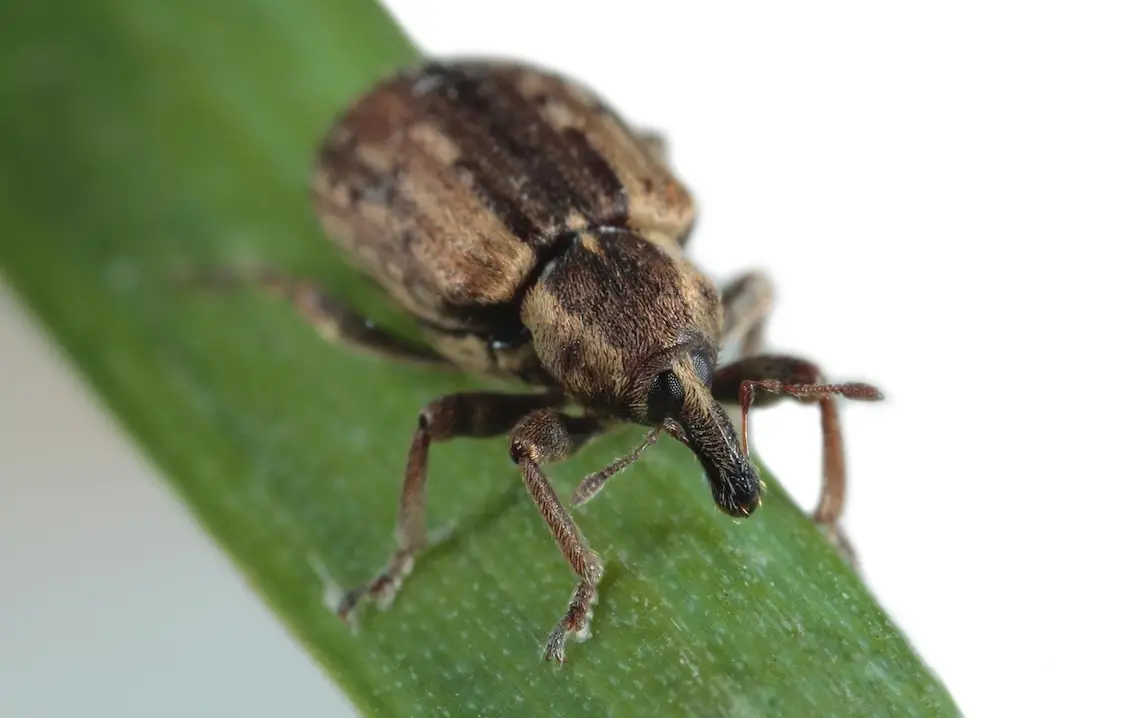
Observations in the Big Horn Basin and Sheridan County indicate that there is high alfalfa weevil pressure this year, the University of Wyoming Extension reports.
With alfalfa weevil control in full swing across the state, UW Extension encourages producers to make time for post-treatment scouting.
Many alfalfa producers spend considerable time scouting fields before making a management decision for alfalfa weevil. However, one of the most overlooked steps in integrated pest management (IPM) is evaluating the outcome after treatment has occurred.
IPM emphasizes the use of multiple tactics to manage pests while minimizing environmental impact and preserving beneficial organisms. Evaluation is the final step in the IPM process and helps determine whether a management action achieved the desired outcome.
“Whether you apply an insecticide application or just harvest, this is not the end of your alfalfa weevil management,” says Dan VanderPloeg, UW Extension educator in Washakie County. “Valuable information comes from what producers observe after a management action has been completed.”
By making post-treatment scouting a routine practice, producers can improve the effectiveness of their IPM, protect the second cutting from alfalfa weevil and monitor for other damaging pests.
Whether a producer applied an insecticide or harvested the first cutting earlier to manage alfalfa weevil populations, returning to the field (after the re-entry period for insecticide applications) to assess the results can provide valuable information for future decisions.
Successful control should result in reduced numbers of alfalfa weevil larvae and limited feeding injury to the regrowth regardless of the management approach used on the first cutting of alfalfa.
Even when alfalfa weevil control has been successful, other pests such as pea aphids and spotted alfalfa aphids can rapidly become a problem on tender regrowth, reducing both hay yield and forage quality of the second cutting if populations are allowed to build unchecked.
Poor control of the weevils does not always mean insecticide resistance. Factors such as equipment calibration, application timing, spray coverage, weather conditions and insecticide selection can all influence treatment effectiveness. However, insecticide resistance has been documented in localized alfalfa weevil populations in parts of the Intermountain West, including Wyoming.
If post-treatment scouting reveals that large numbers of alfalfa weevil larvae survived an application, producers should first evaluate whether treatment conditions and application practices were appropriate.
If the insecticide was applied at the labeled rate under favorable conditions and excessive numbers of weevils remain, insecticide resistance may be contributing to the control failure.
Producers who suspect resistance should document their observations and consult local UW Extension personnel or their crop advisers. Contact information for county extension offices can be found at https://bit.ly/uwe-counties.
Additional information on insecticide resistance management strategies can be found in “Management of Insecticide Resistance in Alfalfa Weevil for the Intermountain West: Montana, Utah, and Wyoming,” an extension bulletin available at https://bit.ly/alfalfa-weevil-resistance.