


Managed Grazing May Be the Key to Improving Soil Health at Reclaimed Mining Sites

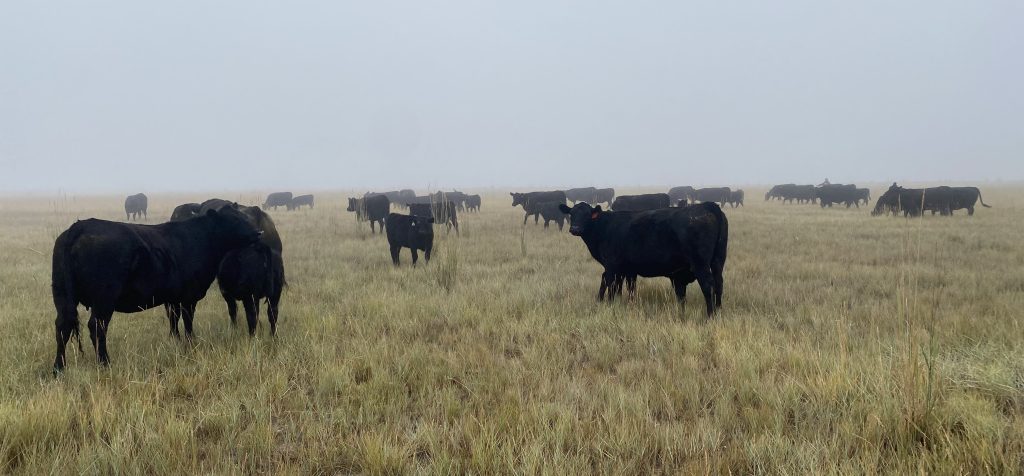
Herd of black cows stand in a field of green and yellow grass on a foggy day

Todd Heward’s family has been ranching in Shirley Basin, Wyoming, for more than a century. “We’ve watched success, and we’ve watched failure,” he says. “You learn that way.”

For decades, Heward has grazed cattle near and on reclaimed uranium mine sites, observing changes in the landscape over time. He’s seen mining sites reclaimed in the ’80s planted with monocultures of crested wheatgrass. He’s seen other reclaimed sites deteriorate to bare ground over the decades. In more recent years, he’s seen newly retired mine lands planted with a mix of grasses, forbs, legumes, and sometimes shrubs.

And, under his conscientious management, Heward has seen former mining sites slowly return to grasslands with healthy soil and diverse plant communities. The key to successful reclamation, it turns out, may be carefully managed rotational grazing.

Collaborative stewardship

In addition to grazing cattle on his own property, Heward leases reclaimed mine lands from Ur-Energy, an active mining company, and the U.S. Department of Energy.

In 2014, the Department of Energy’s Office of Legacy Management (DOE-LM) recruited UW researchers to help assess soil and plant health at the reclaimed mining sites. The project brought together agency staff, soil scientists, ecologists, and local ranchers.

“Our project explores how carefully managed cattle grazing and fostering robust grass growth can enhance soil health, increase biodiversity, and support sustainable agriculture on these post-mining landscapes,” explains Chandan Shilpakar, who joined the project in 2021 as a PhD student in UW’s plant sciences program. “Our primary goal was to understand grazing as a tool that can help improve ecosystems in these reclaimed mine lands.”

Throughout the project, he worked closely with Heward, who designed and implemented the grazing system used in several study sites. Heward, it turns out, had been fine-tuning grazing practices in the area for years and was happy to lend his expertise (and livestock) to the study.

“What I feel proud about is that everyone owns it,” Shilpakar comments. “The mining industry is serious about their job. Todd has been taking care of [the land]. The Department of Energy is very sensitive about what is happening in the study area…It’s not just me going in the field and deciding what can be done.”

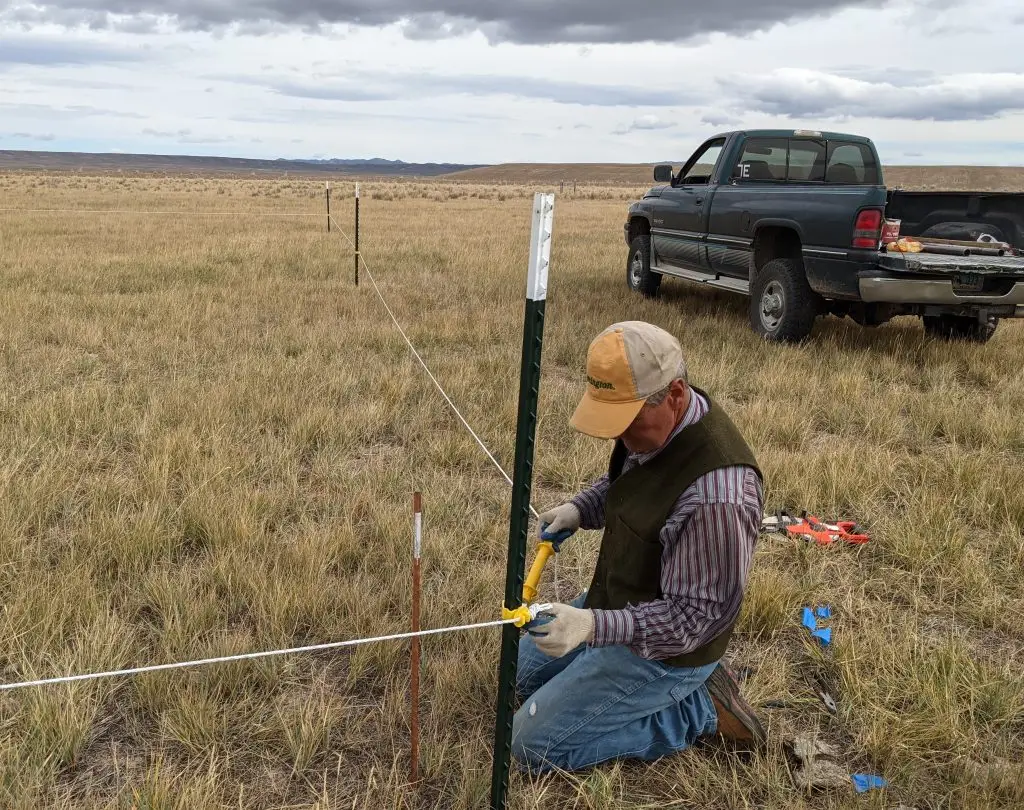
Man kneels in a grassy field to adjust a rope attached to metal poles to fence off a field site. A pickup truck with tools is parked nearby and dark clouds dot the sky overhead
Todd Heward helps set up an enclosure area in a reclaimed grassland. Photo by Chandan Shilpakar.

Measuring success

Shilpakar monitored chemical, physical, and biological indicators of soil health at five sites, three of which were on reclaimed mine land. Two natural grassland plots on Heward’s property served as control sites. In total, Heward estimates, the project represents nearly 10,000 acres of reclaimed mine lands.

Across the former mining sites, reclamation efforts began at different times, some in the 1980s and others as recently as 2010. Grazing also began at different times, starting as early as 2007 or as recently as 2021. While it added a layer of complexity, the staggered timing provided valuable comparisons in studying ecological succession over time.

Initially, the researchers recorded the types and number of different plants growing at the sites. In 2021, when Shilpakar joined the project, the study expanded to include forage productivity and soil heath. In addition to tracking plant growth, Shilpakar’s group assessed soil bulk density, which serves as an indicator of soil compaction, and soil texture. They limited the investigation to the top 30–45 centimeters of soil to avoid potential exposure to radioactivity.
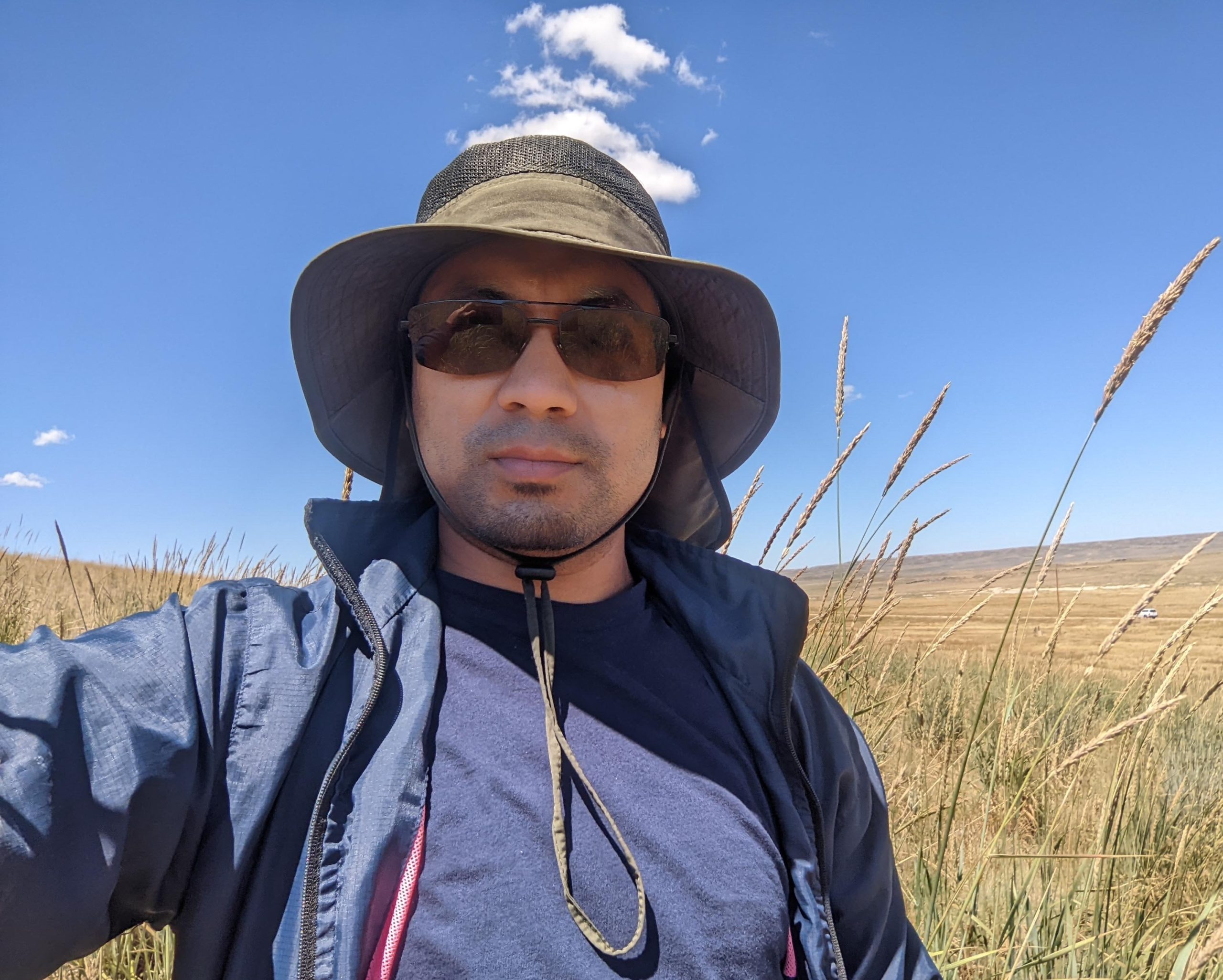
Selfie of a man wearing sun hat, sun glasses, and a windbreaker while standing in a field of tall yellow grass
Chandan Shilpakar on a field-monitoring expedition in the study area. Photo by Chandan Shilpakar.

Shilpakar, Heward, and their collaborators also assessed soil nutrient content, measuring levels of nitrogen, phosphorous, and carbon. As they examined nutrient cycling in the post- mining sites, they found that the sites with a wider variety of plant species also tended to have higher carbon content.

“We were trying to determine, does a small diverse [plant] community sequester more carbon,” Heward explains. “We learned that the more diverse the plant community and the better your plant health is, the better your carbon sequestration is.”

Finally, the researchers examined the soil’s biological health. In other words, how were the microbes in the soil doing? Were there enough microbes to ensure carbon and nutrient cycling processes were carried out?

Encouragingly, the soil microbes appeared to be thriving in the grazed areas. Along with higher soil carbon levels, the grazed areas had larger populations of soil microbes, indicating that livestock manure had likely boosted nutrient cycling processes.

Benefits of managed grazing

“One of the most encouraging outcomes has been the improvement of soil health under a long-term rotational grazing system,” says Shilpakar. “Our observations indicate that integrating livestock at low intensities has increased the organic matter in the soil without damaging the existing vegetation.”

That’s potentially good news for both reclamation agencies and ranchers. If properly managed grazing doesn’t interfere with—and can even amplify—reclamation efforts, former mine lands could help support local livestock production.

“The native grassland that had not been grazed for 50 years was poor as far as forage quality and productivity and things of that nature compared to the stuff we have grazed for a hundred years,” Heward notes.

But it’s important to remember that grazing is a double-edged sword, he and Shilpakar caution.

Without Heward’s careful management, the study areas could have easily been overgrazed, with potentially disastrous consequences for soil health. “You have to manage it for it to be effective,” he explains.

Heward’s grazing management strategies revolve around three key principles: time, timing, and rest. He’s found that the best results occur when grazing intensity, duration, and season of use are rotated between different areas. For instance, he might allow high-intensity grazing for a short time in one area, followed by an 18-month rest period. In another location, he might implement a longer, less intense grazing period and a shorter recovery time.

In a reclaimed area that he began grazing in 2007, Heward remembers observing only a few plant species across the whole area—the majority was filled with crested wheatgrass. Today, plant diversity is slowly increasing in the grazed areas. In some cases, areas once planted with monocultures now boast up to nine different grass species.

In the natural areas unexposed to mining, Shilpakar’s team has documented about 60 plant species, 18 of which are quite common. Ultimately, that level of diversity is the goal for the reclaimed plots, Heward says.
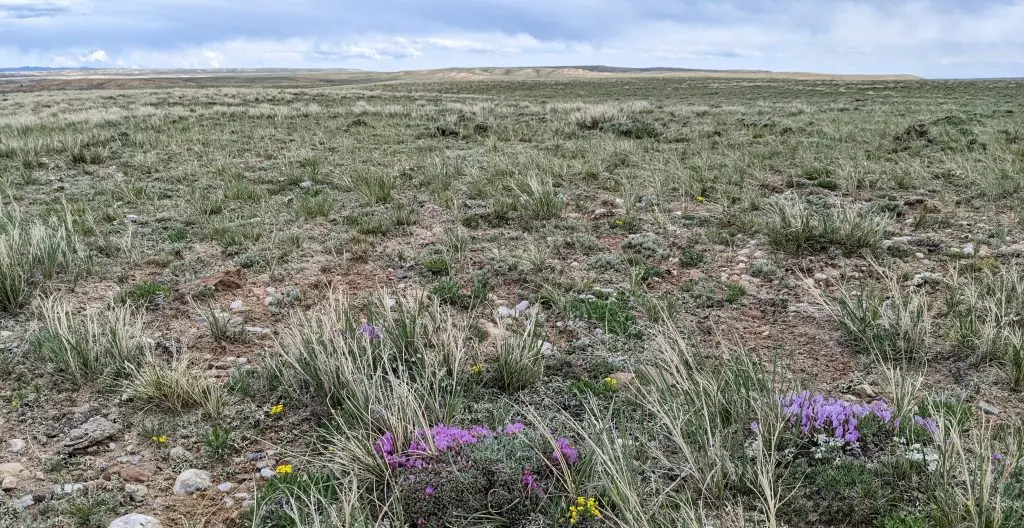
Wide grassy plain dotted with purple and yellow wildflowers in the foreground
Note the plant diversity in this grazed natural grassland. Photo by Chandan Shilpakar.

Over time, he has observed some native grasses returning to the grazed reclamation sites without even being replanted. He says that’s the fun part for him—seeing natives like prairie June grass, Indian ricegrass, and needle and thread returning to the area on their own.

“Reclamation is a huge part of Wyoming,” he says. “I think people watch projects like this and the success that comes and try to use that in their own operations…It’s beneficial for us that that ground and those [plant] communities be as healthy as possible. We don’t want them to fall apart.”

The second phase of the project launched in 2025 and will continue into 2026, providing two additional years of data collection—but it won’t necessarily end there. “The longer the study, the longer the time we’re on the land, the more we learn,” Heward comments.

Either way, he’ll continue his life’s work of tending to land and livestock. “I love to watch [ecological] succession. I love to watch livestock at work,” he says.

This article was originally published in the 2025 issue of Reflections, the annual research magazine published by the UW College of Agriculture, Life Sciences and Natural Resources.


Continue reading AgNews
«    |    »