

Starting Tuesday, Feb. 25, the University of Wyoming Extension Sheep Task Force is hosting a series of virtual webinars on predator management.
The webinar series is free and open to the public. Sheep producers from across Wyoming and beyond are welcome to attend. The three webinar sessions will take place 6-7 p.m. on Feb. 25, March 4, and March 11.
The UW Extension Sheep Task Force supports Wyoming’s sheep producers with current industry challenges through evidence-based research and on-the-ground implementation.
“The UWE Sheep Task Force has heard loud and clear that predation is one of the top issues for Wyoming sheep producers,” says McKenna Julian, Lincoln County extension educator. “This webinar [series] will provide information on a few predator management strategies and the economic impact that predation and a good management plan can have on an operation.”
The first webinar will focus on using burros to protect sheep flocks from predators. Researchers at the Laramie Research and Extension Center (LREC) adopted burros from the Bureau of Land Management to test this method. During the webinar, LREC director Derek Scasta will discuss LREC’s research and what producers may need to know before adding a burro to their flock.
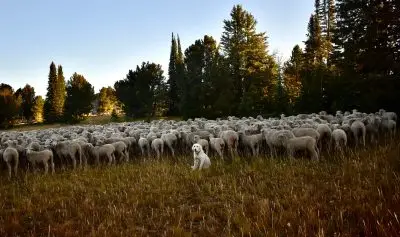
Livestock guardian dogs are the topic of the second webinar on Tuesday, March 4. Dagan Montgomery, Sublette County extension educator, and Cat Urbigkit, president of the Wyoming Wool Growers Association, will lead the discussion. They will discuss differences between livestock guardian dog breeds and how to manage guardian dogs effectively.
The final webinar session on Tuesday, March 11, will address predator assistance options and predator management costs. Speakers are Chance Marshall, Fremont County extension educator and member of the Fremont County Predator Board; Alison Crane, executive director of the Wyoming Wool Growers Association; and Rob Ziegler, UW Extension livestock production and marketing specialist.
Marshall and Crane will discuss how the Wyoming Wool Growers Association, county boards, and state trappers can assist Wyoming sheep producers with predation. Ziegler will review the economic impacts of predation and examine which predator management strategies are most cost effective.
To register for the webinar series, visit https://bit.ly/wy-predator. Registered participants will receive a Zoom link to all three webinars and are free to attend one or all of the sessions.
Webinar recordings will be available on UW Extension’s YouTube page after the series’ conclusion. For more information, contact Julian at mbrinton@uwyo.edu or (307) 828-4093.