


As Palmer amaranth continues to spread across the Intermountain West, the University of Wyoming Extension has released a new publication on how to identify this invasive weed, best practices for preventing its dispersal, and the limited options available for its control.
Now considered one of the most damaging agricultural weeds in the U.S., Palmer amaranth was first reported in Wyoming in 2018. To date, reports of the weed have been recorded in four counties.
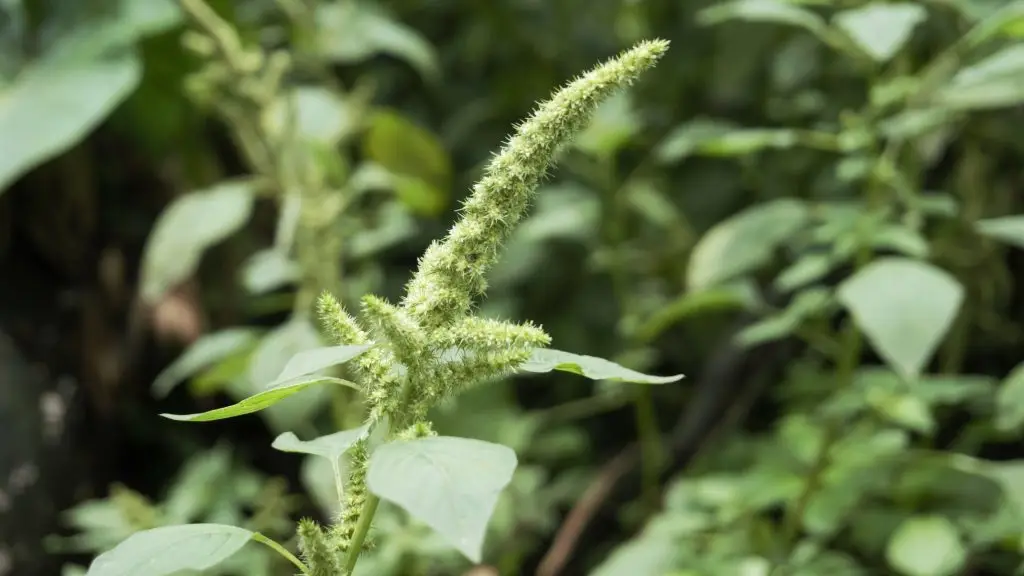
“Palmer amaranth is a new weed in Wyoming with a notorious reputation for being difficult to manage,” says Kelsey Brock, UW Extension invasive plant specialist. “As far as we know, Palmer amaranth is still relatively rare in Wyoming, and we hope it’s still possible to prevent widespread establishment.”
Co-authored by Brock, research assistant Daniel Coles, and Andrew Kniss, head of the UW Department of Plant Sciences, “Palmer Amaranth: A New Threat to Wyoming’s Agriculture” outlines what is currently known about the plant and provides an illustrated identification guide. To view a free downloadable copy, visit https://bit.ly/palmer-wy.
Palmer amaranth is especially damaging to row crops and crops that emerge later in the growing season, the authors report. In addition to reducing crop yield, the weed can act as a host for insect pests and release chemicals that impede the growth of other plants. In dry conditions, Palmer amaranth can also generate high levels of nitrates, in some cases becoming toxic to livestock.
According to the new publication, Palmer amaranth is predicted to cause roughly twice as much yield loss in Wyoming as redroot pigweed. The new invader can germinate more readily in cooler conditions than redroot pigweed, grows more quickly, and is currently resistant to more than twice as many herbicide modes of action.
Since there are no effective long-term treatments for the weed at present, it is imperative to take preventive measures and proactively identify any suspected cases. According to the authors, “In some cases, prevention may be the only feasible option because this plant is exceptional in its ability to rapidly evolve herbicide resistance and alternatives may be expensive, time consuming, and possibly ineffective.”
Palmer amaranth has been documented as traveling via manure-based fertilizer; contaminated seed, including agricultural and restoration mixes as well as bird feeder seed; “hitchhiking” on vehicles and footwear; waterways, both man-made and natural; and the excrement of birds and other animals.
While further research is needed to better understand how and why Palmer amaranth has continued to spread across the West—and how it can be managed more effectively—the authors encourage Wyoming residents to report any suspected cases.
“If we don’t act now, I fear the economic impact to crop production will be significant,” says Brock. “Even though crop producers have the most to lose, everyone in Wyoming can help by keeping an eye out for Palmer amaranth and reporting any sightings to their local weed and pest office.”
Contact Brock at kbrock5@uwyo.edu or (307) 766-3113 with questions or assistance with identification. Weed specialists at local weed and pest offices or UW Extension offices can also help with identification.